Anodizing vs Powder Coating for CNC Machined Aluminum Parts
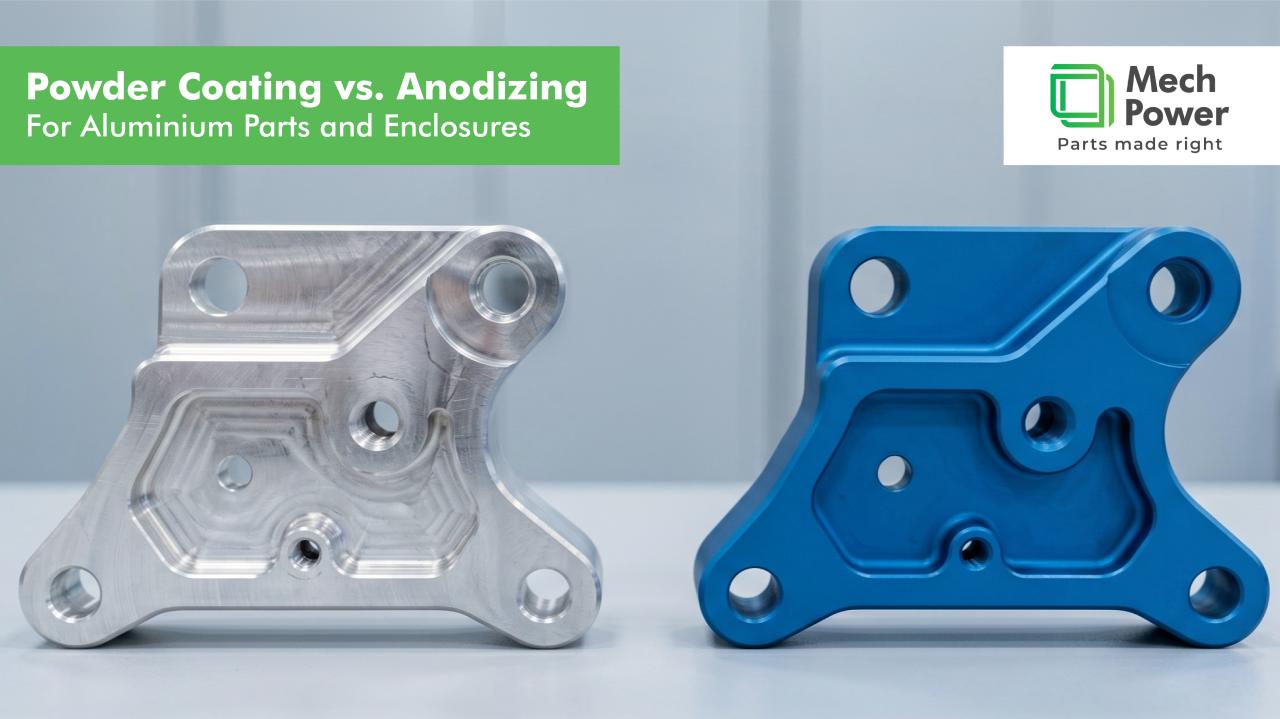
Choosing the right surface finish is a critical step for CNC-machined aluminum components. Beyond aesthetics, surface treatments determine corrosion resistance, wear performance, dimensional stability and long-term reliability. Anodizing and powder coating are two dominant options for aluminum, yet they operate by different mechanisms and deliver distinct performance tradeoffs.
For mechanical engineers, product designers and procurement teams, understanding anodizing vs powder coating helps match the finish to functional needs and tolerance requirements. Anodizing builds an integrated protective aluminum oxide layer via electrochemistry, while powder coating deposits a polymer film that is cured onto the part surface. These differences directly impact coating thickness, tolerance control, corrosion protection, and compatibility with precision machined features. This guide compares both finishing processes and outlines practical selection rules for aluminum CNC machining projects.
1. What Is Aluminum Anodizing?
Aluminum anodizing is an electrochemical treatment that transforms the aluminum’s outer surface into a controlled oxide layer. The workpiece is submerged in electrolyte and energized, growing an oxide layer that is part of the base material rather than a separate top coating.
Its biggest advantage for CNC parts is balanced corrosion protection and surface hardness with a relatively thin coating. Three common grades:
- Type I (Chromic Acid Anodizing): Ultra-thin layer, widely used in aerospace where tight dimensional control is required.
- Type II (Sulfuric Acid Anodizing): General-purpose decorative and protective finish, available in clear, black, blue and other dyed colors.
- Type III (Hardcoat Anodizing): Thick, high-hardness oxide layer for heavy abrasion and sliding wear.
Pros of Anodizing
- Excellent corrosion resistance after proper sealing
- High surface hardness, especially Type III hardcoat
- Preserves natural metallic aluminum texture
- Supports dye coloring
- Lower overall coating buildup compared to powder coating
- Creates electrical insulation
Limitations Color consistency varies across aluminum alloys. Oxide growth shifts part dimensions, so designers must reserve tolerance allowance for close-fit features.
2. What Is Powder Coating for CNC Machined Aluminum Parts?
Powder coating uses electrostatic spraying to deposit dry polymer powder onto pre-cleaned aluminum, then cures the powder inside an oven to form a continuous solid film. Unlike anodizing, it is a standalone barrier layer on top of the metal substrate.
It is ideal when you need custom colors, textured surfaces or a robust physical barrier. Common powder formulations:
- Epoxy: Strong chemical resistance, poor long-term UV stability, for indoor use.
- Polyester: Great weather and UV resistance, preferred for outdoor assemblies.
- Epoxy-Polyester Hybrid: Balanced cost and performance, for indoor equipment housings.
Pros of Powder Coating
- Huge selection of colors, gloss levels and textures
- Thick barrier against moisture and chemicals
- Better impact and chipping resistance
- Covers minor machining marks and surface defects
- Works on mixed-metal assemblies
Limitations The thicker coating adds significant material buildup, which can ruin tight bores, press fits and threaded features unless critical areas are masked.
3. Anodizing vs Powder Coating: Key Differences
表格
| Comparison Factor | Anodizing | Powder Coating |
|---|---|---|
| Process | Electrochemical oxidation | Electrostatic spray + thermal curing |
| Coating structure | Integrated oxide layer | External polymer film |
| Typical thickness | 5–25 μm (Type II) | 60–120 μm |
| Corrosion resistance | Good to excellent with sealing | Good to excellent with proper pretreatment |
| Wear resistance | Good; excellent for Type III hardcoat | Moderate, not ideal for continuous sliding friction |
| Impact resistance | Hard but prone to local chipping | Better impact resistance |
| Color options | Metallic + dyed colors | Full opaque palette, textures available |
| Dimensional impact | Low but measurable oxide growth | High coating buildup, needs clearance allowance |
| Typical use | Precision fixtures, wear parts, tight-tolerance components | Enclosures, panels, exterior cosmetic parts |
Corrosion Resistance
Both deliver reliable protection, but the protection mechanism differs. Anodizing seals the aluminum surface itself; powder coating blocks contaminants with a physical barrier. A scratch in powder coating can let corrosion spread under the film, while localized damage on anodizing is usually confined.
Wear Resistance
Hardcoat anodizing is the clear choice for sliding, friction-heavy components such as guide rails and fixture surfaces. Powder coating resists bumps and handling damage but wears quickly under continuous abrasion.
Appearance
Anodizing retains a metallic look with limited dye options. Powder coating offers far more flexibility for brand colors, matte/textured finishes and uniform opaque appearance.
4. Tolerance Impact on CNC Machined Parts
Coating thickness directly changes final dimensions, which is the top concern for precision CNC components. Anodizing oxide grows partially into the aluminum and partially outward. For standard Type II, roughly two-thirds of the oxide thickness extends outwards. Engineers must adjust pre-anodizing machining sizes or mask critical features.
Powder coating adds material on both sides of features. An 80 μm coating adds ~160 μm total across opposing surfaces, which can jam threads, bearing bores and sliding fits.
Core rule: Drawings must clearly state whether tolerances apply before or after finishing.
5. Treatment for Threaded Features
Threads are sensitive to coating buildup. Anodizing’s thin layer can still alter fine thread pitch and fit. Powder coating carries higher risk, as powder easily accumulates on thread crests and roots. Best practice for threaded parts: mask critical threads, add coating allowance during machining, and verify final fit with thread gauges.
6. When to Pick Anodizing vs Powder Coating
Choose Anodizing when:
- Tight dimensional control is required
- Parts need wear and abrasion resistance
- Metallic finish is required
- Components are precision fixtures, automation parts or aerospace hardware
Choose Powder Coating when:
- Custom color or textured cosmetic finish is required
- The part needs impact protection for outdoor use
- Minor machining blemishes need to be covered
- The part is an enclosure, cover or exterior panel
表格
| Requirement | Recommended Finish |
|---|---|
| Tight tolerances | Anodizing (with allowance) |
| High sliding wear | Type III hardcoat anodizing |
| Metallic look | Anodizing |
| Custom brand color / texture | Powder coating |
| Outdoor UV exposure | Polyester powder coating / sealed anodizing |
| Precision threads | Either, with masking |
7. Additional Design & Sourcing Notes
Alloy selection matters: 6061 aluminum delivers stable, consistent anodizing results. High-copper or high-silicon alloys often produce uneven anodize color, though they are more forgiving for powder coating. Geometry constraints: Deep blind holes, narrow slots and sharp edges create uneven coating for both processes. Surface preparation is non-negotiable. Poor cleaning, etching or pretreatment leads to poor adhesion, peeling and inconsistent finish. Final inspection should check coating thickness, color, adhesion and critical dimensions after finishing.
Conclusion
There is no universal “better” finish. Anodizing suits precision, wear-critical aluminum parts that need a thin, metallic protective layer. Powder coating excels for cosmetic housings and panels needing thick barrier protection and custom colors. The best results come from planning finishing requirements at the design stage, accounting for coating thickness, masking and inspection. Working with a reliable manufacturer helps align machining tolerances and surface specs. If you need reliable aluminum CNC machining with professional surface finishing, experienced suppliers can coordinate machining, masking and finishing to meet your drawing requirements.
Frequently Asked Questions (FAQs)
- Which finish offers better corrosion resistance for aluminum CNC parts? Both perform well when processed correctly. Sealed anodizing forms an integrated oxide barrier, while properly pretreated powder coating creates a physical shield. The right selection depends on aluminum alloy, exposure environment and service expectations.
- Can anodizing hold tighter dimensional tolerances than powder coating? Generally yes. Standard anodizing creates far less outward buildup than powder coating. Even so, oxide growth shifts dimensions, and hardcoat anodizing creates larger dimensional changes. Both require machining allowances and post-finish inspection for tight-tolerance work.
- Is powder coating suitable for threaded CNC features? Powder coating can be used on threaded parts, but functional threads must be masked. Its thick polymer layer easily fills thread profiles and ruins fastener engagement. Precision threaded parts require masking and gauge verification, and the same tolerance logic applies to anodized threads.