PEEK vs Delrin CNC Machining for Precision Plastic Parts
Introduction
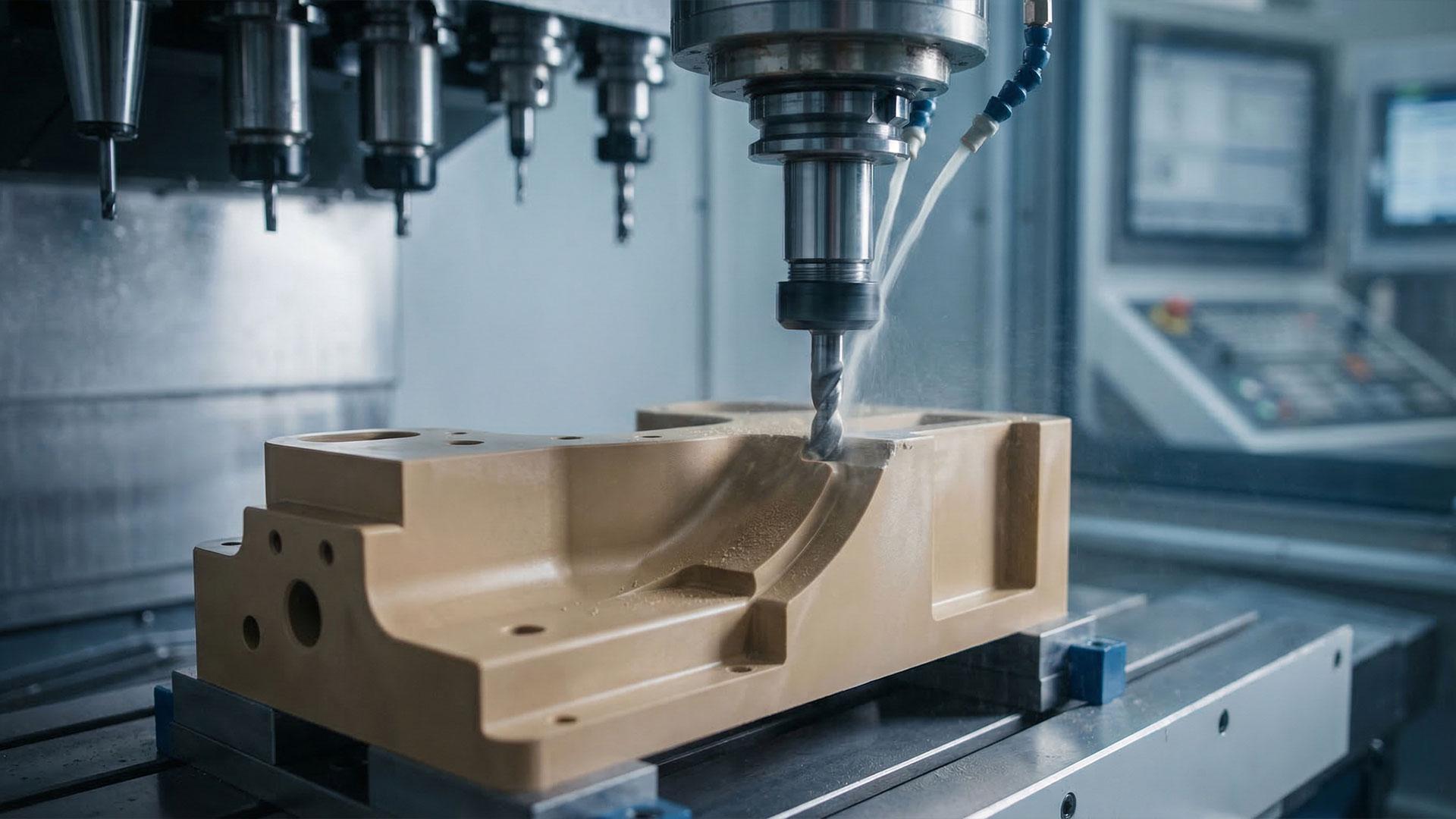
PEEK and Delrin are two widely used engineering plastics for CNC-machined components, but they serve different performance requirements. PEEK offers excellent heat resistance, mechanical strength, and chemical stability. Delrin (POM) is valued for its low friction, dimensional stability, and ease of machining.
For mechanical engineers and sourcing managers, choosing between these materials involves more than comparing material properties. Machinability, operating conditions, dimensional requirements, and total manufacturing cost all influence the decision.
This guide compares PEEK vs Delrin CNC machining to help buyers select the right material for precision plastic parts.
1. Understanding PEEK and Delrin
PEEK (Polyether Ether Ketone) is a high-performance semi-crystalline thermoplastic designed for demanding environments. It maintains useful mechanical properties at elevated temperatures and offers broad chemical resistance. Common applications include aerospace components, semiconductor fixtures, medical equipment parts, and industrial seals.
Delrin (Acetal/POM) is an engineering thermoplastic known for stiffness, low friction, wear resistance, and predictable machining behavior. It is commonly used for gears, bushings, rollers, spacers, and precision mechanical components.
One important distinction: Delrin is a brand of acetal homopolymer, while POM also includes copolymer grades. Buyers should specify the exact material grade rather than treating all acetal materials as identical.
2. PEEK vs Delrin: Material Properties Compared
The following table provides representative properties for common unfilled grades. Actual values vary by manufacturer, grade, temperature, and testing method.
| Property | PEEK | Delrin (POM) |
|---|---|---|
| Tensile strength | 90–100 MPa | 60–70 MPa |
| Continuous service temperature | Up to approximately 250°C | Approximately 85–90°C |
| Density | 1.30–1.32 g/cm³ | 1.41–1.42 g/cm³ |
| Water absorption | Low | Low |
| Chemical resistance | Excellent | Good |
| Friction characteristics | Good | Very good |
| Material cost | High | Relatively low |
| Machinability | Good | Excellent |
PEEK provides better high-temperature performance, strength retention, and resistance to aggressive chemicals. Delrin offers an economical combination of stiffness, wear resistance, and machining efficiency.
These differences make PEEK suitable for demanding applications, while Delrin is often sufficient for conventional precision mechanisms.

3. CNC Machining Differences Between PEEK and Delrin
Both materials can be processed using CNC milling and turning, but they require different machining strategies.
PEEK machining
PEEK requires careful control of cutting heat, tool condition, and workholding. Excessive heat or residual stress can cause dimensional changes, particularly in thin-walled or complex components.
Key considerations include:
-
Use sharp cutting tools and suitable cutting parameters.
-
Control heat generation and chip evacuation.
-
Consider stress-relieved stock for demanding applications.
-
Allow parts to stabilize before final dimensional inspection.
-
Evaluate reinforced grades separately because glass or carbon fillers increase tool wear.
Delrin machining
Delrin is generally easier and faster to machine. It produces clean cuts, supports good surface finishes, and is suitable for precision turned and milled components.
Key considerations include:
-
Use sharp tools to prevent burrs and excessive heat.
-
Avoid excessive clamping pressure.
-
Support thin features to reduce deformation.
-
Account for thermal expansion when specifying tight tolerances.
Overall, Delrin is more forgiving during machining, while PEEK requires more process control and careful material handling.
4. Typical Applications: When Should Buyers Choose Each Material?
Choose PEEK when:
-
Components operate at sustained high temperatures.
-
Parts encounter aggressive chemicals or repeated steam exposure.
-
Higher mechanical strength and stiffness retention are required.
-
Applications involve demanding aerospace, medical, or semiconductor environments.
Choose Delrin when:
-
Parts operate under moderate temperature conditions.
-
Low friction and wear resistance are priorities.
-
Components include gears, bushings, rollers, or sliding interfaces.
-
Cost-effective precision machining is important.
For example, a high-temperature pump component may justify PEEK, whereas a positioning gear or mechanical spacer may perform adequately with Delrin.
5. Cost and Sourcing Considerations
PEEK generally costs substantially more than Delrin. Its raw material price, machining requirements, and inspection needs can increase the total part cost.
Delrin is widely available and easier to process, making it attractive for prototypes and repeat production.
When requesting quotations, buyers should confirm:
-
Exact resin grade and manufacturer.
-
Whether the material is unfilled, glass-filled, or carbon-filled.
-
Required dimensional tolerances and surface finish.
-
Material certificates and application-specific compliance requirements.
-
Production quantity and inspection documentation.
For projects requiring high performance plastic CNC machining services, suppliers should review the component drawing, operating environment, and material grade before confirming manufacturing feasibility.
6. Practical Tips for Selecting CNC Machined Plastic Materials
Before approving a material specification:
-
Define operating conditions: Document temperature, chemical exposure, load, friction, and expected service life.
-
Evaluate dimensional stability: Consider thermal expansion, moisture absorption, and residual machining stress.
-
Check material grades: Confirm whether virgin, reinforced, or application-specific grades are required.
-
Review tolerances: Apply tight tolerances only to function-critical features.
-
Compare total costs: Include raw material, machining, inspection, and potential replacement costs.
A material that costs more initially may provide better long-term value if it prevents premature failure.

7. Frequently Asked Questions
What are the key differences between PEEK and Delrin?
PEEK offers higher temperature resistance, mechanical strength, and chemical resistance. Delrin provides excellent machinability, low friction, and lower material cost. The choice depends on operating conditions and performance requirements.
Is PEEK more difficult to machine than Delrin?
Yes. PEEK generally requires more careful heat management, tooling selection, and stress control. Delrin is easier and faster to machine for most conventional precision plastic components.
Can Delrin parts be used for high-temperature applications?
Delrin can handle moderate operating temperatures, typically around 85–90°C for continuous service in common grades. It is not suitable for sustained high-temperature applications where PEEK is required. Always verify the selected grade's technical data.
Conclusion
PEEK and Delrin serve different needs in precision plastic CNC machining. PEEK is the stronger candidate for high-temperature, chemically demanding, and performance-critical applications. Delrin is a practical choice for cost-sensitive components requiring low friction, wear resistance, and reliable machining.
For buyers, the best material is not necessarily the most advanced one. It is the material that meets functional requirements while maintaining acceptable manufacturing cost and service life.