Design Tips for CNC Machined Medical Components
Introduction
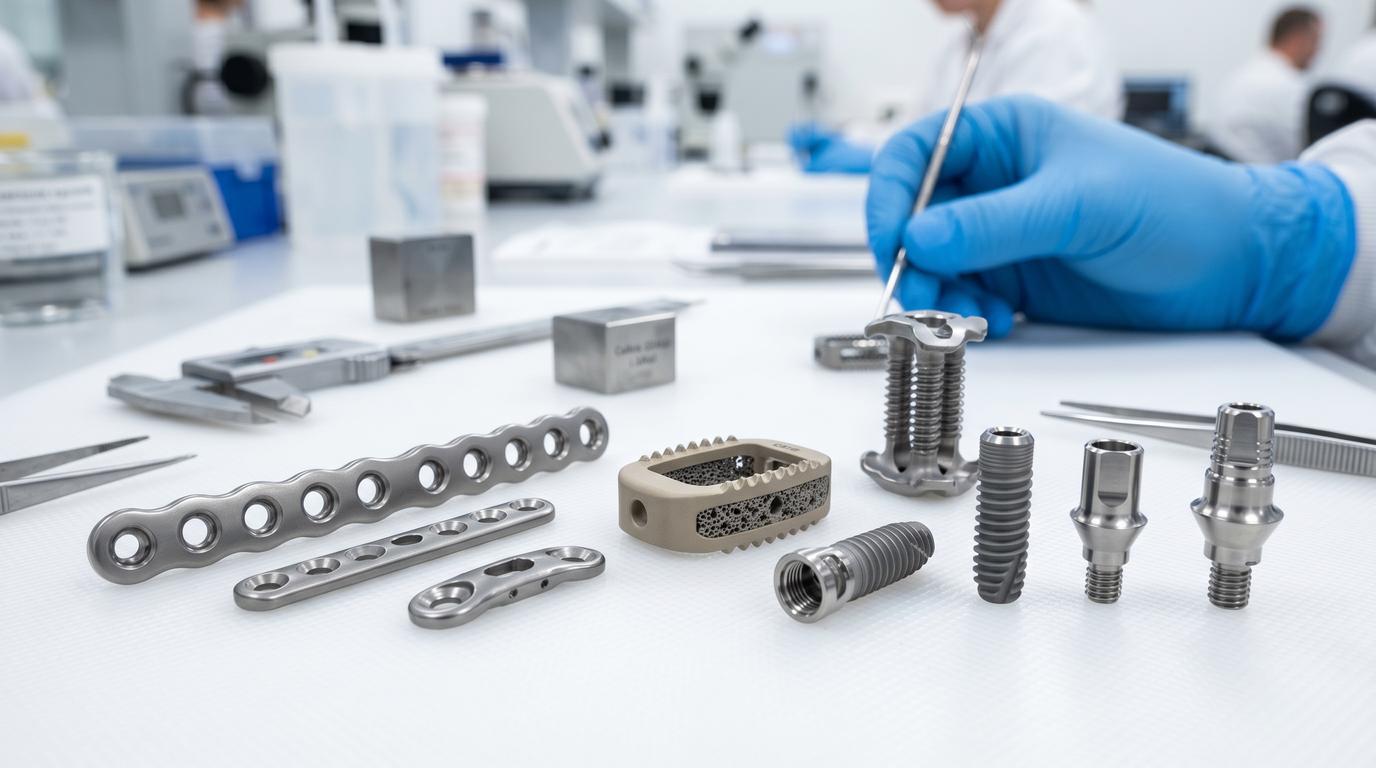
CNC machining plays an important role in manufacturing medical device components that require dimensional accuracy, material consistency, and reliable performance. From surgical instruments and diagnostic equipment to orthopedic implants and specialized medical assemblies, CNC machined medical components must satisfy demanding design and quality requirements.
Unlike conventional industrial parts, medical components often require careful consideration of biocompatibility, sterilization compatibility, surface integrity, and material traceability. Design decisions made before machining can significantly influence component reliability, manufacturing costs, and regulatory documentation.
For engineers and procurement teams sourcing medical grade CNC parts, the key is to balance functional requirements with manufacturability and quality control. The following design tips explain how to achieve that balance when developing precision medical components.
1. Select Materials Based on Medical Application Requirements
Material selection should be one of the first considerations when designing CNC machined medical components. The appropriate material depends on mechanical loading, patient contact, corrosion resistance, sterilization methods, and intended service life.
Common materials include:
|
Material |
Typical Applications |
Key Considerations |
|---|---|---|
|
316L stainless steel |
Surgical instruments, medical fittings |
Corrosion resistance and sterilization compatibility |
|
Titanium Ti-6Al-4V |
Orthopedic implants, dental components |
High strength-to-weight ratio and corrosion resistance |
|
Medical-grade PEEK |
Spinal components, instrument parts |
Lightweight, radiolucent, and thermal stability |
|
17-4 PH stainless steel |
Surgical instrument mechanisms |
Strength, hardness, and heat-treatment requirements |
|
Aluminum 6061 |
Medical equipment housings |
Lightweight construction and machinability |
Medical PEEK CNC components are particularly useful where electrical insulation, low weight, and radiolucency are important. However, engineers should specify the exact medical-grade formulation and verify its suitability for the intended application.
Avoid selecting materials based solely on their generic alloy names. Specify applicable material standards, grades, and certifications on engineering drawings. The final component's biological safety must also be evaluated according to its intended contact conditions.

2. Design for Manufacturability (DFM)
Medical component designs often include small holes, thin walls, complex contours, and precision interfaces. Although CNC milling and turning can produce these features, unnecessary complexity can increase machining time and inspection costs.
Consider the following design recommendations:
-
Maintain consistent wall thickness: Avoid excessively thin sections that may deform during machining, particularly in titanium and PEEK components.
-
Use practical internal radii: Specify internal corner radii that accommodate standard cutting tools instead of requiring specialized tooling.
-
Optimize hole geometry: Consider tool access, hole depth-to-diameter ratios, and chip evacuation when designing small or deep holes.
-
Simplify complex geometries: Use multi-axis machining where necessary, but avoid adding features that do not contribute to component functionality.
-
Allow sufficient clamping surfaces: Provide suitable datum and fixturing areas to maintain dimensional stability during machining.
For medical components with multiple precision features, engineers should identify critical dimensions and apply geometric dimensioning and tolerancing (GD&T) according to functional requirements.

3. Specify Surface Finish and Edge Requirements
Surface finish directly affects the cleanliness, functionality, and durability of medical components.
Rough surfaces, burrs, and machining residues may create problems during cleaning, sterilization, assembly, or repeated use.
Depending on the application, common finishing processes include:
-
Mechanical polishing for smoother contact surfaces.
-
Electropolishing to improve stainless steel surface characteristics.
-
Passivation to support corrosion resistance in stainless steel.
-
Controlled deburring to remove sharp edges and machining burrs.
-
Precision cleaning to remove oils, particles, and processing residues.
Design drawings should clearly identify required surface roughness (Ra), edge breaks, burr limits, and finishing processes.
Importantly, a polished appearance alone does not demonstrate cleanliness or biological safety. Final surface requirements should be validated against the component's intended use.
4. Account for Tight Tolerances and Inspection Requirements
Precision is essential for medical assemblies involving moving mechanisms, fluid connections, surgical instruments, and implant interfaces.
However, applying extremely tight tolerances to every dimension can increase manufacturing costs without improving performance.
A more effective approach is to:
-
Identify critical-to-function dimensions.
-
Establish appropriate datums and GD&T requirements.
-
Specify tighter tolerances only where necessary.
-
Define inspection methods for critical features.
-
Review measurement accessibility before production.
Coordinate measuring machines (CMMs), optical inspection equipment, micrometers, and specialized gauges can verify dimensional compliance.
For complex medical assemblies, first article inspection (FAI) and documented dimensional reports help establish consistency before production quantities increase.
5. Consider ISO 13485 and Quality Documentation Early
ISO 13485 CNC machining involves more than producing components to drawing specifications. It requires controlled manufacturing and quality management processes appropriate to medical device production.
Before selecting a machining supplier, confirm whether its certification scope covers the relevant manufacturing activities.
Typical documentation requirements include:
-
Material test reports and certificates of conformity.
-
Dimensional inspection and CMM reports.
-
First article inspection records.
-
Production batch and material lot traceability.
-
Process and revision control records.
-
Surface treatment and special-process certificates, where applicable.
-
Nonconformance and corrective action records, when required.
The exact documentation package depends on the device manufacturer’s quality system, purchasing specifications, and regulatory obligations.
For US-market projects, it is also important to recognize that the FDA's Quality Management System Regulation (QMSR) became effective on February 2, 2026, incorporating ISO 13485:2016 by reference into its medical device quality system requirements.
6. Verify Biocompatibility and Sterilization Compatibility
Material selection alone does not establish that a finished component is biocompatible.
Engineers should evaluate the complete manufacturing process, including machining fluids, cleaning agents, surface treatments, and packaging materials.
For patient-contacting components, biological evaluation should follow a risk-based approach consistent with ISO 10993-1 and applicable regulatory guidance.
Sterilization methods, such as steam, ethylene oxide, or radiation, should also be considered during material selection and design validation.
For example, medical-grade PEEK may be suitable for certain sterilizable applications, but its specific formulation and processing history must be verified.
The FDA emphasizes evaluating the finished device's contact conditions and biological risks rather than relying exclusively on generic material claims.
7. Work with an Experienced CNC Machining Supplier
A qualified supplier should provide engineering feedback before production begins. This includes reviewing drawings, identifying machining risks, confirming material availability, and agreeing on inspection and documentation requirements.
For overseas sourcing, particularly from China, buyers should evaluate manufacturing capability, quality management systems, material traceability, and communication procedures.
A supplier offering medical-grade precision CNC machining services should be able to discuss technical requirements rather than simply quote based on part dimensions.
Custom low-volume production, prototype CNC machining, and no-MOQ arrangements can also help medical device developers validate designs before committing to larger production runs.
Frequently Asked Questions
1. What materials are commonly used for CNC medical parts?
Common materials include 316L stainless steel, titanium alloys, 17-4 PH stainless steel, and medical-grade PEEK. The selection depends on mechanical strength, corrosion resistance, patient-contact requirements, sterilization compatibility, and applicable material standards.
2. What quality documentation is required for medical CNC components?
Typical documentation includes material certificates, certificates of conformity, dimensional inspection reports, first article inspection records, and production lot traceability. Additional process validation and finishing records may be required depending on the device manufacturer's quality requirements.
3. Can medical CNC parts meet strict biocompatibility requirements?
Yes. CNC machining can produce components from materials suitable for medical applications. However, biocompatibility must be evaluated based on the finished component, including its material grade, manufacturing processes, surface treatments, cleaning, and intended patient-contact conditions.
Conclusion
Designing reliable CNC machined medical components requires more than achieving dimensional accuracy. Material selection, manufacturability, surface integrity, biocompatibility, and quality documentation must be considered together.
By addressing these factors during the design stage, medical device engineers can reduce manufacturing risks, simplify inspection, and improve production consistency. Working with an experienced CNC machining supplier also helps ensure that technical specifications and quality expectations are clearly defined from prototype development through production.