Mastering the Leap: From CNC Prototype to Mass Production
TL;DR
Moving a product from a CNC-machined prototype to mass production is a critical strategic process. It requires adapting the initial design for high-volume, cost-effective manufacturing methods like injection molding or die casting. Success hinges on a deep focus on Design for Manufacturability (DFM), careful material selection for scale, and close collaboration with manufacturing partners to ensure quality, efficiency, and cost control.
Understanding the Journey: From Single Prototype to Full-Scale Production
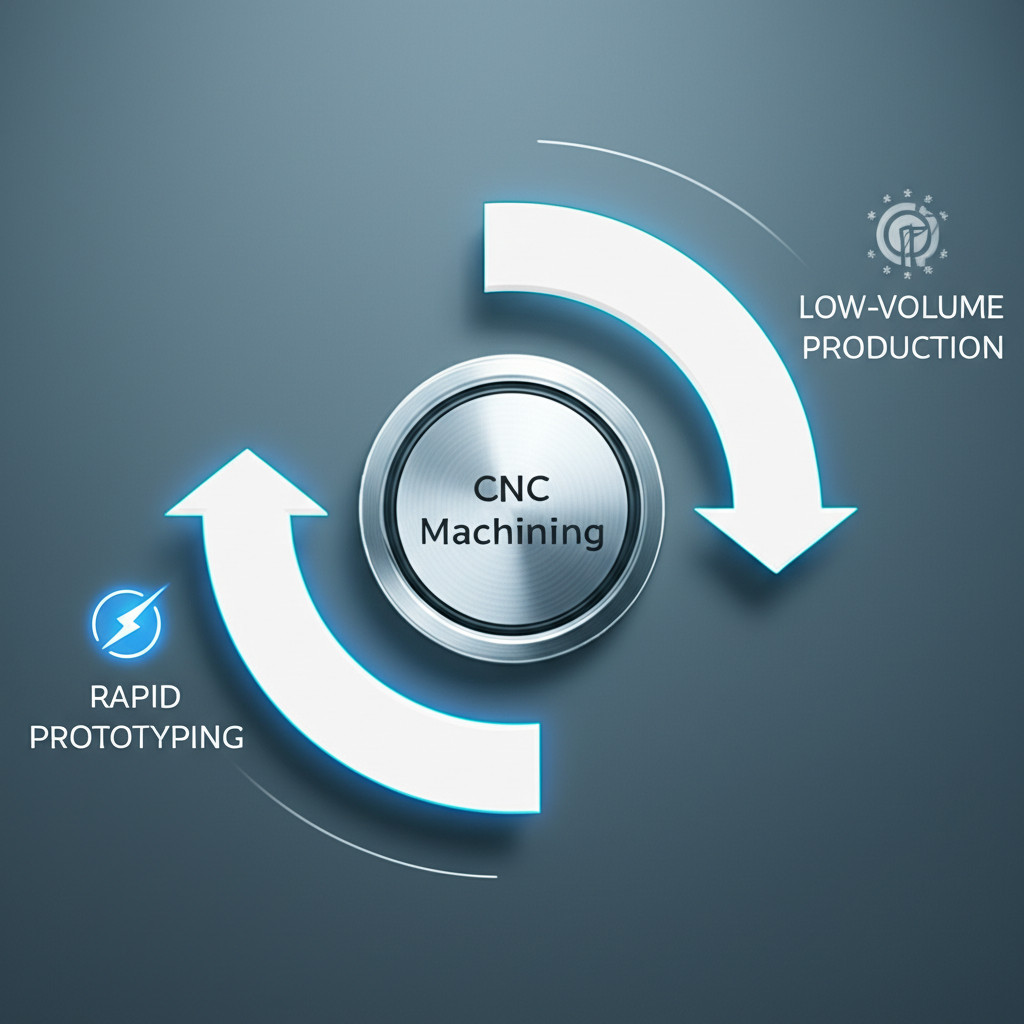
The path from a single, perfect prototype to thousands of market-ready units is not a straight line but a fundamental transformation in goals, methods, and mindset. The prototyping phase is about exploration and validation. Its primary purpose is to create a physical model to test a product's design, function, and feel. During this stage, speed and flexibility are paramount, which is why processes like CNC machining and 3D printing are ideal. They allow for rapid iterations and adjustments based on testing and user feedback without the high upfront costs of permanent tooling.
Mass production, conversely, is built on efficiency, consistency, and scale. The goal is no longer to test an idea but to replicate a finalized design as quickly and cost-effectively as possible. This phase requires robust, repeatable processes that can produce thousands or even millions of identical parts with minimal deviation. As explained in a comprehensive guide by Fictiv, this shift often means moving away from the very methods used for prototyping toward processes like injection molding, which have high initial tooling costs but a much lower per-unit cost at high volumes.
A direct one-to-one transition is rarely feasible because a design optimized for a single CNC-machined unit is often not optimized for mass production. Features that are simple to machine from a solid block of aluminum may be impossible or prohibitively expensive to mold. This disconnect is why a 'bridge' or low-volume production phase is often necessary to refine manufacturing processes before committing to full-scale production.
| Factor | Prototyping Phase | Mass Production Phase |
|---|---|---|
| Primary Goal | Design validation, functional testing, iteration | Efficiency, cost reduction, consistency at scale |
| Manufacturing Method | CNC Machining, 3D Printing (Additive) | Injection Molding, Die Casting, Stamping |
| Quantity | 1 to 100s | 10,000s to millions |
| Cost Per Unit | High | Low |
| Speed & Flexibility | High (fast iterations, easy design changes) | Low (changes are expensive and time-consuming) |
The Critical Role of CNC Machining in the Product Lifecycle
CNC machining is a cornerstone of modern product development, playing a distinct but vital role in both the prototyping and production stages. Its versatility and precision make it uniquely valuable across the entire lifecycle, though its application shifts as a product matures. Understanding where and why to use CNC machining is key to a successful development strategy.
For Prototyping: Speed and Precision
In the prototyping phase, CNC machining is invaluable. It is a subtractive process that carves a design from a solid block of material, offering exceptional precision and the ability to use production-grade materials like aluminum, steel, and various plastics. This allows engineers to create high-fidelity prototypes that accurately represent the final product's look, feel, and mechanical properties. According to experts at Process Evolution, this precision is crucial for validating designs and catching flaws early. Unlike 3D printing, CNC machining can achieve very tight tolerances, which is essential for testing parts that require a precise fit and function. The speed of CNC machining also enables rapid iterations, allowing teams to move from a CAD model to a physical part in days, not weeks.
For Production: Flexibility at Scale
When transitioning to production, the role of CNC machining evolves. While it may not be the most cost-effective method for extremely high volumes (e.g., millions of units) compared to injection molding, it is an excellent choice for several production scenarios. CNC machining is ideal for low-to-mid volume production runs, where the quantities don't justify the high cost of creating a mold. It is also the go-to process for parts requiring extreme precision and complex geometries that other methods cannot achieve. Industries like aerospace and medical devices rely heavily on CNC machining for production parts where quality and accuracy are non-negotiable. Furthermore, it offers the flexibility to make design changes without incurring massive re-tooling costs, making it suitable for products with evolving designs or custom variations.
Key Stages for a Seamless Transition
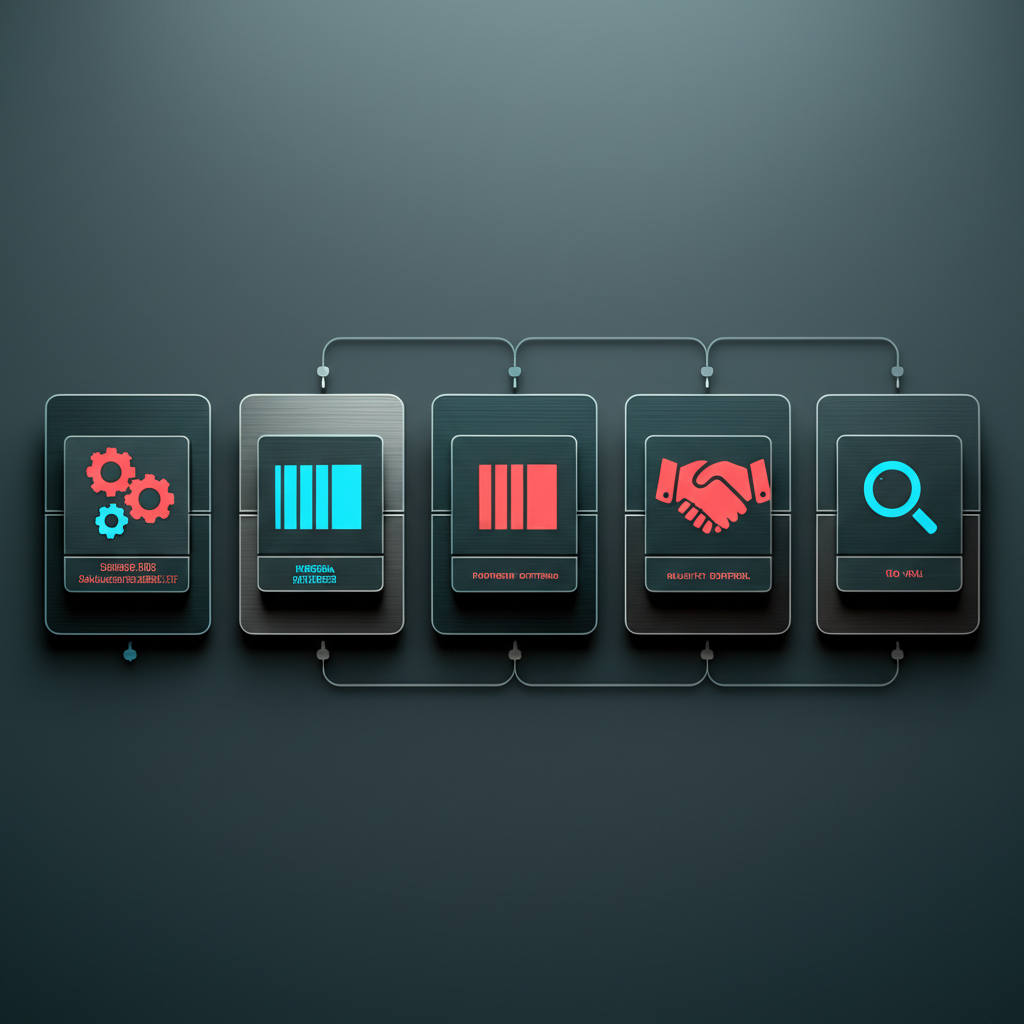
Successfully navigating the journey from a CNC prototype to mass production requires a structured, multi-stage approach. Rushing this process can lead to costly errors, delays, and quality issues. Following a clear roadmap ensures that each decision is deliberate and builds a solid foundation for scalable manufacturing.
-
Finalize Design and Conduct a DFM Review
Before any scaling can begin, the prototype design must be locked and thoroughly vetted for manufacturability. This is the core of Design for Manufacturability (DFM), a process of optimizing a design to be easier, faster, and more cost-effective to produce at scale. A DFM review involves analyzing features like wall thickness, draft angles (for molding), tolerances, and material choices to align them with the intended mass production method. For example, sharp internal corners that are easily created with a CNC end mill might need to be rounded for an injection mold to function correctly. This stage is about translating the prototype's design intent into a language that high-volume machinery understands.
-
Select and Validate Production-Grade Materials
The material used for a prototype may not be suitable or cost-effective for mass production. While you might prototype in a standard grade of aluminum, production may require a specific alloy with better corrosion resistance or a lower cost. This stage involves selecting the final material and rigorously testing it to ensure it meets all performance, durability, and regulatory requirements. Sourcing materials in bulk for mass production also introduces supply chain considerations. It's crucial to ensure a stable, reliable supply of the chosen material to avoid future production halts.
-
Vet and Select Manufacturing Partners
Choosing the right manufacturing partner is one of the most critical decisions in the entire process. A good partner does more than just make parts; they provide DFM feedback, help optimize processes, and manage quality control. When evaluating partners, look for expertise in your chosen production method, a proven track record, and robust quality certifications like ISO 9001. For a smoother transition, it's beneficial to work with a partner who can handle both prototyping and production. Companies like XTJ, for instance, offer advanced 4 and 5-axis CNC machining for both rapid prototyping and volume production, simplifying the transition by keeping the project under one roof. This eliminates communication gaps and ensures that production considerations are baked in from the very first prototype.
-
Initiate Low-Volume Initial Production (LVIP)
Before pressing the button on tens of thousands of units, it's wise to conduct a low-volume production run. This 'bridge' phase, as described in guides from Uptive, serves as a final validation of the entire manufacturing process, from tooling and assembly to quality control. This run helps identify any unforeseen bottlenecks or quality issues that only appear at scale. It allows you to fine-tune assembly lines, confirm quality benchmarks, and train staff before making the full financial commitment to mass production. The feedback gathered here is invaluable for de-risking the final launch.
-
Establish Rigorous Quality Control (QC) Systems
Maintaining quality is exponentially harder at scale. A single flaw in a prototype is a learning opportunity; the same flaw in a run of 10,000 units is a disaster. A robust QC plan must be established before mass production begins. This includes defining clear quality standards, setting up inspection points throughout the production line, and creating feedback loops to address any deviations immediately. Consistent quality is essential for brand reputation and customer satisfaction, and it must be designed into the production system, not left to chance.
Navigating Common Challenges and Pitfalls
The transition to mass production is fraught with potential challenges that can derail even the most promising products. Anticipating and mitigating these common pitfalls is essential for a smooth and cost-effective scaling process. Many issues stem from a failure to adapt the design and processes from a prototype-centric mindset to a production-centric one.
One of the most frequent challenges is dealing with unexpected cost increases. Costs that are manageable for a single prototype, such as complex machining operations or expensive materials, can become unsustainable at high volumes. This often happens when DFM is neglected early on. To mitigate this, engage with manufacturing partners early to get realistic cost estimates for production at scale and design with cost-efficiency in mind from the start. Simplifying geometry, consolidating parts, and choosing scalable materials are key strategies.
Another significant hurdle is maintaining quality and consistency across thousands of units. It's one thing to make a perfect part once; it's another to do it 10,000 times. Quality fade can occur due to tool wear, material inconsistencies, or variations in the assembly process. The solution lies in establishing robust quality control systems, as mentioned earlier. This includes automated inspections, statistical process control (SPC), and clear, documented standards for every component. A reliable manufacturing partner with strong quality assurance protocols is your best defense against this challenge.
Finally, supply chain management becomes exponentially more complex at scale. A single supplier for a prototype is easy to manage, but mass production requires a network of reliable vendors for raw materials, components, and finishing services. Any disruption—a supplier delay, a material shortage, or a logistics issue—can bring the entire production line to a halt. Building a resilient supply chain involves qualifying multiple suppliers for critical components, managing inventory effectively, and having contingency plans in place. This strategic planning prevents minor hiccups from escalating into major production crises.
Your Blueprint for Successful Scaling
The leap from a CNC prototype to mass production is more than a simple increase in quantity; it's a strategic evolution of design, process, and partnership. Success is not accidental but the result of deliberate planning and a deep understanding of the fundamental shift from validating an idea to efficiently replicating it. By embracing Design for Manufacturability early, you transform your prototype from a mere model into a true blueprint for production.
The key takeaways are clear: treat prototyping and production as interconnected phases, not separate worlds. Leverage the precision of CNC machining to create high-fidelity prototypes, but always design with the end goal of scalable manufacturing in mind. Select partners who can provide expertise across the entire product lifecycle, helping you navigate the complexities of material selection, process optimization, and quality control. By anticipating challenges like cost scaling and supply chain logistics, you can de-risk the transition and set your product up for market success.
Frequently Asked Questions
1. How do you transition from prototype to production?
The transition involves several key steps: finalizing the design based on prototype testing, performing a Design for Manufacturability (DFM) review, selecting and sourcing production-grade materials, choosing a manufacturing partner, conducting a low-volume initial production run to validate processes, and establishing a rigorous quality control system for scale.
2. Is CNC machining good for mass production?
CNC machining is excellent for low-to-mid volume mass production and for parts that require very high precision and complex geometries. While processes like injection molding are often more cost-effective for very high volumes (hundreds of thousands of units), CNC machining offers flexibility, high accuracy, and avoids the high upfront tooling costs of molding, making it a valuable production method in many scenarios.
3. What are the main challenges when moving from prototype to mass production?
The main challenges include scaling the design without compromising quality, managing significant cost increases, ensuring consistency across all units, and developing a reliable supply chain. Designs that work for a one-off prototype may be too complex or expensive for mass production, and maintaining quality requires robust control systems that weren't necessary for a single unit.
4. How long does it take to go from prototype to production?
The timeline varies greatly depending on the product's complexity, the industry, and the manufacturing processes involved. After a prototype is finalized, the transition to mass production—including tooling, process validation, and supply chain setup—can take anywhere from a few months to over a year. A reasonably complex product might take 12-18 months to move from a near-final prototype to a mass-produced state.
-
Posted in
cnc machining, manufacturing, mass production, product development, prototyping