Essential Custom Plastic Machining Services for Industry
TL;DR
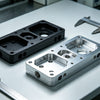
Custom plastic machining services use advanced Computer Numerical Control (CNC) technology to precisely manufacture custom parts from a wide range of polymers. Key processes include CNC milling, turning, and routing, which transform blocks or rods of materials like Acetal, PEEK, and Polycarbonate into high-tolerance components. These services are essential for industries such as aerospace, medical, and automotive that require durable, lightweight, and corrosion-resistant parts tailored to exact specifications.
Understanding Custom Plastic Machining Capabilities
At the core of custom plastic machining are several precision manufacturing processes designed to shape raw plastic stock into finished components with exceptional accuracy. Unlike metal machining, working with plastics requires specialized knowledge of material properties, such as thermal expansion and cutting tool geometry, to prevent melting, cracking, or dimensional instability. Leading service providers leverage state-of-the-art equipment to deliver parts that meet the most stringent engineering requirements.
The primary capabilities offered by custom plastic machining shops are rooted in CNC technology. This automated process translates digital designs (CAD files) into machine instructions, ensuring perfect repeatability and adherence to tight tolerances. Some parts can be machined to tolerances as close as +/-.003 inches, a critical factor for complex assemblies. Quality control is paramount, with rigorous inspection protocols often in place to verify every dimension and feature of the finished part.
Key services include:
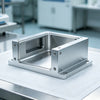
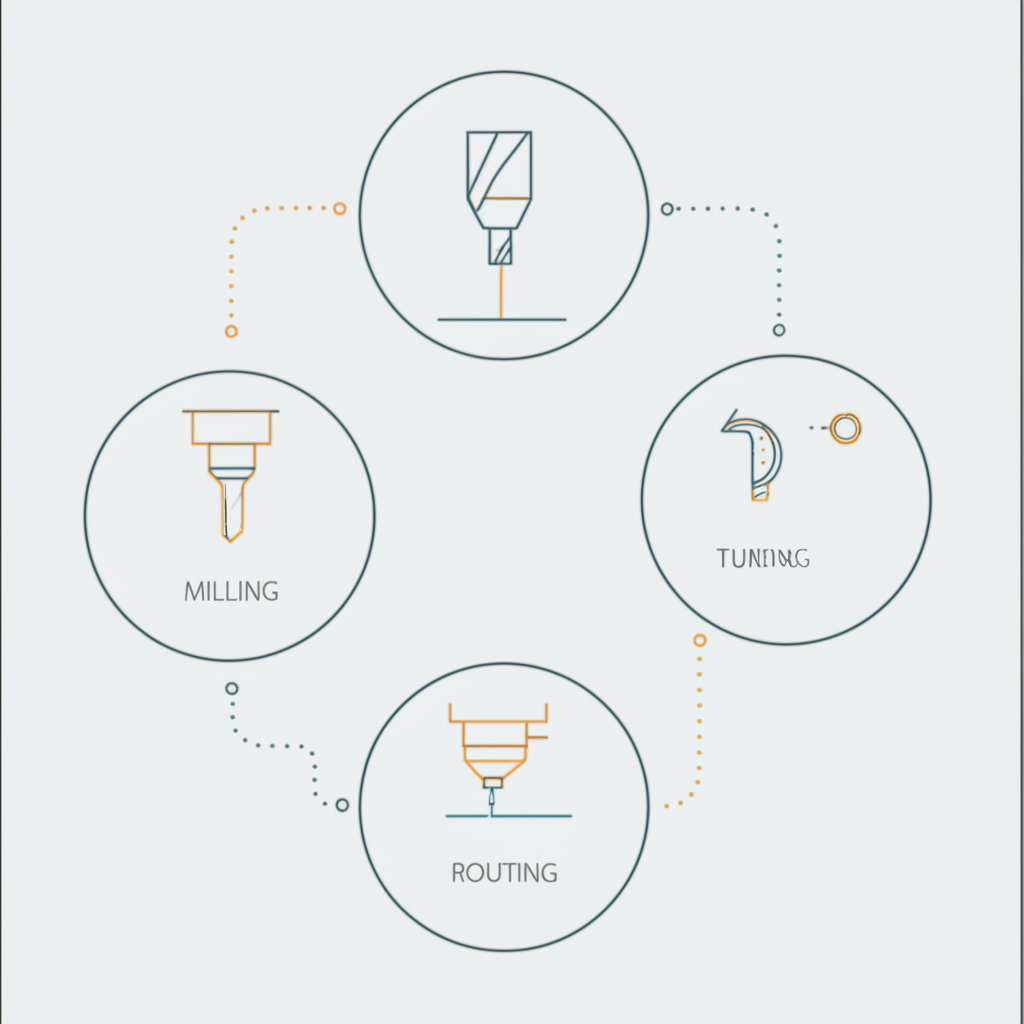
- CNC Milling: This process uses rotating multi-point cutting tools to remove material from a stationary workpiece. It is ideal for creating complex shapes, slots, holes, and flat surfaces on plastic blocks or sheets.
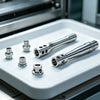
- CNC Turning: In turning, the plastic workpiece rotates while a single-point cutting tool moves along its surface. This method is used to create cylindrical parts, including shafts, bushings, and connectors, with high precision.
- CNC Routing: Similar to milling, routing is typically used for cutting large sheets of plastic. It is highly efficient for creating 2D profiles, signage, and panel components.
- Supporting Processes: Many shops also offer value-added services like laser cutting for intricate details, plastic welding for creating larger assemblies, and various polishing techniques for achieving specific surface finishes.
A Guide to Machinable Plastics and Materials
Selecting the right material is a critical step that dictates the performance, longevity, and cost of a custom part. Plastic materials offer a wide spectrum of properties, from high strength-to-weight ratios and chemical resistance to excellent electrical insulation. An experienced machining partner can provide invaluable guidance in choosing a polymer that aligns with the application's specific demands, such as operating temperature, mechanical stress, and environmental exposure.
High-performance engineering plastics are often chosen for their superior mechanical and thermal properties. For example, PEEK is renowned for its ability to withstand high temperatures and harsh chemicals, making it a staple in aerospace and medical applications. In contrast, materials like Delrin (Acetal) offer excellent machinability and low friction, ideal for creating gears, bearings, and wear pads. Understanding these nuances ensures the final component performs reliably in its intended environment.
Below is a summary of commonly machined plastics and their key characteristics:
| Material | Key Properties | Common Applications |
|---|---|---|
| ABS | Good impact strength, stiffness, and dimensional stability. | Housings, prototypes, consumer electronics. |
| Acetal (Delrin®) | High strength, low friction, excellent wear resistance. | Gears, bushings, rollers, seals. |
| Nylon | Great toughness, wear resistance, and chemical resistance. | Bearings, wear pads, structural components. |
| PEEK | Exceptional thermal stability, chemical resistance, and strength. | Medical implants, aerospace components, high-temp seals. |
| Polycarbonate (PC) | High impact strength, optical clarity, and rigidity. | Machine guards, displays, medical devices. |
| UHMW PE | Extremely high abrasion resistance and low coefficient of friction. | Chain guides, star wheels, conveyor components. |
| PTFE (Teflon®) | Excellent chemical resistance and a very low coefficient of friction. | Seals, valve seats, non-stick surfaces. |
Industries We Serve and Common Applications
Custom plastic machining services are indispensable across a multitude of high-tech industries where precision, reliability, and material performance are non-negotiable. The versatility of machined plastics allows engineers to solve complex challenges that metals cannot, such as the need for lightweight, non-corrosive, or electrically insulating components. From life-saving medical devices to critical aerospace parts, custom-machined plastics are integral to modern technology.
In the medical and healthcare sector, biocompatible materials like PEEK and Ultem are machined into surgical instruments, trial implants, and components for diagnostic equipment. The ability to produce sterile, durable, and precisely dimensioned parts is crucial for patient safety and device efficacy. Similarly, the aerospace industry relies on lightweight, high-strength plastics to reduce fuel consumption and withstand extreme conditions in aircraft and spacecraft components.
The automotive and electronics industries are also major consumers of machined plastic parts. In automotive applications, materials like Nylon and Delrin are used for under-the-hood components, fuel system parts, and interior mechanisms due to their durability and resistance to chemicals and wear. For electronics and semiconductor manufacturing, plastics provide essential electrical insulation and can be machined into intricate connectors, sockets, and handling trays for sensitive components.
Our Process: From Your Design to a Finished Part
A transparent and collaborative manufacturing process is key to successfully transforming a digital design into a high-quality physical part. The journey begins long before a machine starts cutting, with a focus on clear communication and engineering validation to ensure the final product meets all functional and quality requirements. This structured approach minimizes errors, manages expectations, and guarantees timely delivery.
The typical workflow for a custom plastic machining project follows a series of well-defined steps designed for efficiency and precision. This ensures that every aspect of the project, from material choice to final inspection, is carefully managed. According to industry experts like Accurate Products, a streamlined process is fundamental to delivering consistent results.
The customer journey generally includes the following stages:
- Consultation and Design Submission: The process starts when you submit your CAD files (e.g., STEP, IGES) and project specifications for a quote. This initial stage includes a review of the design for manufacturability.
- Material Selection and Engineering Review: Experts evaluate your design and application requirements to recommend the optimal plastic material, balancing performance needs with budget considerations.
- Prototyping (Optional): For complex parts or new designs, creating a prototype allows for functional testing and design validation before committing to a full production run.
- Precision Machining: Once the design is approved, skilled technicians program the CNC machines to produce the parts according to the exact specifications and tolerances.
- Quality Assurance and Inspection: Throughout and after production, parts undergo rigorous inspection using certified measurement tools to ensure every dimension meets the required standard.
- Finishing and Delivery: Parts may undergo secondary operations like polishing or assembly before being securely packaged and shipped to the customer on schedule.
Why Choose a Premier Partner for Your Plastic Machining Needs?
Selecting the right manufacturing partner is as critical as the design itself. A premier custom plastic machining service provides more than just parts; they offer expertise, reliability, and a commitment to quality that can significantly impact your project's success. The key differentiators lie in their technological capabilities, quality systems, and ability to deliver consistently on tight deadlines. These factors ensure that your components are not only made to spec but also contribute to the overall performance and reliability of your final product.
Look for a partner with a proven track record across diverse industries and a deep understanding of materials science. Top-tier providers invest in advanced equipment, such as multi-axis CNC machines, which enable the creation of highly complex geometries in a single setup, improving accuracy and reducing costs. Furthermore, robust quality management systems are essential for ensuring that every part is traceable and meets exacting standards.
For instance, providers like XTJ exemplify these qualities by offering rapid production with lead times as short as three days. Their use of advanced 4 and 5-axis CNC centers allows them to handle over 30 different materials and achieve extremely tight tolerances down to +/- 0.005mm. With an ISO 9001 certification, they provide a level of quality assurance crucial for demanding sectors like aerospace and medical, ensuring that every component meets the highest industry benchmarks.

Frequently Asked Questions About Plastic Machining
1. What are the typical tolerances that can be achieved with plastic machining?
While tolerances depend on the material, part geometry, and machining process, it is common for experienced shops to hold dimensions within +/-.005 inches. For processes like CNC turning on stable materials, tolerances can be even tighter, sometimes reaching +/-.003 inches or better. Always discuss your critical tolerance requirements with your machining partner during the quoting phase.
2. Which plastic material is best for high-wear applications?
For applications involving friction and wear, materials with a low coefficient of friction and high abrasion resistance are ideal. UHMW (Ultra-High Molecular Weight Polyethylene) is a top choice for components like chain guides and wear strips due to its exceptional durability. Acetal (Delrin®) and Nylon are also excellent options for bearings, gears, and rollers.
3. What file formats are required to get a quote for a custom part?
Most CNC machining providers prefer 3D CAD files in universal formats such as STEP (.stp or .step) or IGES (.igs or .iges). These file types contain the complete geometric data needed for programming the CNC machines. Providing a 2D drawing (in PDF format) with tolerances, material specifications, and other critical information is also highly recommended to ensure an accurate quote and final part.
-
Posted in
CNC milling, CNC plastic services, custom plastic machining, plastic fabrication, precision machining