CNC Machined Aluminum Motor Housings for Electric Vehicles: Balancing Precision, Thermal Performance, and Cost
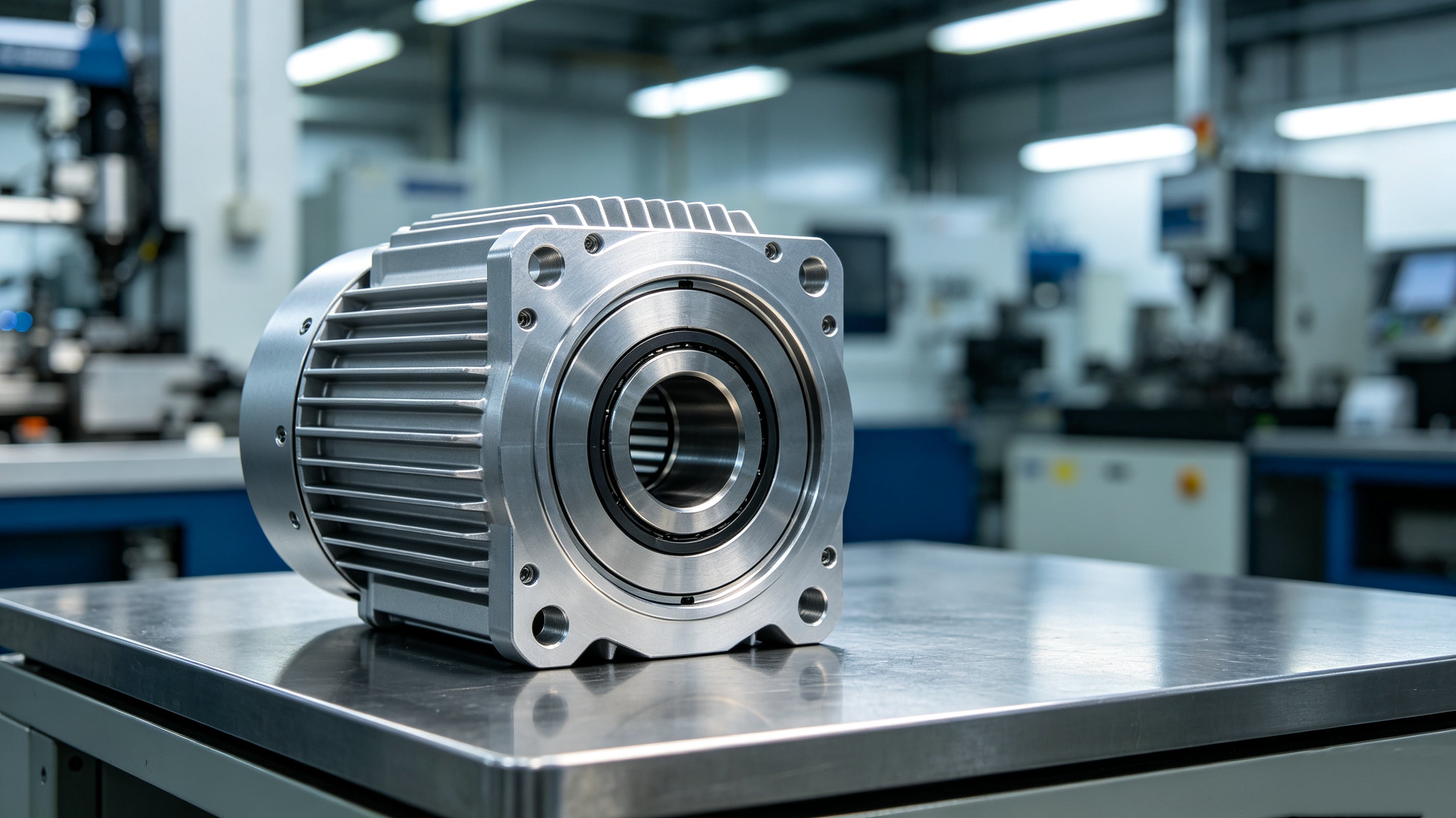
In modern electric vehicle manufacturing, the aluminum motor housing is no longer just a basic protective shell. It serves as a core structural and thermal management component that directly impacts motor stability, energy efficiency, and overall vehicle durability. Minor dimensional inaccuracies, poor concentricity, or inconsistent surface quality can lead to increased motor vibration, abnormal noise, reduced cooling efficiency, and shortened bearing service life. For EV engineers and procurement teams, consistent precision, reliable heat dissipation performance, and cost-controlled production are the top priorities when sourcing custom CNC motor housing components.

Best Aluminum Alloy Choices for EV Motor Housing Machining
Aluminum alloys dominate electric motor enclosure manufacturing due to their lightweight properties, excellent thermal conductivity, and stable machinability. In automotive and new energy industries, 6061 and 6082 aluminum are the most widely adopted grades for prototype and small-to-medium batch production.
6061 aluminum provides outstanding corrosion resistance, uniform material stability, and easy processing performance, making it ideal for EV motor housing prototyping, trial verification, and general commercial batches. For projects requiring higher structural strength and rigidity, 6082 aluminum delivers enhanced mechanical performance while retaining excellent heat dissipation capabilities. Both alloy grades support post-processing treatments such as anodizing, sandblasting, and powder coating, helping manufacturers achieve durable surface protection and standardized appearance quality.

Key Precision Machining Challenges for Custom EV Motor Housings
Electric motor housings feature complex structures, including thin-wall sections, deep cavities, precision bearing holes, and dense cooling fin structures. These characteristics bring significant CNC machining difficulties that ordinary processing solutions cannot fully meet.
Thin-wall aluminum structures are prone to clamping deformation and cutting distortion, which affects assembly accuracy and flatness. The bearing mounting bores usually require strict H7 tolerance and high coaxiality to ensure stable rotor and stator operation, minimizing motor noise and mechanical loss. Additionally, uniform cooling fin dimensions and smooth inner surface finish are critical to maintaining efficient thermal circulation and long-term motor operation reliability. Professional fixture design, optimized cutting sequences, and complete post-process inspection are essential to eliminate dimensional deviations.

Mid-Range Cost-Effective CNC Machining for Prototypes & Small Batches
Most EV startup companies and component suppliers face a common dilemma: high-end automotive manufacturers charge premium prices for motor housing production, while low-cost factories cannot guarantee stable precision and batch consistency. As a mid-range precision CNC machining supplier, we focus on balanced quality, flexibility, and competitive pricing for custom automotive CNC parts.
We specialize in rapid motor housing prototyping and low-to-medium volume production. By optimizing tool paths, controlling clamping stress, and implementing full-dimensional inspection, we effectively reduce thin-wall deformation and maintain tight tolerance stability. Our flexible production mode supports frequent design iterations, small-batch trial orders, and multi-variant customized projects, avoiding the high costs of mass-production-oriented manufacturers.

Get Professional DFM Review for Your Custom Motor Housing Projects
Early manufacturability analysis is the most efficient way to reduce production costs and avoid design defects. If you are developing new EV aluminum motor housings or upgrading existing electric motor enclosure designs, submitting your CAD drawings for a professional DFM review helps identify potential machining risks, optimize structural design, and shorten lead times.
We provide accurate dimension evaluation, deformation control suggestions, and cost optimization solutions for precision automotive CNC parts, supporting reliable prototype verification and stable batch production for global EV industrial clients.