CNC Titanium Parts for Minimally Invasive Surgical Instruments
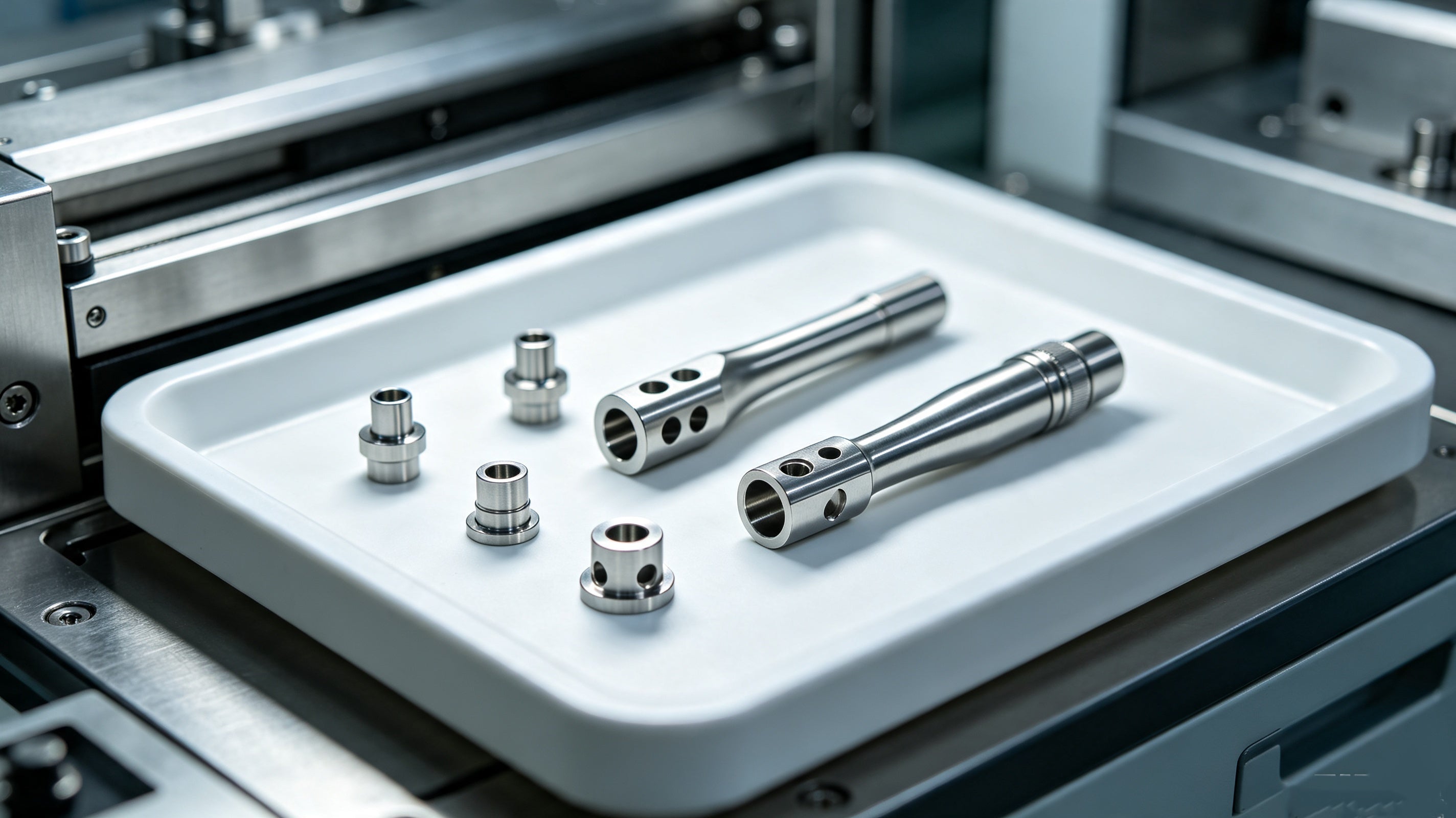
Small internal fittings in minimally invasive surgical tools cannot tolerate even tiny machining deviations. Thin-walled structures deform easily during prototype testing, micro-hole positions drift, and mating surfaces often fail to meet drawing tolerances. Repeated prototype revisions greatly raise R&D costs for medical device brands.
Our medical-grade titanium CNC machining solves these pain points via rigid fixture design, stable cutting parameters and full dimensional inspection. We support medical R&D teams manufacturing minimally invasive surgical components, delivering consistent precision across prototyping and small-batch mass runs.
Unique Machining Difficulties of Surgical Titanium Components
Titanium metal has poor thermal conductivity, trapping cutting heat on tool and workpiece surfaces. Ultra-thin medical part walls lack structural rigidity and warp under cutting pressure. Standard small-diameter tools cannot eliminate deformation risks alone; customized auxiliary support and low-stress cutting routines are mandatory.
Micro-channels and tiny through-holes are core functional structures for fluid delivery and wiring inside surgical tools. Minor tool runout or poor chip removal leads to hole offset, which directly affects equipment assembly performance. Every hole position and inner diameter must be strictly controlled during precision medical CNC machining.
Post-machining surface finish is non-negotiable for medical applications. All finished titanium parts need to adapt to industrial cleaning, passivation, coating and high-temperature sterilization. We align surface processing standards with client drawing requirements before starting production.

Why 5-Axis CNC Dominates Surgical Fitting Manufacturing
Most surgical titanium parts feature inclined planes, crossed micro-holes and complex curved contours, which are hard to fully process with basic 3-axis equipment. Repeated workpiece re-clamping creates positioning errors and breaks the unified datum reference.
5-axis CNC equipment completes multi-sided machining in one single setup. For custom titanium surgical shafts and miniature instrument connectors, it guarantees accurate positional tolerance between holes, grooves and outer profiles while reducing manual handling steps.
This unified datum processing system cuts prototype iteration cycles significantly. Engineers receive more stable inspection data and verify surgical part performance faster.

Medical-Grade Ti-6Al-4V Material Standards
Ti-6Al-4V titanium alloy remains the top material choice for invasive surgical hardware, balancing high tensile strength and outstanding corrosion resistance inside human body environments.
Complete material traceability runs through our entire production workflow, from raw material incoming inspection to finished part delivery. We supply full material certification to match ISO medical manufacturing standards for procurement and quality audit demands. Clients need to clarify alloy grades and certification rules before placing orders.

Conclusion
Custom CNC titanium components perfectly match the prototype and small-batch production demands of minimally invasive surgical tools. Integrated 5-axis processing, titanium-specific low-stress cutting and full inspection records reduce geometric defects during R&D testing, helping medical manufacturers push validated surgical designs to market faster.
FAQ
- Can you fabricate miniature titanium surgical accessories?
Absolutely. We manufacture micro surgical fittings strictly following clients’ 2D engineering drawings or 3D CAD files, with pre-production reviews on all critical tolerance features.
- Do you offer customized titanium surgical shaft machining?
Yes. We tailor shaft outer diameters, internal micro structures and end face shapes fully based on your technical specifications and tolerance limits.
- What documents are required to get an accurate quotation?
Submit your 3D CAD file, 2D dimension drawing, material grade, order volume, critical tolerance standards and surface finishing requirements.