CNC Machined Aluminum EV Motor Housing: Precision Solutions for Lightweight Hollow Drive System Components
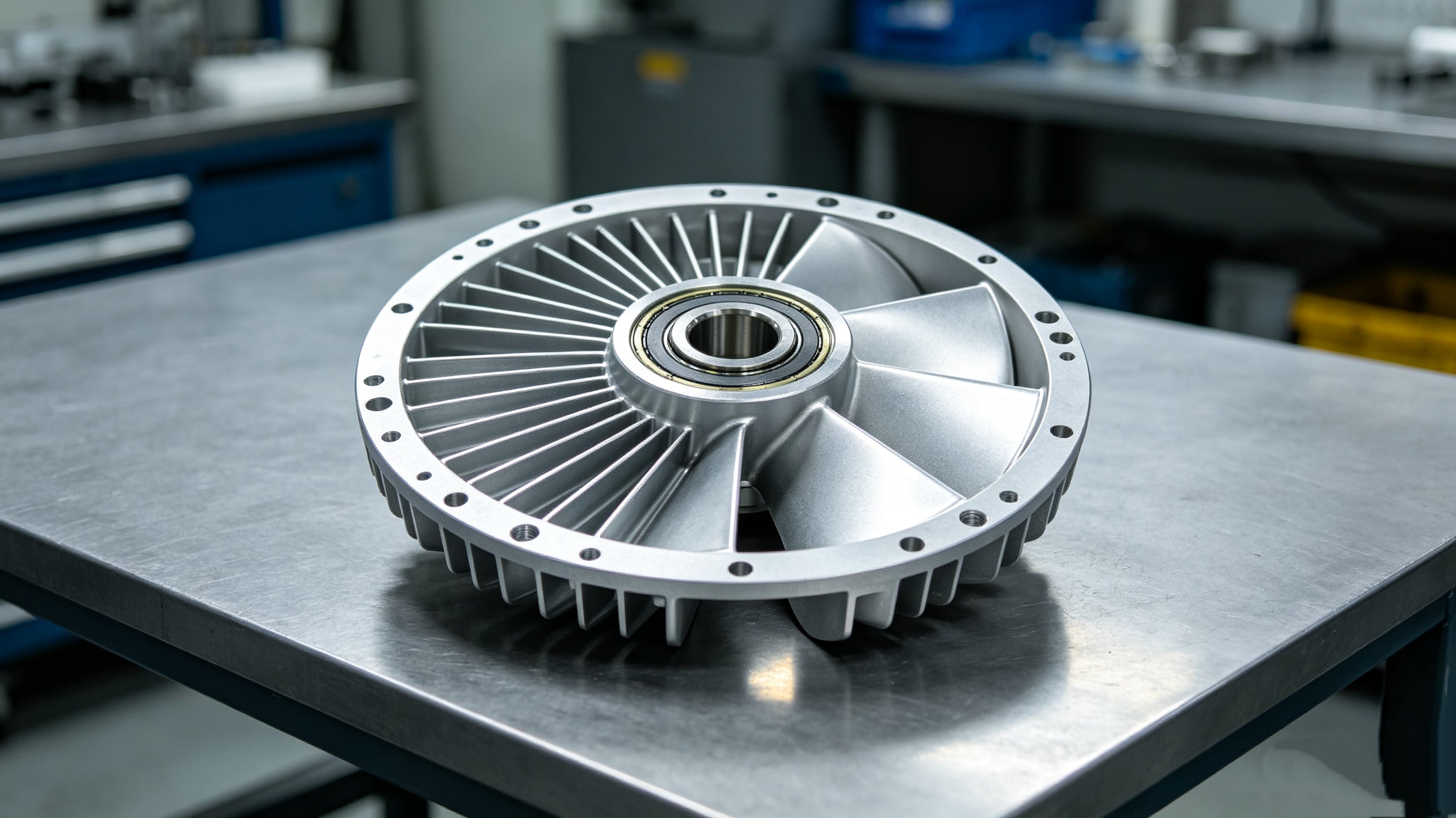
The hollow fan-style aluminum motor housing has become an indispensable core part of modern electric vehicle drive assemblies, far more functional than basic protective casings. As a CNC machined aluminum EV motor housing, it needs to deliver three core performance simultaneously: drastic weight reduction, efficient thermal dissipation via hollow rib structures, and strict concentricity to secure stators, rotors and bearings. Its irregular hollow layout brings unique manufacturing hurdles that standard closed motor shells do not have.
EV procurement specialists and design engineers frequently run into recurring sourcing headaches after ordering custom electric motor enclosures. Thin rib sections easily deform under cutting and clamping force; central bearing holes lose coaxiality and fail tolerance standards; dimensional consistency varies wildly across separate batches; and prototype manufacturing costs from high-tier manufacturers blow out R&D budgets. A reliable custom aluminum motor housing supplier must resolve these machining pain points while keeping overall component costs under control.

6061 & 6082 Aluminum Alloys: Top Material Picks for Light EV Motor Housings
6061 and 6082 aluminum remain dominant for 6061 aluminum automotive CNC parts in new energy vehicle projects, striking a perfect balance between mechanical rigidity, low density and stable machinability.
The open hollow fan frame featured on our motor housing fully leverages aluminum’s outstanding heat transfer capability. Thin structural ribs disperse operational heat from the motor core evenly, while cut-out hollow sections cut down overall vehicle curb weight to boost driving range.
Both aluminum grades support precise high-speed milling without unpredictable material shrinkage. They are also fully compatible with post-processing options including hard anodizing, matte sandblasting and passivation, adding anti-corrosion protection and uniform cosmetic finish for finished drive assemblies. When conducting EV motor housing prototyping, engineers can test structural strength and heat performance on either alloy before scaling up to mass production.

Unique Machining Barriers for Hollow Thin-Wall EV Motor Housings
Regular round symmetrical motor casings have uniform wall thickness and simple internal cavities, but this fan-shaped housing integrates ultra-thin hollow ribs, scattered peripheral mounting holes, and a central bearing seat demanding strict H7 dimensional tolerance. Each structural feature raises distinct processing risks.
Thin hollow ribs are extremely vulnerable to bending distortion. Over-tight clamping fixtures create permanent part warping, while overly aggressive cutting feeds lead to uneven wall thickness, rough surface texture and burr residues. The central precision bore adds another non-negotiable standard: tiny coaxiality errors trigger extra motor vibration, abnormal operating noise and shortened bearing service life after assembly.
All distributed mounting holes must maintain precise positional tolerance for seamless component fitting. To overcome these obstacles, we deploy custom-made dedicated fixtures, rearranged step-by-step cutting sequences, calibrated cutting parameters and stress-relief intermediate operations. This mature process system delivers stable thin wall precision machining, consistent surface finish and accurate hole positioning for irregular hollow motor housings.

Budget-Friendly CNC Machining for EV Motor Housing Prototypes & Mid-Volume Runs
EV startups and tier-two automotive component manufacturers face a tough market trade-off. Large OEM-focused manufacturers impose costly custom tooling charges and rigid high MOQ limits, while cheap low-end workshops cannot guarantee stable batch dimensional accuracy, resulting in high scrap rates and hidden rework costs.
Our production model caters to buyers chasing consistent precision without the premium price tag of top-tier automotive factories. We offer ultra-fast prototype turnaround and flexible small-to-medium batch production with adjustable minimum orders, supporting frequent design iterations for evolving EV drive projects.
Every finished CNC machined aluminum EV motor housing goes through full 3D CMM dimensional inspection before delivery to eliminate tolerance deviations. Our complimentary DFM drawing assessment detects structural machining risks at the design stage, speeding up drawing revisions and cutting unnecessary production expenditures throughout the product development cycle.
Get Your Complimentary DFM Design Evaluation
Whether you are developing a brand-new custom electric motor enclosure or optimizing existing EV motor housing prototyping designs, submit your CAD files to receive a free professional DFM analysis. Early reviews cover thin-wall deformation risks, bearing bore tolerance planning and optimized machining workflows, removing unseen production defects, compressing product launch timelines and slashing total manufacturing costs before formal production starts.