Custom CNC Housings for Patient Monitoring Sensors
Patient‑monitoring devices demand more than simple mechanical packaging. Sensor housings must shield sensitive internal electronics, withstand repeated sterilization, hold strict assembly tolerances, and deliver stable material performance over long‑term clinical use.
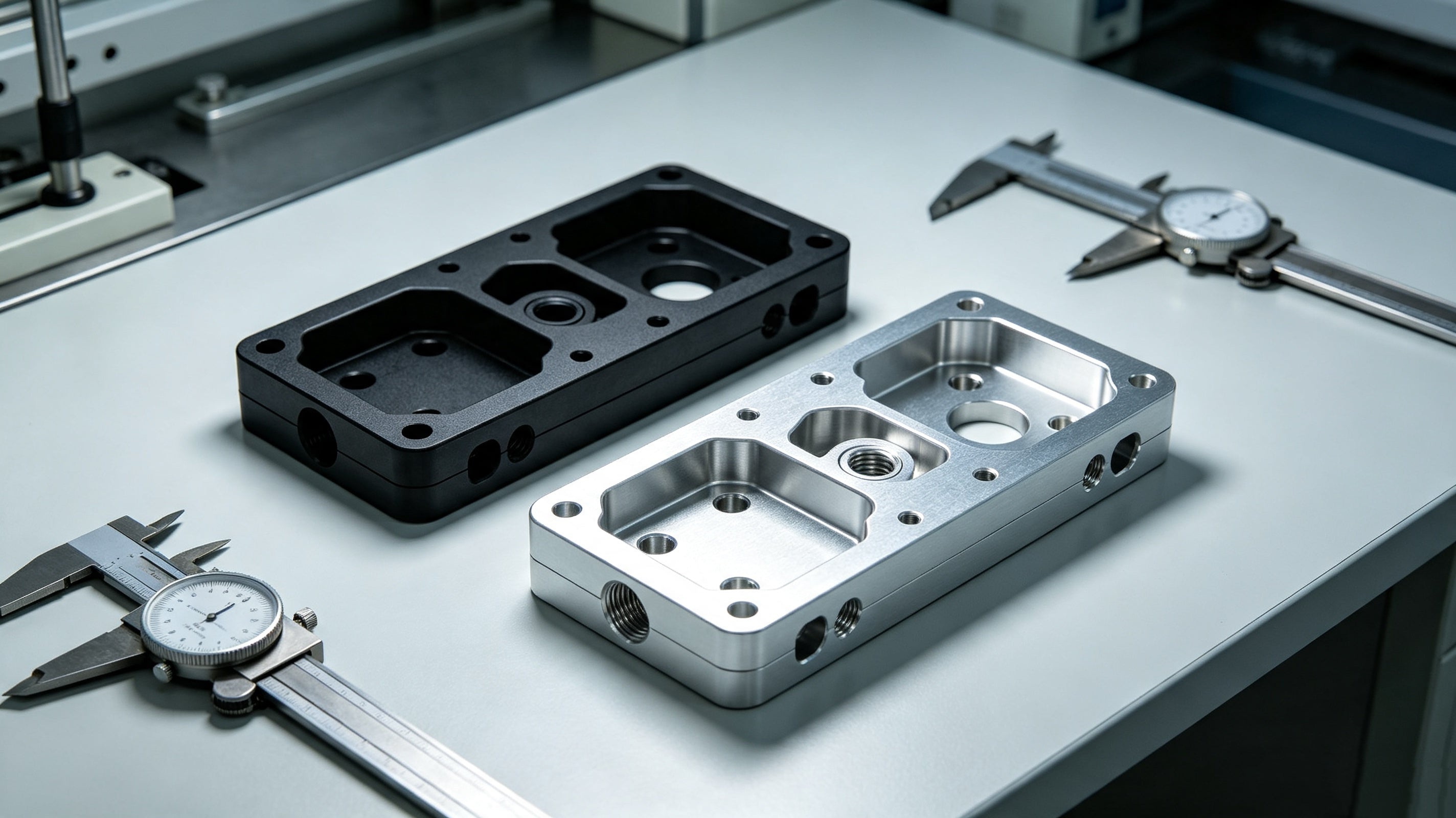
For medical device startups and design engineers, developing a dependable medical CNC sensor housing comes with distinct manufacturing risks. Components that perform well in prototype testing often run into dimensional drift, material‑related flaws, and traceability gaps when scaled to small‑batch production. Whether manufactured from PEEK or 6061‑T6 aluminum, custom medical device enclosures need stable CNC workflows to guarantee proper fit, clean surfaces, and consistent batch‑to‑batch quality.

1. Real‑World Manufacturing Challenges for Medical Sensor Housings
Medical sensor housings incorporate precision mounting bosses, connector cutouts and intricate internal structures that directly determine sensor measurement reliability. Even minor dimensional deviations can trigger assembly gaps, uneven sealing pressure or sensor misalignment that compromises device functionality.
PEEK Stress Cracking in Precision Machining
PEEK is widely adopted in medical hardware for its outstanding chemical resistance and mechanical stability. Nevertheless, it is highly sensitive to cutting heat, aggressive feeds and improper tooling, which can build up residual internal stress.
When producing PEEK medical CNC parts, sharp cutting tools and fine‑tuned machining parameters are critical to minimise micro‑cracks around thin‑wall sections, threaded holes and mounting interfaces.
Unlike metal materials, PEEK continues releasing residual stress post‑machining. Strict process control is necessary to preserve critical dimensions across prototype revisions and small‑batch orders.
Aluminum Surface Performance Under Repeated Disinfection
6061‑T6 aluminum delivers excellent strength‑to‑weight ratio for portable monitoring housings. Raw machined surfaces however are not suitable for regular medical disinfection cycles.
Poor surface finish leaves micro‑crevices difficult to sanitise and weakens coating adhesion. CNC machining paired with medical‑grade post‑processing yields uniform surfaces compatible with cleaning and disinfection protocols.
Dimensional Stability of Internal Mounting Bosses
Internal bosses secure circuit boards, sensor modules and battery packs within the housing. Minor positional offset will disrupt electronic connections and assembly compatibility.
Clamping pressure, machining sequence and inherent material properties all influence boss positional accuracy. Thoughtful process planning is essential to sustain repeatable assembly performance through production runs.
2. PEEK vs 6061‑T6 Aluminum for Medical Sensor Enclosures
Material selection directly impacts housing performance, machining complexity and regulatory compliance documentation.
- PEEK: Great chemical resistance, electrical insulation and low weight. Best for projects requiring non‑metallic characteristics and high sterilization resistance; needs stress‑optimized CNC parameters.
- 6061‑T6 Aluminum: High structural rigidity plus effective thermal dissipation. Preferred for portable monitoring hardware; requires dedicated medical‑grade surface finishing.
| Material | Advantages | Manufacturing Considerations |
|---|---|---|
| PEEK | Chemical resistance, electrical insulation, lightweight | Stress control, specialized machining workflows |
| 6061‑T6 Aluminum | High strength‑to‑weight, excellent machinability | Mandatory medical‑grade surface finishing |
Medical OEMs require full material traceability. ISO 13485 CNC machining suppliers must provide material certificates, production logs and traceability records to support customers’ quality management systems.

3. Multi‑Axis CNC Solutions to Overcome Medical Housing Manufacturing Defects
Multi‑axis CNC machining reduces frequent part re‑fixturing, which is a primary source of cumulative positioning error for complex medical housings.
For PEEK housings, optimised multi‑axis tool paths reduce local tool pressure, protecting thin‑wall geometry and threaded features from stress‑induced damage.
For aluminum housings, fewer setups complete mounting holes, connector ports and inner cavities in one workflow, lowering fixture‑caused tolerance drift.
Precision Fixturing & Process Control
Excessive clamping force will deform PEEK polymer parts, while unstable positioning creates offset errors for aluminum components. Application‑specific custom fixtures apply controlled clamping pressure, maintaining consistent positioning from prototype validation through low‑volume production.
Medical‑Grade Post‑Machining Surface Treatment
Finishing operations are tailored to end‑use clinical requirements. Aluminum components may receive medical‑compliant anodizing to boost corrosion resistance. PEEK parts undergo thorough cleaning and inspection to remove machining residues without damaging delicate features.
Combining multi‑axis CNC with validated finishing workflows delivers robust medical CNC sensor housing solutions for patient‑monitoring equipment.
Conclusion: From Prototype to Low‑Volume Medical CNC Production
Patient‑monitoring housings must satisfy both mechanical design targets and strict medical manufacturing compliance rules.
Custom PEEK and aluminum CNC services empower medical teams to iterate sensor packaging, electronics integration and mechanical design efficiently.
A qualified ISO 13485 CNC machining partner supports prototype development, engineering validation and low‑volume manufacturing, with complete material traceability and strict dimensional inspection. For medical startups and device engineers, custom CNC machining turns CAD concepts into fully manufacturable medical hardware.
FAQ
1. Why choose PEEK for medical sensor housing production?
PEEK delivers strong chemical resistance and electrical insulation, performing reliably under common medical disinfection and sterilization conditions. Carefully tuned machining parameters are required to prevent residual‑stress cracking.
2. What tolerances can be achieved for CNC medical device enclosures?
Achievable tolerance depends on material, wall thickness and feature geometry. Multi‑axis CNC can hold tight dimensional accuracy for mounting interfaces and sensor‑critical alignment features.
3. How does ISO 13485 CNC machining support medical device development?
ISO 13485‑compliant CNC establishes standardized manufacturing workflows, inspection logs and full material traceability. These documentation records help medical companies manage quality risk during prototype testing and small‑batch production.