Powder Coating for CNC Aluminum Parts Handbook
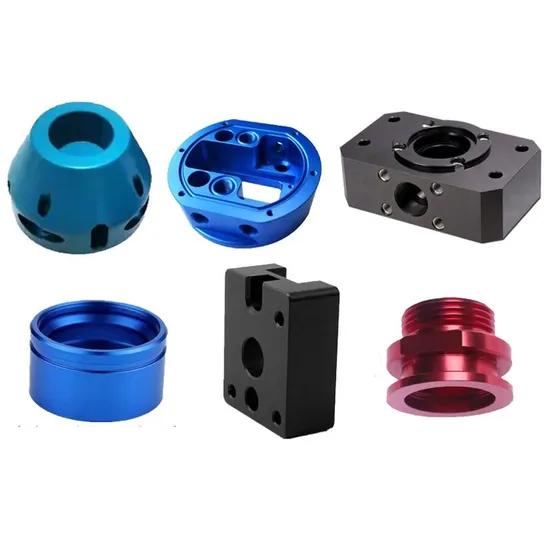
Powder coating is a widely used finishing option for CNC-machined aluminum components. It delivers robust corrosion protection, consistent custom color, and strong impact resistance. Still, engineers and sourcing teams must plan for coating thickness buildup, which alters part dimensions and creates risks for threads, tight tolerance bores, and precision mating surfaces. This handbook explains the powder coating workflow for aluminum CNC parts, compares powder coating against anodizing, reviews available color and finish choices, and shares practical design rules to avoid costly tolerance issues.
Definition
Powder coating is a dry finishing process. Fine resin and pigment powder particles are electrostatically charged and sprayed onto grounded aluminum CNC parts. The part is then cured inside an oven, melting the powder to form a continuous, tough polymer film bonded to the metal. Unlike anodizing, which transforms the aluminum substrate into an oxide layer electrochemically, powder coating adds a separate polymer layer on top of the machined surface. It is ideal for housings, brackets and enclosures where cosmetic consistency and ruggedness are prioritized.
How It Works
The standard powder coating workflow for CNC aluminum parts includes six core stages:
- Surface cleaning: Remove machining oil, coolant, grease and residual shop contaminants.
- Chemical pretreatment: Apply conversion coating to boost powder adhesion and corrosion resistance.
- Drying: Fully remove surface moisture before powder application.
- Electrostatic application: Spray charged powder onto grounded aluminum components.
- Thermal curing: Bake parts following the powder supplier’s recommended time and temperature.
- Final inspection: Verify coating thickness, color, adhesion and dimensional compliance.
Surface preparation is critical. Leftover cutting fluid or oxidation will cause pinholes, blistering, or poor coating adhesion.
Key Parameters
Typical powder coating thickness for aluminum CNC parts ranges from 60–120 μm. Heavy-duty versions can reach 100–150 μm, while decorative finishes are often 50–100 μm. This coating adds material to all outer surfaces. For an internal hole, coating applied on both walls reduces the diameter by roughly twice the single-side coating thickness. For example, an 80 μm coating will shrink a hole diameter by ~160 μm. This dimensional shift makes powder coating risky for precision features unless masking or pre-coating dimensional compensation is used. Powder types include polyester (outdoor UV stable), epoxy (good chemical resistance, indoor use), hybrid epoxy-polyester and polyurethane grades. Each delivers different flexibility, hardness and impact performance.
Powder Coating vs Anodizing
表格
| Engineering Factor | Powder Coating | Anodizing |
|---|---|---|
| Coating Structure | External polymer film | Self-generated aluminum oxide layer |
| Typical Thickness | 60–120 μm | Type II: 5–25 μm |
| Hardness | Medium, resin-dependent | Higher, especially Type III hard anodizing |
| Impact Resistance | Good, flexible, resists chipping under minor deformation | Hard but brittle, prone to cracking under sharp impact |
| Color Options | Extensive opaque RAL colors, matte/gloss/textured | Limited color range, retains metallic aluminum look |
| Dimensional Change | Large film buildup | Minimal dimensional shift |
| Precision Feature Suitability | Requires masking for tight tolerance features | Naturally friendly for precision fits, bores and threads |
| Electrical Property | Insulating | Insulating |
Choose powder coating when you need custom opaque colors, impact protection and outdoor cosmetic durability. Choose anodizing for precision assemblies, sliding wear surfaces, bearing seats and features that cannot tolerate coating thickness gain.
Pros & Cons
✅ Pros
- Broad RAL color, gloss and texture options for branding and aesthetics
- Excellent impact and chip resistance compared to hard anodizing
- Strong corrosion protection with proper pretreatment
- Low solvent emissions; overspray powder can be recycled
- Consistent finish over large exterior surfaces
❌ Cons
- Significant thickness buildup disturbs tight tolerances, threads and fits
- Faraday cage effect causes uneven coverage in deep slots and hidden cavities
- Sharp edges suffer thin coating and early failure risk
- Masking for dozens of precision features raises manufacturing cost and lead time
- Not suitable for surfaces requiring electrical conductivity
Typical Applications
Powder coated CNC aluminum parts are commonly used for industrial equipment enclosures, automation protective brackets, electronic housings, non-critical automotive covers, machinery panels and outdoor structural components. It is not recommended for precision bearing seats, press-fit bores or sliding friction surfaces unless critical zones are fully masked.
Design & Machining Tips
- Account for coating thickness in your pre-coating CNC dimensions; compensate hole and feature sizes upfront
- Clearly mark all masking zones on your drawing: threads, precision bores, sealing faces and grounding points
- Break sharp edges with small radii to improve coating uniformity and reduce edge failure
- Avoid deep, narrow recesses where powder cannot deposit evenly
- Define color by RAL code, gloss level and require physical sample approval before mass production
- Confirm the powder resin grade matches your working environment (polyester for outdoor UV exposure)
We are a CNC machining factory based in China. We support aluminum CNC parts with powder coating and anodizing, and can review your drawings for coating tolerance compensation.
FAQ
- Does powder coating change CNC part tolerances? Yes. Powder coating adds material thickness. A standard 60–120 μm coating reduces hole diameters and increases outer dimensions. Precision threads, bores and mating surfaces need masking or dimensional compensation.
- Can threaded holes be powder coated? Powder will coat threads if unmasked, which ruins thread fit. Use masking plugs to protect internal and external threads when thread tolerance must be preserved.
- Which is better for outdoor aluminum CNC parts, powder coating or anodizing? UV-stable polyester powder coating offers richer color and better impact resistance outdoors. Anodizing delivers thinner protection and metallic appearance, with less dimensional impact.