What Is CNC Turning and How Does It Work?
Introduction
CNC turning is a widely used manufacturing process for producing accurate cylindrical components from metal and plastic materials. It is commonly used in automotive, aerospace, medical equipment, electronics, and industrial machinery manufacturing.
But what is CNC turning, and how does it differ from other CNC machining processes?
CNC turning uses computer-controlled equipment to rotate a workpiece while a cutting tool removes material to create the required shape and dimensions.
This guide explains the CNC turning process, common materials, typical component features, and how to select the right machining method for your project.
1. What Is CNC Turning?
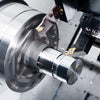
CNC turning is a subtractive manufacturing process performed on a CNC lathe. The workpiece rotates at a controlled speed while a stationary or programmed cutting tool removes material.
It is particularly suitable for producing cylindrical and rotationally symmetrical components.
A typical CNC turning workflow includes:
-
CAD design: Create the component model and technical drawing.
-
CAM programming: Generate toolpaths and machining instructions.
-
Workpiece setup: Secure the raw material in the chuck or collet.
-
Material removal: Rotate the workpiece and cut it into the required shape.
-
Quality inspection: Check dimensions, tolerances, and surface finish.
2. How Does the CNC Turning Process Work?
<AsyncImage query="CNC lathe turning stainless steel cylindrical shaft cutting tool metal chips industrial closeup" aspectRatio="16:9" width="100%"/>
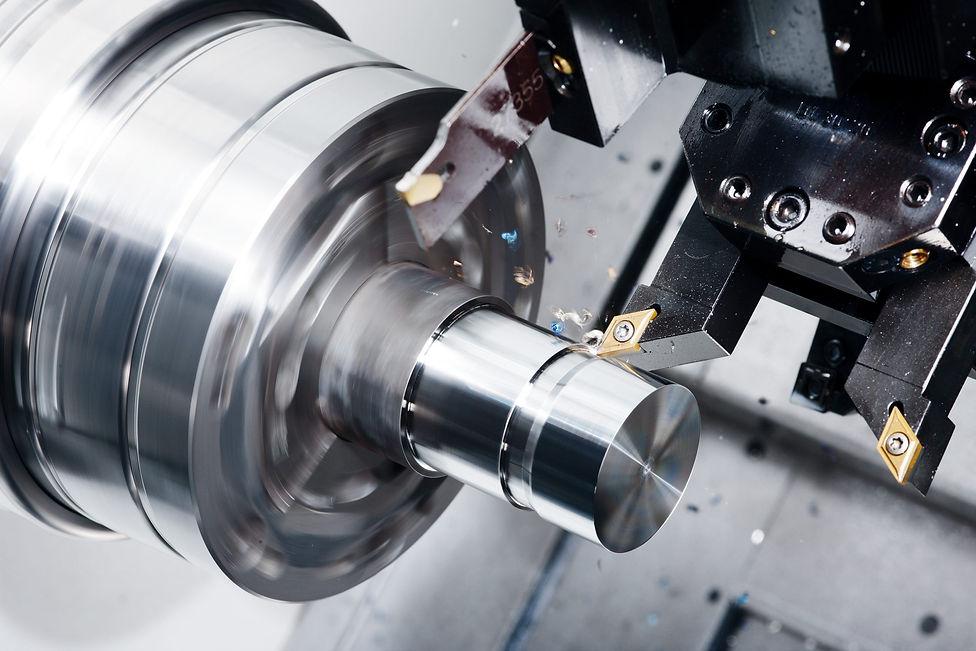
During the CNC turning process, the spindle rotates the workpiece while cutting tools move along programmed axes.
Common turning operations include:
-
Facing: Produces a flat surface at the end of a workpiece.
-
Straight turning: Reduces the outside diameter.
-
Grooving: Creates narrow grooves or recesses.
-
Threading: Produces internal or external threads.
-
Boring: Enlarges or finishes existing holes.
-
Parting: Separates a finished component from the remaining stock.
Modern CNC lathes can also perform drilling, milling, and other secondary operations, depending on their configuration.
3. Common Materials for CNC Turning
Material selection depends on mechanical strength, corrosion resistance, weight, machinability, and operating conditions.
| Material | Characteristics | Common applications |
|---|---|---|
| Aluminum 6061 | Lightweight, easy to machine | Shafts, housings |
| Stainless steel 304 | Corrosion resistant | Fittings, connectors |
| Stainless steel 316L | Improved corrosion resistance | Medical and marine parts |
| Brass C360 | Excellent machinability | Valves, threaded fittings |
| Carbon steel | Good strength and wear resistance | Mechanical shafts |
| Titanium Ti-6Al-4V | High strength-to-weight ratio | Aerospace components |
| POM | Low friction and dimensional stability | Bushings, spacers |
4. What Parts Can CNC Turning Produce?
<AsyncImage query="precision CNC turned metal components stainless steel shafts threaded fittings bushings flanges" aspectRatio="16:9" width="100%"/>
CNC turning is suitable for manufacturing many types of turned CNC components, including:
-
Precision shafts and pins.
-
Bushings and sleeves.
-
Threaded connectors and fittings.
-
Cylindrical housings.
-
Spacers and collars.
-
Flanges and rotating components.
These parts are commonly used in automotive assemblies, industrial automation, hydraulic systems, medical equipment, and aerospace applications.
5. Advantages of Precision CNC Turning
Precision turning parts offer several manufacturing advantages:
-
High dimensional accuracy: Suitable for components requiring controlled diameters and fits.
-
Repeatability: Computer-controlled operations support consistent production.
-
Good surface finish: Appropriate tooling and cutting parameters produce smooth surfaces.
-
Material flexibility: Supports various metals and engineering plastics.
-
Production efficiency: Particularly economical for repeated cylindrical components.
However, dimensional accuracy depends on machine condition, tooling, material stability, workholding, and inspection procedures.
6. CNC Turning vs CNC Milling: Which Should You Choose?
The main difference is how the material and cutting tool move.
| Comparison | CNC Turning | CNC Milling |
|---|---|---|
| Main movement | Workpiece rotates | Cutting tool rotates |
| Typical geometry | Cylindrical parts | Prismatic and complex shapes |
| Common features | Threads, grooves, shafts | Pockets, slots, flat surfaces |
| Typical parts | Pins, bushings, fittings | Brackets, housings, plates |
| Best suited for | Rotational components | Multiple-sided geometries |
Choose CNC turning for parts with primarily cylindrical geometry. Choose CNC milling for components with complex pockets, flat surfaces, and multiple non-rotational features.
For parts requiring both processes, mill-turn machining can combine operations and reduce additional setups.

7. How to Improve CNC Turning Quality
Good part design and machining practices help reduce manufacturing costs and improve dimensional consistency.
Consider these recommendations:
-
Use standard diameters and thread specifications where possible.
-
Avoid unnecessarily tight tolerances.
-
Specify surface roughness according to functional requirements.
-
Maintain sufficient wall thickness for hollow components.
-
Select suitable cutting tools and machining parameters.
-
Consider workpiece stability when machining long, slender shafts.
Before production, discuss critical dimensions and inspection requirements with the CNC supplier.
For additional information, explore precision CNC turning services.
8. Frequently Asked Questions
1. What materials work best for CNC turning?
Aluminum, stainless steel, brass, carbon steel, titanium, and engineering plastics such as POM are commonly used. The best material depends on strength, corrosion resistance, weight, machinability, and the component's operating environment.
2. What part features are typical for CNC turning?
Typical features include cylindrical diameters, stepped shafts, grooves, external and internal threads, tapered surfaces, bores, and chamfers. These features are suitable for components with rotational symmetry.
3. When should I choose turning instead of milling?
Choose CNC turning when the component is primarily cylindrical or rotationally symmetrical, such as a shaft, pin, bushing, or threaded fitting. Milling is generally more suitable for flat surfaces, pockets, slots, and complex non-cylindrical geometries.