Why Are Small-Batch Sheet Metal Prototypes So Expensive? — The Logic Behind “Minimum Order” Prices for Laser Cutting and Bending
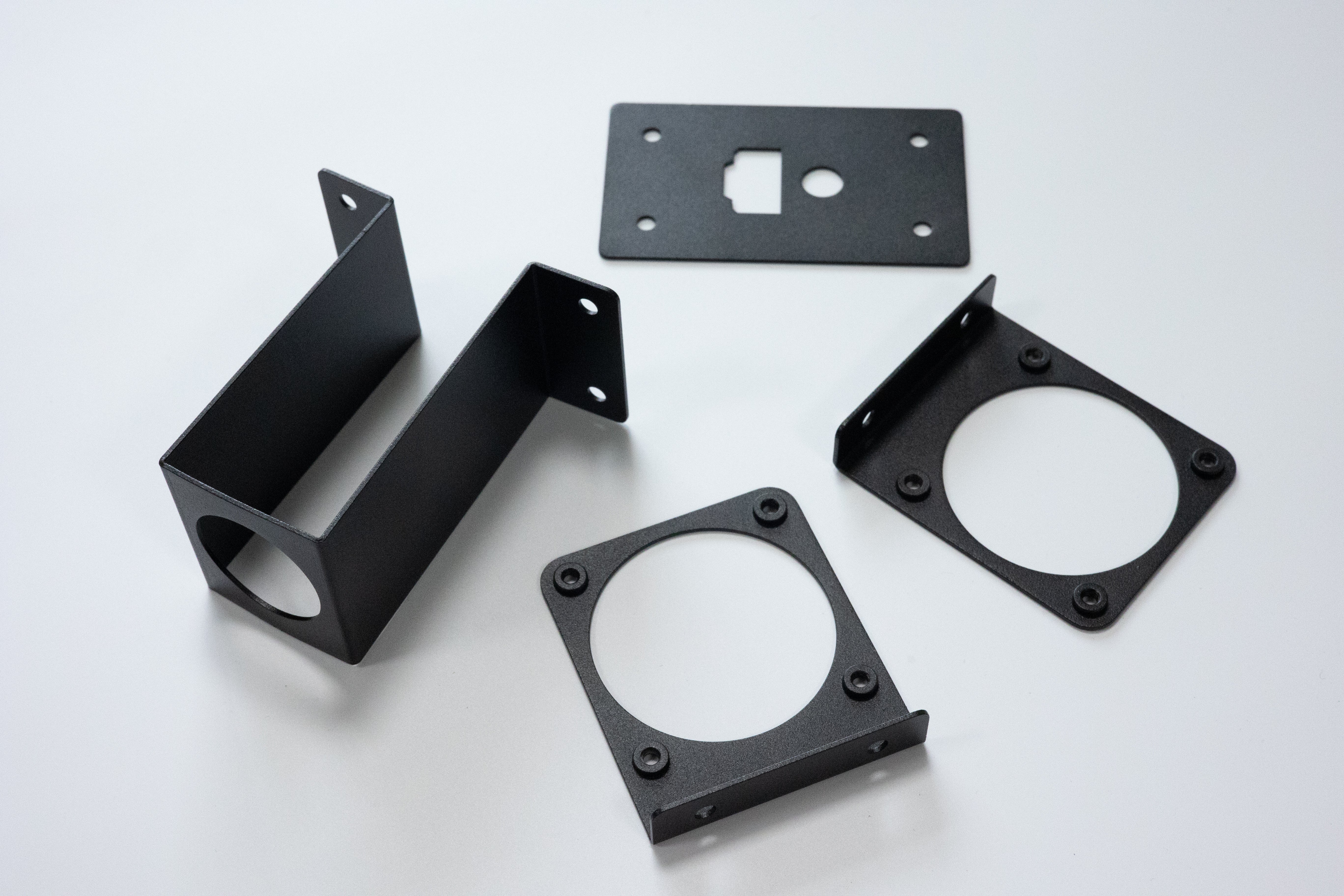
Last week, a client asked us, “You quoted 1,200 yuan for three sheet metal enclosures—that works out to 400 yuan each? The materials only cost a few dozen yuan. Why is that?”
Today, I’ll break down the costs to make it clear. It’s not that we want to overcharge; it’s the concept of a “minimum order” that many people don’t understand.
I. Let’s Start with a True Story
Last year, a smart hardware team approached me to prototype device enclosures: 400×300×80mm enclosures made of 2mm SECC steel plate, requiring laser cutting, bending, welding, and powder coating. They needed 5 sets. I quoted 1,200 yuan.
They said another supplier quoted 850. I asked, “Did that supplier tell you the material grade? The inner radius of the bends? The powder coating thickness? The welding and grinding standards?” He fell silent.
He chose the 850-yuan option. A month later, he came back to me: out of the five enclosures that the supplier made, two had incorrect bend angles so the front cover wouldn’t fit, and one had warped welds that prevented the door from closing properly. It took two rounds of rework, delaying the product launch. This isn’t a made-up story; it happens every day.
II. What is the “minimum charge” for small-batch sheet metal work?
Many people assume that sheet metal cost = material cost + processing time × hourly rate. This formula only applies to high-volume production. The real formula for small-batch prototyping is:
Total Cost = Fixed Costs (independent of quantity) + Variable Costs (proportional to quantity)
Fixed costs are the “minimum charge.” Whether you’re prototyping 1 or 10 units, these costs remain the same:
Drawing processing and programming: Laser cutting requires nesting and setting parameters (power, speed, gas pressure); bending requires calculating the flat pattern, determining the sequence, selecting dies, and writing the program. Whether making 1 or 100 units, the time spent is roughly the same—2–3 hours, with labor costs of 200–300 yuan.
First-piece debugging and verification: For laser cutting, the first piece requires inspection of dimensions, kerf, and slag; for bending, the first piece requires angle measurement and springback compensation adjustment. If issues are found, adjustments must be made and retesting performed. Debugging costs 200–500 RMB.
Die/jig preparation: For bending, different inner radii require changing the lower die; special shapes require changing the upper die; welding requires positioning jigs. These preparations are necessary even for small batches.

Material Procurement Premium: Suppliers do not offer wholesale prices for sheet metal used in prototyping. Purchasing a single sheet (approx. 50–100 RMB) results in only 1/5 being used, with the remainder wasted. The actual material cost per unit is 3–5 times that of mass production.
Total fixed costs range from 800 to 1,500 RMB. Adding the per-unit processing fees (cutting, bending, welding, grinding, powder coating), the total price comes to 1,200–2,000 RMB.
III. Where Is the “Starting Price” for Laser Cutting Hidden?
Nesting: How to arrange parts to minimize material waste? How to avoid deformation caused by cutting gaps that are too close? How to leave micro-connections to prevent parts from falling off? Nesting takes 30 minutes to 2 hours.
Parameter Setup: Cutting parameters vary significantly depending on material thickness and type. The first piece must be inspected after cutting; if unsatisfactory, fine-tuning is required.
Path Optimization: Should cutting start from the edge or via a pilot hole? How should the sequence be arranged to minimize thermal deformation? This requires manual intervention.
These fixed-time tasks take the same amount of time whether cutting one piece or 100. When cutting one piece, the full cost is allocated to it; when cutting 100, each piece bears only 1/100 of the cost.
IV. The “Hidden Costs” of Bending
Flat-pattern calculation: For each bend, the unfolded length must be calculated using a K-factor or a bend allowance. This varies by material, thickness, and die. A calculation error means the part is scrapped.
Bending sequence programming: A cabinet has 8 bend edges; deciding which to bend first and which last requires careful planning to avoid machine collisions. Programming requires experience.
First-piece test bending and compensation: Since springback varies, the angle of the first piece may deviate by 2–3°, requiring compensation in the program. The process involves testing, measuring, adjusting, and retesting—typically two to five or six times.
Die change: Different inner radii require swapping upper and lower dies. Each change takes 5–15 minutes. For small batches, die change time accounts for a significant portion of the total time.
This is why many sheet metal shops charge a minimum fee for small-batch bending (e.g., starting at 200 yuan). It’s not about being greedy; it’s simply because fixed costs must be covered.
V. How to Save Money on Small-Batch Prototyping? Five Suggestions
Combine parts into a single prototype order: Grouping multiple sheet metal parts into one order means layout and debugging are done only once. Three parts ordered separately might cost 1,800 yuan, but combining them could bring the total down to 1,200 yuan.
Use standard sheet metal thicknesses: 1.5, 2.0, and 3.0 mm are common thicknesses that are always in stock. Non-standard thicknesses like 1.2 and 1.8 mm require separate procurement, which is more expensive and often has minimum order quantities.
Simplify the bending design: Avoid multiple internal radii (to prevent die changes); avoid excessively small bend radii (radii less than 4 times the sheet thickness require special dies); avoid closed-end bends (which require welding and are difficult to debug) .
Relax non-critical tolerances: Appearance dimensions can be ±0.5 mm or even ±1 mm; only installation interfaces require ±0.1 mm. Strict tolerances increase debugging time and scrap rates.
Q: Can the prototyping fee be applied toward the bulk production cost? Some suppliers promise that if you proceed to bulk production after prototyping, the prototyping fee will be partially or fully applied toward the mold or programming costs.
VI. A Few Final Straightforward Truths
Small-batch sheet metal prototyping is expensive, not because suppliers want to rip you off, but because fixed costs cannot be spread thinly. The “minimum charge” for laser cutting and bending essentially covers the time spent on technical expertise, equipment setup, and trial-and-error with the first piece. This time is required whether you’re making 1 or 100 units.
Next time you receive a prototyping quote, don’t just look at the unit price. Ask clearly: How much is the programming fee? How much is the first-piece setup fee? How is material utilization calculated? Is there a minimum charge for bending? A responsible supplier will break it down for you.
If you can’t accept the unit price for prototyping, look for manufacturers with a “prototyping sharing program”—where multiple clients combine orders and share fixed costs. Or adjust your mindset: the purpose of prototyping is to verify manufacturability at a controlled, low cost; once mass production begins, the unit price will naturally drop.