CNC Machined Aluminum EV Motor Housing: Solving Prototype Deformation Challenges
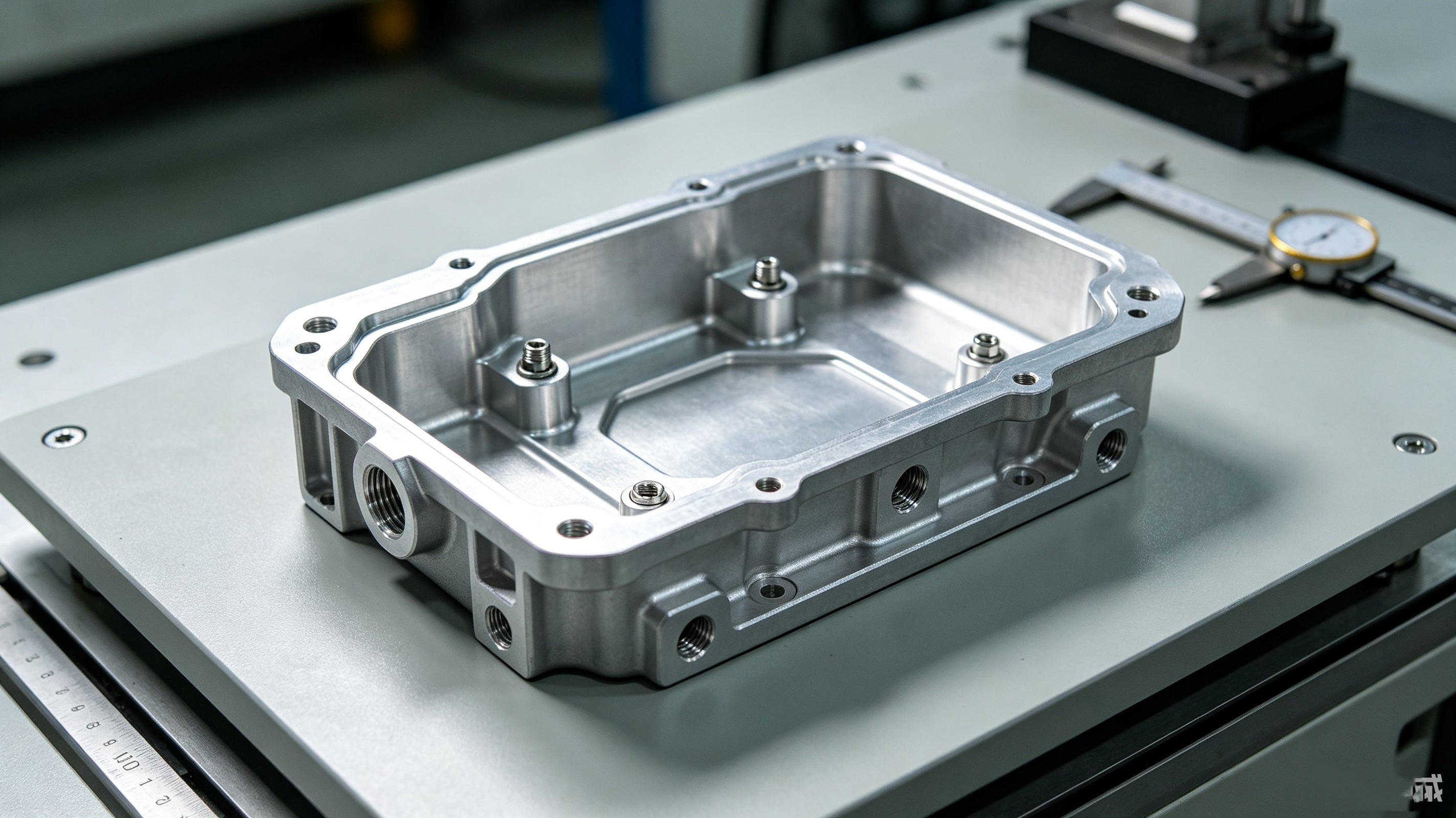
The global electric vehicle industry continues to accelerate lightweight powertrain upgrades. For EV startups, automotive R&D teams, and Tier 1 component suppliers, motor housing prototyping is one of the most critical and iterative stages of new product development. Every design revision requires precise, dimensionally stable samples to verify assembly tolerance, structural rigidity, and thermal performance before formal validation.
CNC machined aluminum EV motor housings have become the standard solution for low-volume prototyping. However, thin-wall aluminum structures are extremely sensitive to machining stress, which often causes deformation, flatness deviation, and bore misalignment. These invisible manufacturing risks directly affect motor assembly accuracy, noise control, and overall powertrain efficiency.
Therefore, choosing an experienced CNC manufacturer is essential to avoid repeated prototype failures and shorten EV product iteration cycles.
Core Prototype Challenges for Thin-Wall EV Motor Housings
EV motor housing designs pursue extreme lightweight performance, which requires hollow structures, thin wall sections, and multi-position mounting interfaces. While these designs optimize vehicle range and heat dissipation, they also bring significant machining difficulties that ordinary 3-axis processing cannot resolve.
The biggest problem in prototype production is residual stress release and post-machining deformation. After large-area material removal on aluminum blanks, internal stress redistribution causes subtle warping, uneven flatness, and distorted bearing bores. Even minor dimensional errors will lead to poor motor shaft concentricity, unstable sealing, and inconsistent assembly clearance.
In addition, EV R&D teams frequently update housing structures based on bench test data. Traditional tooling-based manufacturing cannot adapt to frequent design changes, resulting in high costs and slow iteration speed. Flexible, high-precision CNC prototyping is essential for modern EV development.

How 5-Axis CNC Machining Eliminates Thin-Wall Deformation
5-axis CNC machining has become the mainstream process for high-quality EV motor housing prototyping due to its high flexibility and stable precision. Unlike traditional 3-axis processing, 5-axis equipment completes most complex cavity surfaces, curved structures, and multi-angle mounting features in a single clamping setup.
Fewer re-clamps greatly reduce positioning errors and cumulative tolerance deviations. Meanwhile, optimized cutting paths and layered material removal strategies effectively control thin-wall vibration and stress concentration, ensuring consistent wall thickness, flatness, and bore accuracy after machining.
For EV developers, 5-axis CNC technology provides two core advantages: stable prototype quality and flexible design adaptability. Engineers can iterate CAD models quickly without additional tooling costs, making low-volume EV component verification far more efficient.

Why 6061 Aluminum Is the Best Choice for EV Motor Housing Prototypes
Material selection determines prototype stability and testing reliability. 6061 aluminum alloy remains the most widely adopted material for EV motor housing prototyping, balancing lightweight performance, mechanical rigidity, and excellent machinability.
Its uniform material structure greatly reduces the risk of irregular deformation during high-precision milling. The alloy also supports various surface treatments including anodizing and alodine coating to improve corrosion resistance and surface durability for subsequent bench and road tests.
Compared with high-strength but hard-to-process aerospace alloys, 6061 aluminum allows faster prototyping, lower testing costs, and more stable dimensional consistency during repeated design iterations.

Professional CNC Support for EV Prototype and Low-Volume Projects
Successful EV motor housing prototyping relies not only on equipment precision but also on manufacturing experience aligned with automotive R&D standards. Our team provides full-process custom machining solutions for global EV developers, including DFM design optimization, thin-wall structure improvement, precision CNC processing, and full dimensional inspection.
We support one-piece prototyping and small-batch customized production with no MOQ requirements. Every finished motor housing comes with complete dimension inspection reports, ensuring stable and repeatable verification results for your EV powertrain projects.

Conclusion
Thin-wall deformation and dimensional instability are the biggest hidden risks in EV motor housing R&D prototyping. Adopting professional 5-axis CNC machining and standardized 6061 aluminum processing effectively solves iteration failures caused by manufacturing errors.
If you are developing new electric motor structures and need high-precision aluminum motor housing prototypes or low-volume production parts, submit your CAD files for a free DFM review and fast quotation.