Aerospace Components Manufacturing: Processes and Key Players
TL;DR
Aerospace components manufacturing is the highly specialized field of producing precision parts for aircraft, spacecraft, and defense systems. This industry is defined by its absolute requirement for safety, reliability, and performance, achieved through advanced production technologies, specialized high-performance materials, and adherence to stringent international quality standards. Success hinges on balancing innovation with rigorous compliance to ensure every component functions flawlessly under extreme conditions.
What Is Aerospace Component Manufacturing?
Aerospace component manufacturing involves the design, production, and assembly of parts used in aircraft, missiles, spacecraft, and defense systems. Unlike general manufacturing, this sector operates under some of the most demanding protocols in any industry due to the critical nature of its products. Every component, from a simple fastener to a complex turbine blade, must be engineered to withstand extreme environmental conditions, including drastic temperature fluctuations, high altitudes, and immense pressure. The primary goal is to ensure absolute safety, durability, and reliability, as component failure can have catastrophic consequences.
The scope of this industry is vast, covering a wide array of essential parts that form the building blocks of complex aerospace systems. Manufacturers produce these components through highly controlled processes to meet exact specifications. The focus on precision is non-negotiable, ensuring that each part integrates seamlessly into larger assemblies like engines or airframes. This meticulous approach guarantees the final product's performance and airworthiness.
Components produced in this sector can be categorized into several key groups, each serving a vital function:
- Structural Components: This includes airframes, wings, fuselages, and landing gear, which form the skeleton of the aircraft and must bear significant structural loads.
- Propulsion System Parts: These are components for jet engines and rocket motors, such as turbine blades, fuel nozzles, and engine casings, which must endure extreme heat and stress.
- Avionics and Electronics: This category covers the aircraft's nerve center, including navigation systems, communication equipment, and control panels, which require protection from electromagnetic interference (EMI).
- Mechanical and Hydraulic Systems: Parts like actuators, pumps, and valves that control flight surfaces and other critical functions fall into this group.
- Fasteners and Hardware: Even the smallest screws, bolts, and rivets are custom-engineered for aerospace applications to ensure they do not fail under vibration and stress.
Core Manufacturing Processes and Technologies
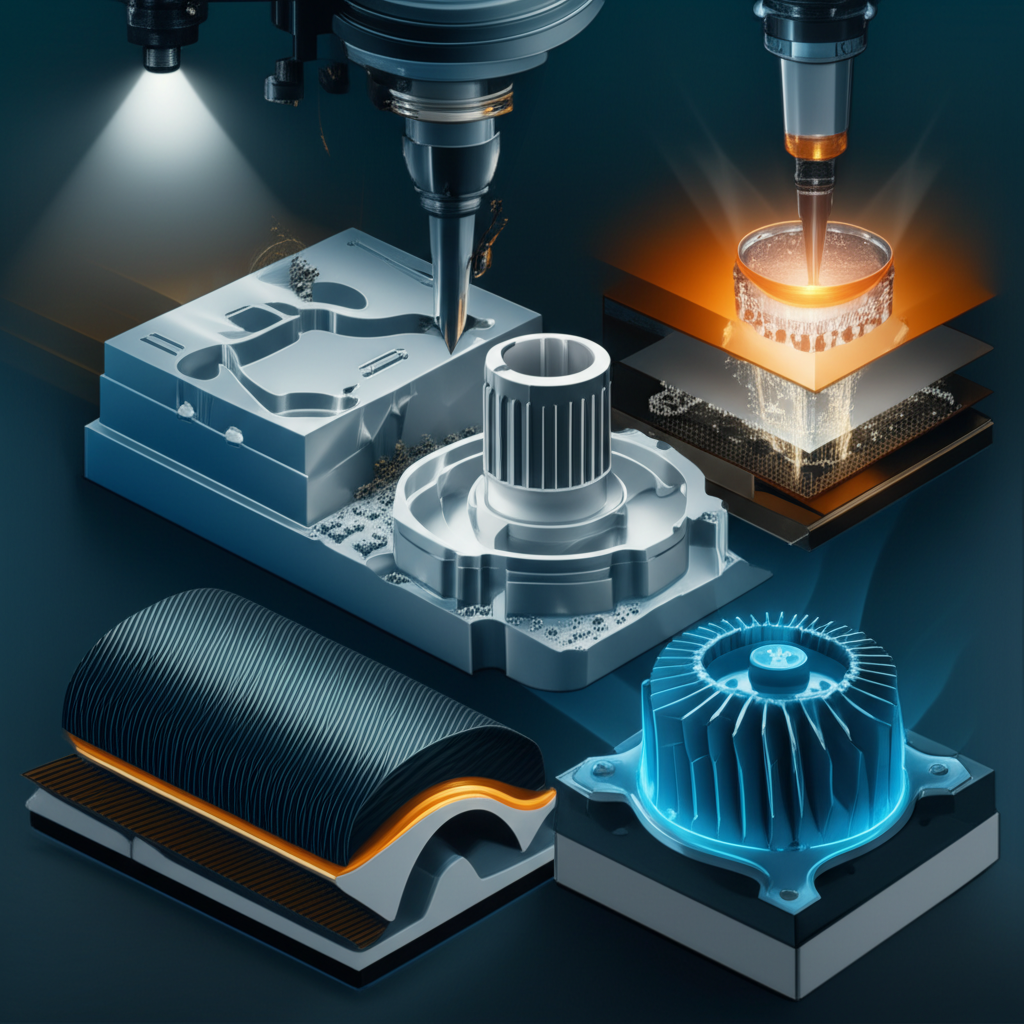
The aerospace industry leverages a combination of traditional and cutting-edge manufacturing technologies to produce parts that meet its extraordinary demands for precision and strength. These processes are continually evolving to improve efficiency, reduce weight, and enhance component performance. As highlighted by experts at Protolabs, a hybrid approach using multiple technologies is often the most effective solution for complex aerospace challenges.
CNC Machining
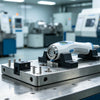
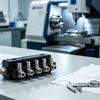
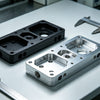
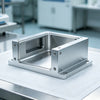
Computer Numerical Control (CNC) machining remains a cornerstone of aerospace manufacturing. This subtractive process uses computer-guided tools to remove material from a solid block, creating parts with exceptionally tight tolerances. Multi-axis CNC machines, particularly 5-axis systems, are essential for fabricating complex geometries found in engine components, structural brackets, and housings. Materials like aluminum, titanium, and high-strength stainless steel are commonly machined due to their excellent mechanical properties. The precision of CNC machining is critical for ensuring parts fit together perfectly and perform reliably under stress.
For projects requiring high-precision custom parts, specialized providers are essential. For instance, companies that deliver rapid prototyping and volume production with advanced 4 and 5-axis CNC machining centers can handle a wide range of materials with tolerances down to +/- 0.005mm. For those needing to bring designs to life with ISO 9001 certified quality, exploring CNC machining services from a trusted vendor can be a critical step.
Additive Manufacturing (3D Printing)
Additive manufacturing, commonly known as 3D printing, has revolutionized aerospace part development. Unlike CNC machining, this process builds parts layer by layer from a digital file. Technologies like Direct Metal Laser Sintering (DMLS) are used to create complex, lightweight components from metal powders such as titanium, Inconel, and aluminum alloys. Additive manufacturing allows for the creation of intricate internal structures and organic designs that would be impossible to produce with traditional methods. This capability enables engineers to consolidate multiple parts into a single component, reducing weight, assembly time, and potential points of failure, which is a significant advantage in aerospace design.
Composite Fabrication
Composite materials, such as carbon fiber reinforced polymers (CFRP), are prized in aerospace for their high strength-to-weight ratio. The fabrication of composite parts involves layering sheets of composite material (pre-preg) into a mold and then curing it under heat and pressure in an autoclave. This process creates strong, lightweight, and corrosion-resistant components like fuselages, wings, and control surfaces. Advanced techniques like automated fiber placement (AFP) and resin transfer molding (RTM) are used to increase production speed and ensure consistent quality for large, complex structures.
Critical Materials in Aerospace Manufacturing
Material selection is a fundamental aspect of aerospace components manufacturing, directly impacting a part's weight, strength, durability, and resistance to environmental factors. The materials used must perform reliably under extreme conditions without failing. Key considerations include a high strength-to-weight ratio, resistance to high temperatures and corrosion, and fatigue life. The choice of material is often a trade-off between performance, cost, and manufacturability.
The industry relies on a select group of advanced materials engineered specifically for these demanding applications. Aluminum alloys have long been a staple due to their low cost and good strength, while titanium is favored for applications requiring higher temperature resistance and corrosion immunity. Superalloys like Inconel are critical for the hottest sections of jet engines, and composites are increasingly used to reduce overall aircraft weight and improve fuel efficiency. Each material offers a unique set of properties tailored to specific component requirements.
Below is a comparison of the most common materials used in the industry:
| Material | Key Properties | Common Applications |
|---|---|---|
| Aluminum Alloys | High strength-to-weight ratio, good formability, low cost. | Fuselage, wings, structural components, housings. |
| Titanium Alloys | Excellent strength-to-weight ratio, high temperature resistance, superior corrosion resistance. | Engine components, landing gear, critical fasteners, structural parts. |
| Steel Alloys | High strength, durability, and heat resistance. | Landing gear, engine pylons, high-strength fasteners. |
| Superalloys (e.g., Inconel) | Exceptional performance at extreme temperatures, mechanical strength, corrosion and oxidation resistance. | Turbine blades, combustors, and other jet engine hot-section components. |
| Composite Materials (e.g., CFRP) | Very high strength-to-weight ratio, design flexibility, fatigue resistance. | Airframes, control surfaces, nacelles, interior components. |
Navigating Quality Standards and Certifications
In aerospace components manufacturing, adherence to stringent quality standards and certifications is not just a best practice—it is a mandatory requirement for ensuring safety and airworthiness. The industry is governed by a complex framework of regulations set by international bodies and national aviation authorities. These standards dictate everything from material traceability and process controls to final inspection and documentation. For any company operating in the aerospace supply chain, demonstrating compliance is essential for gaining trust and market access.
These certifications provide a structured framework for managing quality, risk, and operational consistency. According to an industry guide from Fishbowl Inventory, obtaining these credentials proves that a manufacturer's processes meet the highest industry benchmarks. For businesses seeking a manufacturing partner, verifying these certifications is a critical step in the vetting process, as it ensures the supplier is capable of delivering components that meet all regulatory and performance requirements.
Key certifications and standards in the aerospace industry include:
- AS9100D: This is the premier quality management system (QMS) standard for the aviation, space, and defense industries. Based on the ISO 9001 standard, it includes additional requirements specific to aerospace, focusing on product safety, risk management, and configuration management.
- Nadcap (National Aerospace and Defense Contractors Accreditation Program): Nadcap provides global accreditation for special processes like heat treating, welding, and coatings. Achieving Nadcap accreditation demonstrates that a manufacturer's specific technical processes meet the highest levels of quality and consistency.
- ITAR (International Traffic in Arms Regulations): A set of U.S. regulations that control the import and export of defense-related articles and services. Compliance is mandatory for any manufacturer involved in military or defense contracts to protect U.S. national security.
- ISO 9001:2015: The international standard for a QMS, which forms the foundation of AS9100D. It ensures that a company has established processes to consistently provide products and services that meet customer and regulatory requirements.

Leading Aerospace Component Manufacturers
The global aerospace components manufacturing market is comprised of a diverse range of companies, from multinational giants producing entire systems to specialized firms focusing on niche components. These industry leaders are distinguished by their commitment to innovation, precision engineering, and quality. As noted by a market analysis from Modus Advanced, the supply chain includes both material suppliers who develop advanced alloys and component manufacturers who transform those materials into finished parts.
Identifying the right partner is a critical decision for aerospace engineers and procurement managers. The companies listed below represent some of the key players in the industry, known for their extensive capabilities and contributions to both commercial and defense aviation. This list, based on industry reports from sources like Verified Market Research, provides a snapshot of the companies shaping the future of flight.
- Safran Group: A French multinational corporation, Safran is a major player in aircraft propulsion, landing gear, and electrical systems. The company is renowned for its innovative technologies and significant presence in both the commercial and defense sectors.
- Rolls-Royce: A British engineering giant, Rolls-Royce is a leading manufacturer of aircraft engines for a wide range of commercial and military aircraft. Their reputation is built on decades of engineering excellence and innovation in propulsion systems.
- Collins Aerospace (RTX Corporation): A business of RTX, Collins Aerospace is a global leader in technologically advanced and intelligent solutions for the aerospace and defense industry, covering everything from avionics and aerostructures to power systems.
- JAMCO Corporation: A Japanese company specializing in aircraft interiors, galleys, and other components. JAMCO is recognized for its high-quality designs and serves major airlines and aircraft manufacturers worldwide.
- Triumph Group: This company operates multiple manufacturing facilities that convert raw materials into finished components and assemblies. Triumph Group provides a wide range of products, from small precision parts to large structural assemblies.
- Eaton Corporation: A multinational power management company, Eaton's aerospace division supplies highly engineered hydraulic, fuel, and motion control systems for commercial and military aircraft.
Frequently Asked Questions
1. What is aerospace component manufacturing?
Aerospace component manufacturing is the process of creating parts for aircraft, spacecraft, satellites, and defense systems. According to industry experts at Modus Advanced, this field encompasses everything from engines and avionics to thousands of specialized components, all produced under strict quality and safety standards.
2. What are the 7 major components of an aircraft?
While designs vary, most airplanes consist of seven fundamental sections. These are the fuselage (the main body), wings (which provide lift), the tail assembly (empennage for stability), the engine, the propeller, the landing gear, and the cockpit (flight deck).
3. Is aerospace manufacturing blue collar?
Aerospace manufacturing involves a significant number of production roles that are traditionally considered blue-collar, such as fabricating, assembling, and inspecting parts. However, the industry also relies heavily on white-collar professionals, including engineers, designers, and quality control specialists, reflecting a blend of hands-on production and advanced technical expertise.