Proven Methods to Reduce CNC Machining Cost

TL;DR
To effectively reduce CNC machining cost, focus on three primary areas: optimizing part design for manufacturability (DFM), making strategic material selections, and simplifying technical specifications. Key actions include adding radii to internal corners, relaxing tolerances where possible, choosing cost-effective and easily machinable materials, and increasing order quantities to leverage economies of scale. These adjustments minimize machining time, reduce tool wear, and lower overall production expenses.
Optimize Part Design for Manufacturability (DFM)
One of the most significant factors driving CNC machining costs is the complexity of the part design itself. By applying Design for Manufacturability (DFM) principles, you can drastically cut down on machining time and the need for specialized tooling. Every decision, from the shape of a corner to the thickness of a wall, has a direct impact on the final price. A well-optimized design not only saves money but also often results in a more robust and functional part.
A critical area for optimization is the treatment of internal corners. CNC milling tools are cylindrical, meaning they naturally leave a radius when cutting an inside corner. Designing a perfectly sharp 90-degree corner is impossible with standard milling and requires costly secondary processes like Electrical Discharge Machining (EDM). To avoid this, always design internal corners with a radius. A good rule of thumb, as suggested by Protolabs Network, is to make the radius at least one-third of the cavity's depth. A larger radius is even better, as it allows for a larger, more rigid cutting tool that can remove material faster and more efficiently.
The depth of pockets and cavities is another major cost driver. Deep pockets require long, slender tools that are prone to vibration and breakage, forcing the machine to run at slower speeds. This significantly increases machining time. As a general guideline, try to limit the depth of any cavity to no more than four times its width. Similarly, thin walls present a challenge; walls under 0.8mm for metal or 1.5mm for plastic are susceptible to vibration and warping. Increasing wall thickness provides stability, allowing for faster and more reliable machining.
Finally, simplifying features like holes and threads can yield substantial savings. Whenever possible, use standard drill bit sizes for holes, as non-standard sizes require an end mill to create, adding an extra step. Through-holes are also cheaper to machine than blind holes (holes that don't go all the way through). For threads, limit their length to what is functionally necessary—typically, thread engagement beyond 1.5 times the hole's diameter provides no additional strength but adds significant cost, according to insights from multiple manufacturing experts. By standardizing these simple features, you eliminate the need for tool changes and reduce overall cycle time.
Select Materials Strategically to Control Costs
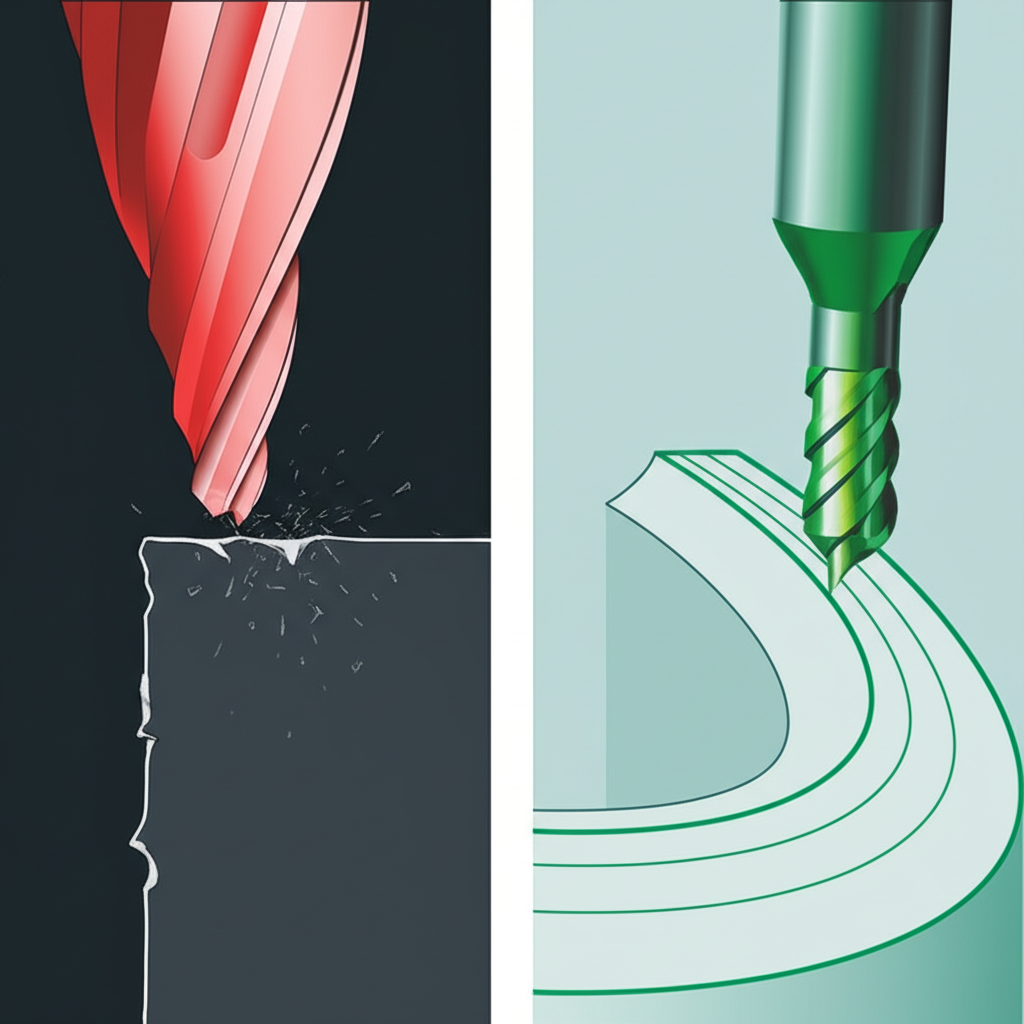
The material you choose for your part influences its cost in two ways: the raw material price and its machinability. Machinability refers to the ease with which a material can be cut, which directly affects the time and tool wear required to produce a part. A material that is difficult to machine will require slower cutting speeds and more durable (and expensive) tooling, driving up the hourly cost of production. Therefore, the ideal choice is the most affordable material that meets all the functional requirements of your design.
For prototyping and many functional parts, softer metals like Aluminum 6061 are often the most cost-effective option. It has an excellent combination of low raw material cost and high machinability. In contrast, harder materials like stainless steel or titanium are more expensive and take significantly longer to machine. However, different grades within the same material family can have vastly different properties. For example, 303 stainless steel is specifically formulated for better machinability than the more common 304 grade, making it a smarter choice if its properties are sufficient for your application, as noted by Fictiv.
Plastics also offer a wide range of options. Materials like POM (Delrin) and ABS are relatively inexpensive and easy to machine, making them great for many applications. High-performance plastics like PEEK offer incredible strength and temperature resistance but come with a much higher price tag and can be more challenging to machine. The key is to avoid over-engineering. Don't specify a high-performance, expensive material if a more common and affordable one will do the job.
To help guide your decision, here is a simple comparison of common CNC materials:
| Material | Relative Cost | Machinability | Common Characteristics |
|---|---|---|---|
| Aluminum 6061 | Low | Excellent | Good strength-to-weight ratio, corrosion resistant. |
| Stainless Steel 304 | Medium | Fair | Excellent corrosion resistance, high strength. |
| Mild Steel (1018) | Low | Good | Easy to machine and weld, but not corrosion resistant. |
| ABS Plastic | Low | Good | High impact strength, easy to machine, low cost. |
| POM (Delrin/Acetal) | Low-Medium | Excellent | High stiffness, low friction, excellent dimensional stability. |
Manage Tolerances and Surface Finishes Wisely
Among the most overlooked yet significant cost drivers in CNC machining are unnecessarily tight tolerances and fine surface finishes. A tolerance is the acceptable range of variation for a dimension. While precision is a key benefit of CNC machining, achieving extremely high precision is a process of diminishing returns; each incremental increase in precision can cause an exponential increase in cost. This is a point emphasized by nearly all manufacturing guides, including those from MakerVerse and Protolabs.
Tighter tolerances require more careful machining, slower speeds, additional measurement steps, and potentially specialized tooling or secondary operations like grinding. Unless a feature is critical for the part's function—such as a bearing bore or a mating surface—it's best to stick with standard tolerances (often around ±0.125mm or ±0.005 inches). Clearly specify on your technical drawing which dimensions are critical and require tight tolerances, leaving the rest to the standard, more affordable specification.
Similarly, the required surface finish has a major impact on cost. A standard 'as-machined' finish is the most economical. Requesting smoother finishes often requires extra machining passes or secondary processes like bead blasting, polishing, or anodizing. Each of these steps adds time and labor to the project. Evaluate whether a cosmetic finish is truly necessary for the part's function. If it is, consider cost-effective options and avoid specifying multiple different finishes on a single part, which requires complex masking and handling.
For projects where high precision is non-negotiable, partnering with a capable machining service is essential to ensure quality without excessive costs from trial and error. For components with demanding specifications, such as tolerances down to +/- 0.005mm, working with an experienced provider like XTJ, which specializes in high-precision 4 and 5-axis machining across various materials, can be a crucial step in achieving your design goals efficiently.

Leverage Standardization and Quantity for Savings
Beyond individual part design, broader strategic decisions about standardization and order volume can unlock significant cost reductions. These principles are especially important when moving from a single prototype to low- or high-volume production. The core idea is to minimize custom work and maximize efficiency through repetition and economies of scale.
First, embrace standardization wherever possible. This applies to features within your design, such as using standard tap sizes for threads or common drill sizes for holes. It also applies to using off-the-shelf components instead of custom-machined ones when feasible. Every time a machinist has to use a non-standard tool or perform a custom setup, it adds to the Non-Recurring Engineering (NRE) costs. These are one-time costs for programming and machine setup. By designing with standard tools in mind, you streamline the manufacturing process and reduce these upfront expenses.
Second, understand the relationship between order quantity and per-unit cost. The NRE costs are fixed, whether you are making one part or one hundred. When you order a single prototype, that entire setup cost is applied to that one part, making it very expensive. However, as detailed by Fathom, when you order a larger batch, that same setup cost is amortized across all the units, drastically lowering the cost of each individual part. If you anticipate needing multiple units in the future, ordering them in a single, larger batch is almost always more economical than placing several small orders over time.
Frequently Asked Questions
1. How can I make CNC parts cheaper?
To make CNC parts cheaper, focus on a few key areas. First, simplify your design by removing any non-essential features, adding generous radii to internal corners, and avoiding very thin walls or deep pockets. Second, select a cost-effective material that is easy to machine, like Aluminum 6061 or POM (Delrin). Third, specify tolerances and surface finishes only as strictly required by the part's function; stick to standard specifications for all non-critical features. Finally, increase your order quantity to spread setup costs over more units, which significantly lowers the price per part.
2. How much does CNC machining cost per hour?
The cost of CNC machining per hour can vary widely, typically ranging from $35 to $200. The exact rate depends on several factors. The type of machine is a major determinant; a complex 5-axis machine will have a higher hourly rate than a simpler 3-axis machine. The material being machined also plays a crucial role, as harder materials require more time and cause more tool wear. Finally, the complexity of the part and the expertise required from the machinist and programmer also influence the final hourly cost.