Medical CNC Machining Parts for Ultra-Thin Wall and Micro-Precision Medical Devices
Introduction: Precision Manufacturing for Next-Generation Miniature Medical Equipment
Global demand for miniaturized, lightweight, high-accuracy medical hardware continues to drive innovation in minimally invasive surgical tools, diagnostic hardware and implant assemblies. Medical design engineers are constantly developing compact components featuring ultra-thin walls, micron-level tolerances and stable batch-to-batch consistency.
Standard conventional machining fails to meet these strict medical-grade standards. All medical CNC machined miniature components must retain stable dimensional accuracy while eliminating common manufacturing flaws: post-processing deformation, tool chatter marks and uneven surface finishes.
Four mainstream challenging workpieces dominate today’s precision medical machining field: laparoscopic instrument shafts, micro titanium implant sleeves, aluminum diagnostic sensor enclosures and thin-wall surgical gripper assemblies. Even tiny dimensional deviations on these parts will hinder seamless assembly, disrupt surgical operation stability or shorten the service life of finished medical devices.
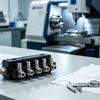
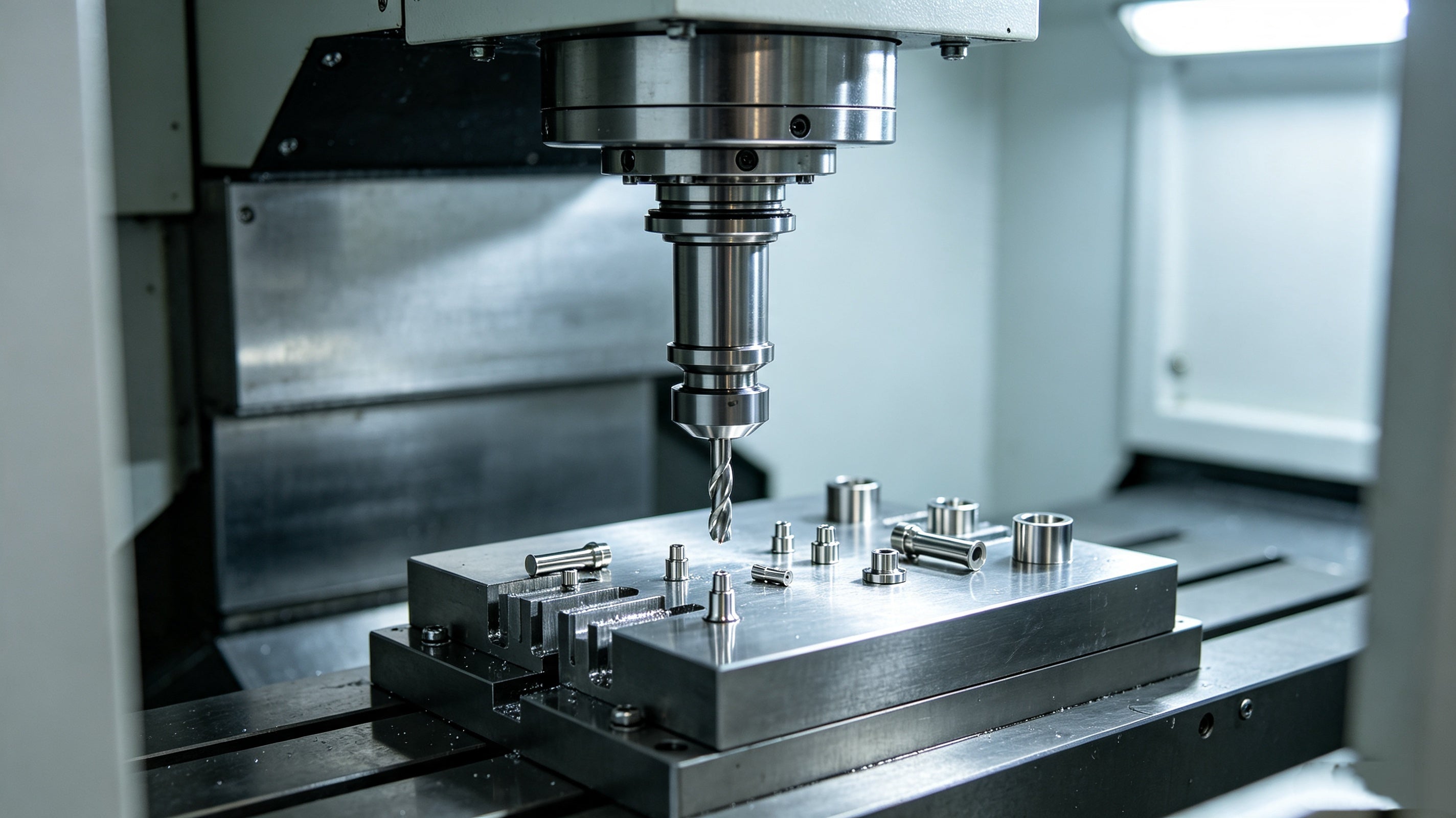
[Image Position 1: CNC vertical machining center processing tiny medical precision metal components]
1. Why Laparoscopic & Surgical Instruments Rely on Micro-Precision CNC Machining
Minimally invasive surgical equipment adopts slender, lightweight structures to fit tiny human tissue access ports. Core parts including laparoscopic shafts and surgical grippers integrate intricate internal cavities paired with ultra-thin outer walls.
Custom CNC-manufactured laparoscopic hardware demands strict control over concentricity, linear straightness and mirror-smooth surface texture. Minor geometric distortions on long shafts will hinder flexible instrument movement, while rough surfaces create persistent friction during repeated clinical use.
Unlike general industrial mechanical parts, surgical hardware needs to balance mechanical strength and miniaturized sizing. CNC technicians must optimize cutting force parameters, tool selection and machining sequences to avoid residual internal stress that distorts finished dimensions.
Thin-Wall Deformation Risks for Surgical Gripper Components
Surgical grippers rank among the most difficult micro-precision medical machined parts, as their slim thin-wall structures deform easily under cutting pressure.
When stripping excess material from stainless steel or titanium blanks, improper machining loads lead to frequent defects:
- Permanent wall warping post-machining
- Misaligned gripping jaw geometry
- Uneven contact surfaces during clamping
- Failure to meet final assembly tolerance standards
Professional CNC manufacturers deploy optimized tool paths, rigid custom workholding fixtures and staged multi-step machining workflows to protect fragile thin-wall structures. This mature production system delivers defect-free prototypes and consistent low-volume batches for medical device developers.
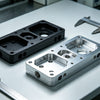
[Image Position 2: Close-up machining process of thin-wall surgical gripper and laparoscopic tool blanks]

2. Titanium & Aluminum Alloys for Custom Implant & Diagnostic Sensor Components
Material selection directly determines the durability, biocompatibility and functional performance of compact medical devices. Different medical application scenarios require tailored combinations of lightweight properties, anti-corrosion performance and medical-grade biocompatibility.
For permanent and temporary implant applications, CNC-machined titanium components such as miniature implant sleeves are the top industry choice. Titanium alloys feature an outstanding strength-to-weight ratio and exceptional corrosion resistance, perfectly matching the strict operating environment inside the human body.
For portable diagnostic machinery, aluminum alloy serves as the ideal raw material for lightweight electronic protective shells. Production of micro medical sensor housings requires ultra-precise machining, as enclosures need to shield delicate internal circuit modules while reserving accurate mounting datum planes.
Key technical requirements for aluminum medical sensor housings:
- Precision cavity milling for embedded electronic modules
- Ultra-thin wall construction for overall weight reduction
- Mirror surface finishing for easy sterilization
- High-precision sealing groove interfaces
Biocompatibility Standards for Medical-Grade CNC Machined Parts
Medical hardware manufacturers must validate raw material specifications and processing workflows before mass production. Reliable CNC suppliers fully comply with medical material regulations, strictly control cross-contamination risks and offer compatible surface treatment solutions.
When machining titanium implant components, all cutting processes are refined to prevent surface damage and preserve raw material mechanical integrity. Qualified manufacturers also provide complete material traceability documents and standardized production records to support medical device certification audits.
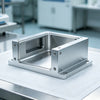
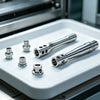
[Image Position 3: Finished titanium implant sleeves and machined aluminum medical sensor housings display]

3. How 5-Axis CNC Eliminates Dimensional Deviations on Miniature Medical Housings
Complex medical hardware often features multi-angle curved surfaces, internal fluid channels and multi-direction precision mounting lugs. Traditional 3-axis machining requires repeated workpiece re-clamping, which inevitably introduces cumulative positioning errors.
5-axis CNC machining for medical components solves this pain point by completing multi-surface forming in a single clamping setup. Fewer fixture replacements drastically boost geometric accuracy for micro sensor housings and surgical assembly parts.
Compact diagnostic sensor enclosures require perfect alignment between external mounting lugs and internal electronic positioning slots; tiny dimensional errors will directly compromise sensor detection accuracy and finished product assembly efficiency.
Enterprises equipped with advanced 5-axis CNC equipment achieve core production advantages:
- Higher positional accuracy between scattered component features
- Uniform, burr-free surface textures
- Minimized tool machining traces
- Superior dimensional repeatability across production batches
This technical edge greatly accelerates prototype iteration cycles for medical brands preparing to launch commercial mass production.
[Image Position 4: 5-axis CNC machine processing a miniature aluminum medical sensor housing]

4. Rigorous Quality Control Standards for Medical CNC Machined Components
Precision medical machining performance relies equally on high-end CNC equipment and comprehensive full-process inspection systems. Every critical dimension of medical CNC parts undergoes strict verification before shipment.
Trusted precision machining partners implement a full inspection workflow covering:
- Full dimensional measurement via CMM coordinate measuring machines
- Quantitative surface roughness testing
- Comprehensive visual defect screening
- Thread, hole and groove tolerance verification
- Continuous monitoring of batch consistency
Quality control thresholds become far stricter for ultra-thin wall medical machining. Minor dimensional shifts may appear during post-processing steps including polishing, ultrasonic cleaning and surface coating.
Professional CNC factories provide all-round support for medical clients: rapid prototype development, flexible small-batch manufacturing and customizable medical-grade surface treatments. This integrated one-stop service cuts down product R&D cycles while fully meeting strict medical component technical standards.
[Image Position 5: Inspector performing CMM precision measurement on finished medical CNC machined parts]

Conclusion: Custom CNC Precision Manufacturing for Next-Generation Medical Hardware
The fast evolution of minimally invasive medical technology raises higher precision requirements for tiny core components. Whether laparoscopic shafts, thin-wall surgical grippers, micro titanium implant sleeves or aluminum diagnostic sensor housings, advanced multi-axis machining technology is the foundation of stable, reliable medical device performance.
A professional CNC processing supplier delivers far more than basic machining services. By integrating 5-axis processing equipment, full-set precision inspection systems, professional medical material expertise and flexible batch production capabilities, we supply certified micro-precision medical CNC parts covering prototype trial runs, small-batch orders and formal commercial mass production.
For medical device enterprises developing new-generation clinical equipment, partnering with an experienced medical CNC manufacturer effectively improves design stability and shortens overall production lead times.
FAQ About Medical CNC Machining Parts
-
What minimum tolerances can micro medical CNC machined components reach?Premium medical CNC machining achieves micron-level tight tolerances customized to raw material, part geometry and clinical inspection standards. Advanced multi-axis equipment paired with CMM inspection systems maintains ultra-high dimensional stability for intricate miniature medical components.
-
What core benefits does custom CNC manufacturing bring to laparoscopic instrument parts?Custom CNC machining enables medical manufacturers to produce lightweight, high-precision surgical tools tailored to unique clinical scenarios. The technology supports complex curved geometries, fragile thin-wall structures and fully customized designs exclusive to minimally invasive surgical equipment.
-
Why is 5-axis CNC machining indispensable for titanium implant component production?Titanium implant sleeves feature irregular complex contours and extremely strict dimensional standards. 5-axis CNC machining eliminates repeated clamping errors and delivers consistent precision when fabricating miniature human implant hardware.