CNC Machined EV Precision Components for New Energy Vehicles
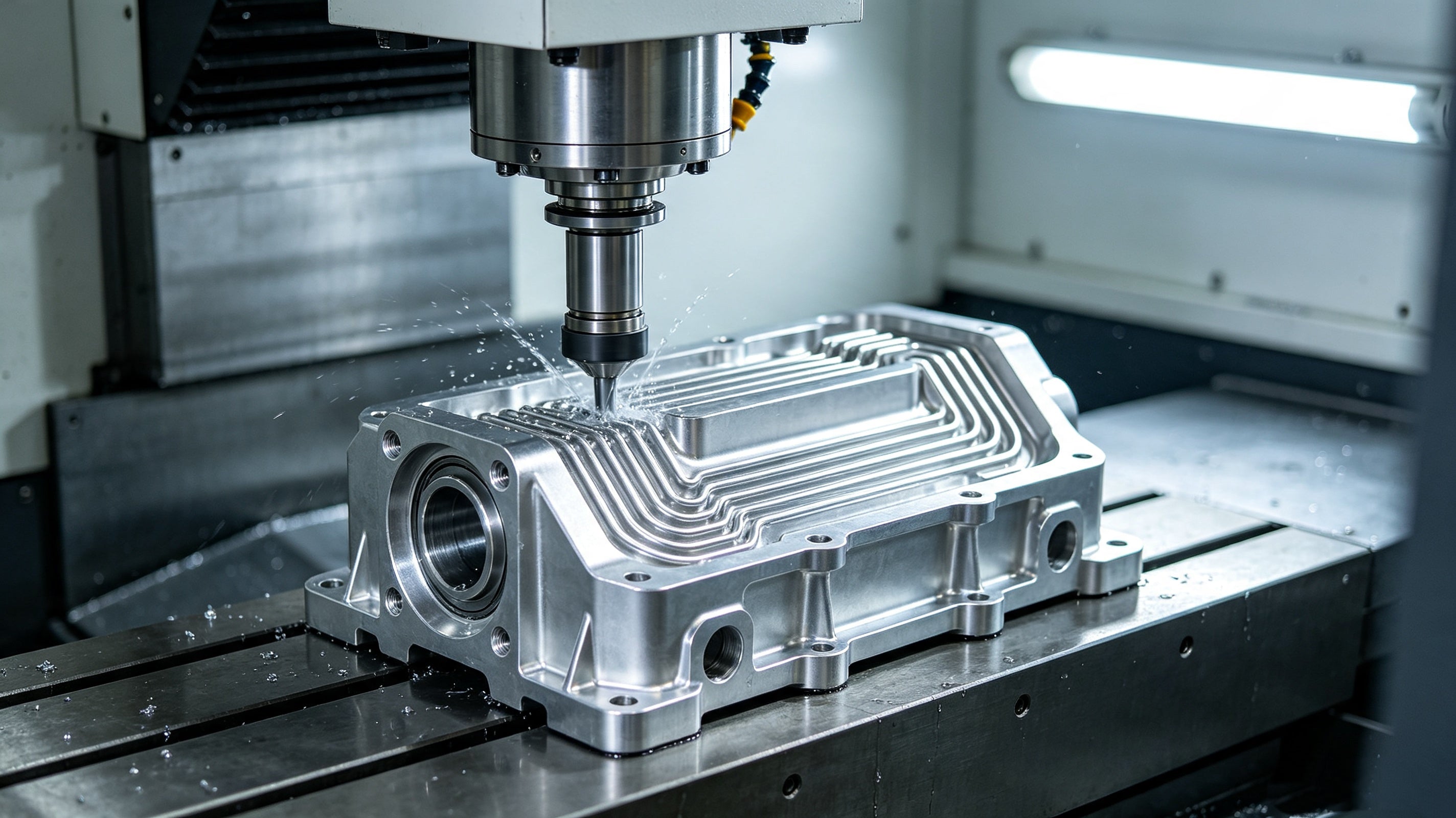
The global transition to electric and lightweight new energy vehicles raises higher standards for precision metal components, shorter R&D iteration cycles and stable batch consistency. Compared with traditional die casting, custom CNC machining delivers tighter dimensional tolerances, flexible design revisions and superior surface finish for complex auto structural parts. EV OEMs, tier-one automotive suppliers and prototype design teams rely on CNC-machined automotive precision components to produce mission-critical parts: motor shafts, liquid cooling housings, automotive sensor enclosures and lightweight suspension aluminum fittings.
As new energy vehicle platforms trend toward compact layouts and high power output, automotive design engineers demand parts that strike a perfect balance between light weight, micron-level precision and long-term operational stability. Custom CNC manufacturing converts complex CAD models into finished functional components without the high upfront costs and rigid limitations of casting molds.
4 Core CNC-Machined Auto Components & Their Key Machining Pain Points
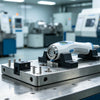
Custom EV Motor Shaft: Strict Concentricity Control for High-Speed Rotation
EV motor shafts are among the most tolerance-critical components within electric drive assemblies. Unlike traditional fuel vehicle transmission shafts, EV variants sustain ultra-high rotational speeds and must maintain seamless fit with bearings, rotors and reduction gears.
The biggest manufacturing hurdle lies in preserving consistent concentricity, straightness and mirror surface roughness throughout turning and milling. Minor dimensional drift will trigger abnormal vibration, accelerate bearing wear and slash overall motor efficiency.
Our multi-stage precision CNC workflow solves this challenge via hard turning, dynamic balance correction and full dimensional inspection. We strictly control bearing seat tolerances, keyway symmetry and rotational balance to guarantee smooth, long-lasting operation for EV drive systems.

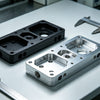
Aluminum Liquid-Cooled EV Housing: Mitigate Thin-Wall Machining Deformation
Water-cooled motor housings feature intricate internal cooling channels, ultra-thin walls and flat sealing mating surfaces. Conventional casting often brings hidden defects including internal porosity, uneven wall thickness and unstable flatness, which severely impede heat dissipation efficiency.
Material removal during CNC machining releases internal aluminum stress, leading to warping and dimensional distortion without proper process control. We adopt segmented machining sequences, low-stress clamping fixtures and optimized cutting parameters to lock in original housing geometry.
For liquid cooling assemblies, precision of sealing grooves and contact flatness is non-negotiable. CNC machining ensures tight matching between housings, gaskets and end caps to prevent coolant leakage under long operating hours.

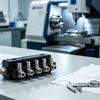
Automotive CNC Sensor Casing: Micro Precision for Signal Stability & Protection
Modern EVs deploy dozens of sensors for battery management, autonomous driving and vehicle safety monitoring. Each CNC-machined sensor casing acts as both mechanical shielding and accurate positioning carrier for sensor chips and wiring connectors.
Manufacturing obstacles include micro miniature features, fragile thin-wall structures and rigorous waterproof sealing requirements. Tiny locating holes, connector ports and assembly surfaces directly determine sensor signal accuracy.
Our stable CNC process maintains uniform surface texture and consistent sealing interface tolerances across all batches. Standardized precision machining cuts assembly adjustment workload for automotive component suppliers.
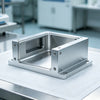
Lightweight Aluminum Suspension Parts: High Structural Strength With Reduced Weight
Suspension assemblies directly govern vehicle handling performance, driving safety and service lifespan. Lightweight aluminum suspension fittings require outstanding strength-to-weight ratios while enduring continuous dynamic mechanical loads.
Complex curved profiles and uneven wall thickness create residual stress during processing, which distorts mounting holes and disrupts load distribution after installation. We utilize high-rigidity fixtures, optimized tool paths and post-machining full inspection to lock critical assembly dimensions, meeting both lightweight targets and structural reliability standards.

How 5-Axis CNC Machining Eliminates Common Auto Component Defects
For geometrically complex EV parts, 5-axis CNC prototype machining outperforms standard 3-axis equipment with unmatched processing flexibility. Multi-angle cutting reaches deep, hard-to-access features in a single setup and minimizes repeated re-clamping.
This advantage shines for contoured motor shafts, intricate sensor casings and curved suspension components. Fewer fixture setups cut accumulated positioning errors and unify dimensional consistency between prototype samples and mass small-batch products.
Our complete 5-axis production workflow includes CAD/CAM digital simulation, trial machining and three-coordinate inspection. This accelerates design validation for automotive engineers and streamlines the transition from prototype testing to mid-volume production.
Ideal Aluminum Alloys for CNC Automotive Precision Components
Material selection lays the foundation for part functionality; different aluminum grades serve distinct automotive application scenarios.
6061 Aluminum: All-Rounder for General EV Structural Parts
6061 balances easy machinability, natural corrosion resistance and moderate mechanical strength. It is widely adopted for sensor brackets, auxiliary structural frames and general EV support fittings.
6082 Aluminum: High-Durability Load-Bearing Structural Parts
With higher tensile strength than universal aluminum alloys, 6082 is the top choice for stress-bearing components such as suspension brackets and vehicle structural connectors.
7075 Aluminum: Ultra-High Strength for High-Performance EV Parts
7075 aerospace-grade aluminum boasts exceptional strength-to-weight performance, ideal for high-performance new energy vehicles where weight reduction and mechanical robustness are prioritized.
Custom CNC Manufacturing Solutions: From Prototypes to Medium Batch Production
Automotive R&D relies on rapid design iteration before formal mass production. Our end-to-end CNC service covers prototype validation, sample testing and low-to-medium volume customized manufacturing.
Customers only need to submit 3D CAD drawings, technical specifications or tolerance requirements for our engineering team to conduct manufacturability analysis, material matching and process optimization.
Whether you are developing a brand-new EV platform, upgrading existing powertrain components or sourcing customized replacement parts, our factory delivers flexible precision machining solutions for global automotive manufacturers.
FAQ for CNC Machined Automotive Precision Components
- What automotive parts can be produced via CNC machining?
We manufacture EV motor shafts, liquid cooling motor housings, sensor enclosures, suspension aluminum fittings and all types of customized precision brackets for new energy vehicles.
- Why pick CNC machining over casting for auto prototypes?
CNC eliminates costly mold development fees, supports instant design modifications and achieves far tighter tolerances, perfectly fitting prototype testing and small-batch orders.
- Which aluminum alloy works best for custom auto CNC parts?
6061 fits general-purpose components; 6082 suits structural load-bearing parts; 7075 is selected for high-strength performance vehicle applications.
- Do you accept small-batch CNC automotive component orders?
Absolutely. CNC machining requires no dedicated casting molds, making it highly suitable for prototype samples, trial batches and small-volume customized production.

Conclusion: Custom Precision CNC Parts for Global EV Manufacturers
From high-precision motor shafts and liquid cooling housings to miniature sensor casings and lightweight suspension components, advanced CNC machining is indispensable for modern new energy vehicle R&D. Our factory supplies consistent-tolerance automotive CNC components, flexible batch production and one-stop engineering technical support for automotive clients worldwide.
Share your CAD files or technical drawings with our team to get a customized quotation for your automotive precision parts project today.