CNC Machined EV Suspension & Brake Aluminum Prototypes
Introduction
The iteration cycle of new energy vehicle chassis and braking systems demands reliable test parts prior to mass production launch. Suspension control arms, lightweight brackets and brake valve casings feature intricate thin-wall structures that combine weight reduction targets with rigid safety standards, bringing unique manufacturing hurdles to component developers.
Distortion after cutting, offset concentricity of precision bores and excessive upfront costs for low-volume trial runs are frequent pain points for EV R&D teams and automotive tier suppliers. Custom CNC machined automotive suspension components solve these bottlenecks perfectly, delivering design-verifiable prototypes with mass-production-level dimensional accuracy without lengthy mold development cycles.
Unlike generic off-the-shelf auto parts, chassis and brake prototypes undergo repeated structural adjustments, durability bench tests and assembly matching checks. Multi-axis CNC machining enables flexible production of geometrically complex aluminum blanks, stabilizing size consistency while supporting frequent CAD drawing revisions for EV chassis innovation.
H2: Why EV Chassis Prototypes Demand Ultra-Precision CNC Machining
Suspension and brake assemblies are core safety-related components that directly determine vehicle handling, riding stability and braking performance. Tiny dimensional deviations will trigger wheel misalignment, abnormal operational vibration and poor sealing of hydraulic brake channels.
Modern EV makers keep optimizing chassis layouts to cut curb weight without sacrificing structural stiffness. Suspension knuckles, lightweight brackets, caliper mounts and integrated brake valve shells involve curved surfaces, deep hollow cavities and multi-directional precision mounting holes, which cannot be fully processed by ordinary 3-axis machine tools.
Tight-tolerance CNC auto components guarantee seamless matching between interconnected chassis modules. For instance, positioning holes on suspension arms require micron-level precision to standardize wheel alignment parameters; internal flow passages inside brake housings need smooth, dimensionally stable inner walls to maintain constant hydraulic pressure during vehicle operation.
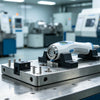
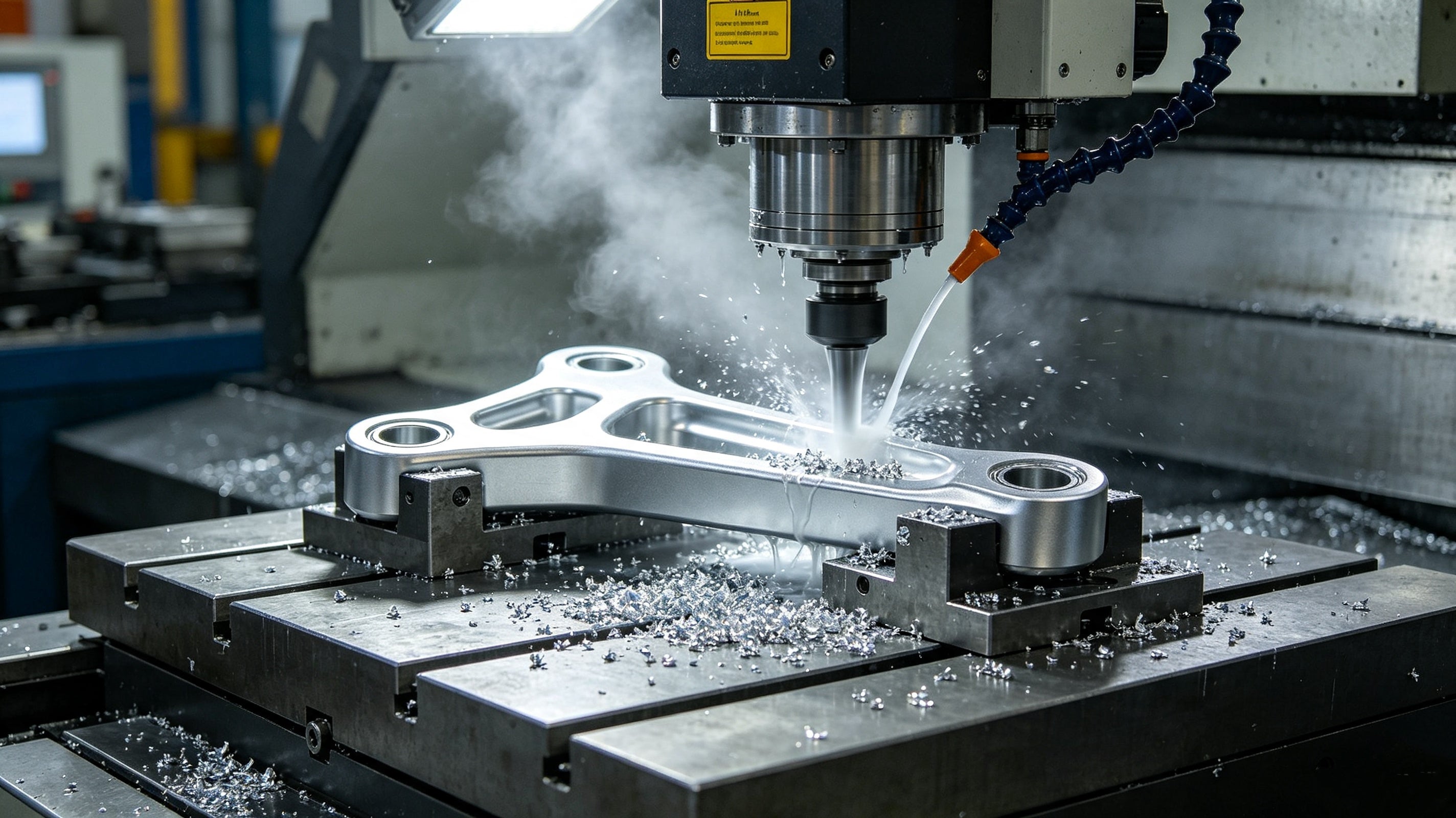
5-axis CNC machining stands out for prototype manufacturing by completing all-sided cutting in one clamping setup. It eliminates cumulative errors caused by repeated workpiece repositioning and delivers uniform surface finish for complex lightweight EV chassis parts.
For EV research teams, CNC rapid prototyping drastically shortens product verification timelines. Engineers upload revised CAD files and receive updated test components within days, skipping the high costs and long lead times of casting mold fabrication.
[Image 1 insertion position: End of this section]
Alt Text: 5-axis CNC machine processing lightweight aluminum EV suspension arm prototype
H2: Key Machining Challenges of Aluminum EV Chassis & Brake Parts
6061-T6 and 6082 aluminum alloys dominate EV prototype production thanks to their light weight, decent tensile strength and easy machinability. Even so, manufacturers must implement strict process control to avoid common production defects.
-
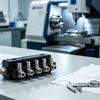
Thin-wall structural distortion during cuttingMost EV suspension parts adopt hollow thin-wall layouts for weight reduction. Aggressive cutting force will warp thin aluminum sections after excess material removal. Experienced CNC manufacturers optimize tool paths, cutting speeds and customized fixture jigs to lock part geometry and eliminate post-machining deformation, especially for slim suspension support brackets.
-
Concentricity & positional accuracy of precision bore featuresBrake system components integrate dozens of interconnected through holes, sealing bores and hydraulic flow channels. Minor machining drift ruins assembly compatibility and impairs brake system stability. Our workshop controls boring feed rates, tracks tool wear in real time and carries out full dimensional inspection to ensure batch consistency of brake CNC parts.
-
High development costs for ultra-low volume prototype ordersEV startups and auto R&D institutes usually only need 1–20 pieces for lab testing. Traditional casting or stamping involves expensive custom molds, which greatly raises early-stage R&D expenditure. CNC machining requires no dedicated tooling, making it cost-effective for single prototypes and small trial batches to validate designs before mass manufacturing investment.
[Image 2 insertion position: End of this challenge chapter]
Alt Text: Lightweight CNC-machined aluminum suspension bracket prototype with hollow thin-wall design

H2: Our Custom CNC Manufacturing Solution for EV Low-Volume Prototypes
We tailor full-cycle CNC machining services for EV engineers and global automotive suppliers, covering early-stage prototype validation to medium-batch trial production. Our mainstream customized chassis and brake CNC parts include:
- Lightweight aluminum suspension control arms
- Prototype steering knuckles
- EV brake caliper mounting brackets
- Integrated brake valve housings
- Custom chassis connection fittings
Our workshop deploys 3-axis, 4-axis and full 5-axis CNC equipment to fabricate complex aluminum components with superior surface smoothness and repeatable dimensional tolerance. All aluminum blanks adopt automotive-grade 6061 & 6082 materials matched to new energy lightweight standards.
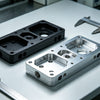
For brake prototype orders, our machinists prioritize precision of internal cavities, flat sealing surfaces and standardized connection ports. The internal hydraulic channels of brake valve housings are strictly calibrated, as dimensional fluctuations will directly disrupt braking fluid circulation.
When processing suspension structural parts, we design targeted fixtures and optimize cutting sequences upfront to mitigate thin-wall deformation risks. Instead of simply following CAD drawing cutting paths, our technical team evaluates structural weakness points and adjusts processing parameters to guarantee qualified finished prototypes for real vehicle testing.
Our streamlined production workflow helps overseas automotive purchasers lower prototype testing risks and acquire stable, functional aluminum chassis components at competitive costs.
[Image 3 insertion position: End of this solution paragraph]
Alt Text: Precision CNC machined aluminum brake valve housing for electric vehicle hydraulic systems
[Image 4 insertion position: Before FAQ segment]
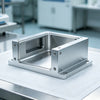
Alt Text: CMM precision inspection for EV suspension CNC prototype dimensional verification

FAQ: Top Questions From Global Automotive Procurement & R&D Teams

Q1: What dimensional tolerances can you reach for EV suspension CNC prototypes?
Tolerance standards vary based on part structure, aluminum material and testing requirements. Our CNC workshop maintains micron-level tight tolerance for core functional surfaces, fully meeting bench testing and real vehicle assembly standards for EV chassis prototypes.
Q2: Why select CNC machining over die casting for small-quantity auto prototypes?
Casting requires expensive custom molds with long lead times, which is uneconomical for frequent design revisions. CNC machining supports rapid CAD iteration, allowing updated prototype production within several days without extra mold investment.
Q3: Can your workshop support both one-off prototypes and medium-batch auto component production?
Absolutely. We provide seamless production transition: customers start with small prototype batches for performance verification, then scale up to medium-volume manufacturing while retaining identical machining precision and surface quality standards.
[Image 5 insertion position: After FAQ section]
Alt Text: Small batch production workstation for custom EV suspension and brake CNC aluminum parts

Conclusion
Lightweight, high-safety EV suspension and brake systems rely on flexible, high-precision manufacturing solutions to accelerate design iteration and road testing. Custom aluminum CNC prototypes, multi-axis processing technology and deformation-control production processes enable automotive manufacturers to convert conceptual chassis designs into test-ready components efficiently.
Get in touch with our professional CNC engineering team to share your requirements for suspension arms, brake housings and other tight-tolerance automotive machined parts, and secure a tailored quotation quickly.