Custom Precision CNC Machining for Industrial Robot Components | Robotic Spare Parts Manufacturing
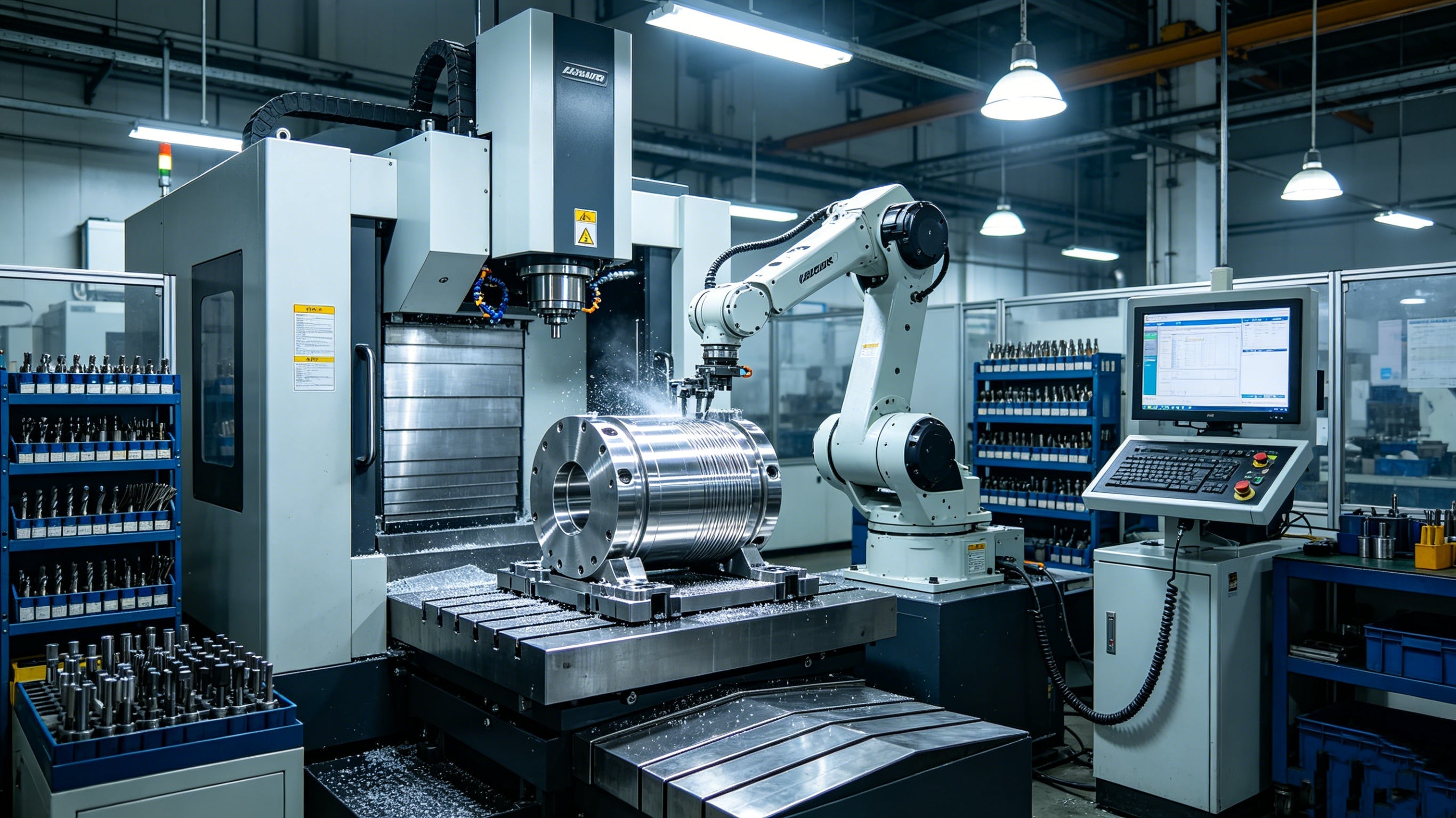
Modern industrial robots are continuously upgraded to deliver faster operation, lighter structural weight, and higher positioning accuracy. From six-axis industrial arms and collaborative cobots to AGV mobile robots and automated production equipment, every mechanical component determines the overall system stability and service lifespan. Parts with poor dimensional consistency frequently cause assembly interference, persistent operational vibration, accelerated bearing wear, and reduced motion repeatability.
For automation OEMs, system integrators, and robotics manufacturers, selecting a qualified CNC machining partner relies on far more than basic processing capabilities. Stable manufacturing processes, professional material application expertise, complete quality traceability, flexible production capacity, and consistent on-time delivery are equally critical for long-term project cooperation.
As a professional precision CNC machining factory focused on robotic and automation components, we specialize in robot CNC machined parts and custom robotic components precision machining. We deliver customized structural and functional parts for industrial robots, collaborative robots, AGVs, servo systems, and intelligent automation equipment. With strict dimensional control, stable batch consistency, and complete inspection documentation, we fully support customer prototype verification, trial production, and large-scale mass manufacturing.
Equipped with advanced 5-axis CNC machining centers and standardized process management systems, we conduct full-range dimensional inspection for every batch of parts. We help global customers obtain lightweight, high-rigidity robotic components with a stable tolerance accuracy of up to ±0.01 mm, meeting strict industrial automation operation standards.
Why High-Precision CNC Machining Is Critical for Industrial Robots
Industrial robots operate continuously under complex dynamic load conditions. All moving components must maintain ultra-precise positioning while minimizing mechanical vibration and wear to ensure long-term stable operation.
Unlike general mechanical equipment, robotic systems require the precise coordination of multiple assembled components. Tiny machining errors will accumulate along the entire motion chain, ultimately undermining positioning repeatability, payload accuracy, and overall equipment reliability.
Professional industrial robot spare parts CNC manufacturing brings core advantages for robotic system operation:
-
Fits perfectly without secondary trimming or excessive assembly adjustment
-
Improves motion repeatability and stability during high-speed operation
-
Effectively reduces vibration of rotating and moving assemblies
-
Optimizes load distribution for bearings and reducers
-
Extends the service life of precision transmission components
-
Enhances overall assembly efficiency for batch production
Typical robotic application scenarios that require high-precision CNC machining include:
-
Industrial six-axis robot arms and collaborative cobots
-
AGV mobile robot chassis and structural frames
-
Servo motor housings and mounting structures
-
Robotic end effectors and gripper accessories
-
Harmonic reducer housings and transmission components
-
Robot base support frames and automated production line fixtures
As robotic equipment evolves toward lightweight and high-speed design, high-precision CNC machining becomes indispensable for balancing structural rigidity and overall equipment weight.
Key Materials for CNC Machined Robot Parts (Strength & Lightweight Balance)
Material selection directly determines the weight, structural rigidity, fatigue resistance, thermal stability, and service performance of robotic components. We select the most suitable materials based on actual load conditions, operating environments, and customer cost requirements to achieve the best balance of performance and economy.
Aerospace-Grade Aluminum Alloy for Lightweight Robot Frames
Aluminum alloy is the most widely used material for robotic structural parts, thanks to its excellent strength-to-weight ratio and outstanding comprehensive processing performance. Our commonly used grades include 6061-T6, 6082, and 7075-T6 aerospace aluminum alloys.
Aluminum alloy features lightweight texture, excellent machinability, high corrosion resistance, and stable dimensional performance. It supports hard anodizing treatment, effectively reducing moving inertia while ensuring structural stability.
It is widely applied in robot arm frameworks, cobot overall frames, servo mounting plates, sensor brackets, end effector supports, and AGV chassis structures. Our mature lightweight robot alloy machining process optimizes cutting parameters and tool paths to minimize residual stress and avoid post-machining deformation.
Titanium Alloy for High-Load Robotic Joint Components
Titanium alloy delivers ultra-high strength while maintaining a lighter weight than steel, featuring excellent fatigue resistance and thermal stability. Although titanium alloy machining requires professional processing strategies due to low thermal conductivity and high cutting resistance, it is the optimal choice for high-load and high-precision robotic core components.
It is mainly used for robotic joint core parts, high-load rotating shafts, precision mounting interfaces, high-end aerospace automation equipment, and medical robotic systems. For customers with robotic joint components machining demands, our engineering team adjusts spindle speed, coolant delivery, and cutting depth in real time to eliminate heat deformation and ensure consistent surface precision of parts.
Carbon Steel & Alloy Steel for Heavy-Duty Robot Bases
Heavy-duty industrial robots bear large impact loads and long-term static pressure, requiring higher structural rigidity than aluminum alloy can provide. Carbon steel and alloy steel are ideal for heavy-load robotic supporting structures.
These steel materials offer high stiffness, superior wear resistance, excellent impact resistance, and long-term dimensional stability, suitable for robot base plates, heavy equipment frames, reducer housings, mechanical connection interfaces, and high-load structural brackets. We adopt standardized stress relief treatment and layered machining processes to eliminate internal stress and ensure no deformation during long-term service.

Ultra-Tight Tolerance Machining for Robotic Functional Parts
Robotic functional assembly parts require precise clearance coordination, which ensures flexible and smooth operation without jitter or jamming. For all core precision components, we stably control the machining tolerance within ±0.01 mm, fully meeting high-standard assembly and operation requirements.
Ultra-tolerance precision machining guarantees accurate bearing installation, concentric shaft alignment, precise reducer positioning, flexible joint rotation, and stable servo mounting, effectively improving the repeat positioning accuracy and overall operational stability of robots.
High-precision manufacturing relies on standardized process control rather than single equipment accuracy. Our complete processing system includes standardized material pre-treatment, layered roughing and finishing, real-time tool wear monitoring, constant-temperature machining environment, customized precision fixtures, and post-process calibration inspection.
For thin-wall aluminum robotic parts that are prone to deformation, we optimize cutting paths, reduce concentrated clamping force, and evenly distribute machining loads to maintain complete dimensional stability. This core advantage enables our tight tolerance robotic aluminum parts to perform stably in precision robotic joints, servo systems, and automated equipment.

Common Custom CNC Robot Components We Produce
We provide one-stop customized CNC machining services for global automation customers, processing various robotic and automation components strictly according to customer 2D drawings and 3D models. Our mainstream products cover all core structural and functional parts of industrial robots and AGV equipment:
Robot Joint Housings
High-precision machined joint shells, matching bearings and reducer assemblies, with accurate hole position tolerance and stable assembly clearance to ensure smooth rotation of robotic joints.
Harmonic Reducer Housings
Core transmission structural parts, requiring ultra-high concentricity and flatness, effectively ensuring the stable operation of robot transmission systems and reducing operational noise.
AGV Structural Frames
Lightweight and high-rigidity aluminum alloy frames, customized for mobile robots, balancing equipment weight and load-bearing capacity to adapt to long-term continuous mobile operation.
Robotic Gripper Components
Including precision gripper fingers, mounting plates, tool changers and customized clamping structures, with precise dimensional control to meet automated grabbing and handling needs.
Servo Motor Mounts
Precision mounting and fixing structures, ensuring accurate shaft alignment, reducing operational vibration, and improving the stability of servo power output.
Robot Base Supports
High-rigidity load-bearing structures, absorbing equipment operation vibration and impact loads, maintaining long-term positioning accuracy of robotic equipment.
Automation Equipment Connection Parts
Custom brackets, adapters, connecting blocks and guide structures, widely used in automated production lines. Our rich experience in automation equipment precision CNC parts helps customers integrate supply chains and reduce procurement costs.

CNC Processing & Surface Finishing for Robotic Parts
Precision machining determines the dimensional accuracy of parts, while professional surface finishing directly affects wear resistance, corrosion resistance, service life and assembly appearance of robotic components. We provide full-process customized surface treatment solutions for different robotic application scenarios:
Hard Anodizing
Suitable for aluminum alloy robotic parts, improving surface hardness and wear resistance, enhancing corrosion resistance, and providing electrical insulation protection for operational components.
Standard Anodizing
Optimizes surface appearance, forms a protective oxide layer, and improves corrosion resistance without affecting part dimensional accuracy.
Sand Blasting
Forms a uniform and delicate surface texture, eliminating tool marks, improving surface adhesion, and laying a foundation for subsequent anodizing and coloring treatment.
Precision Polishing
Applied to sealing surfaces, sliding fitting surfaces and precision optical components to reduce surface roughness and ensure flexible fitting movement.
Black Oxide
Used for carbon steel parts, providing basic anti-rust and corrosion protection with zero impact on part dimensional accuracy.
Full Deburring
All edges and corners are precisely deburred to eliminate sharp edges, avoid assembly scratches, and improve overall assembly safety and fineness.
Dynamic Balancing
Professional dynamic balancing calibration for rotating robotic components reduces high-speed operation vibration and improves equipment operational stability and service life.
Strict QC Inspection Process for Robotic Machined Components
Stable batch quality comes from systematic full-process quality control, not random sampling inspection. We implement strict quality management from raw material entry to finished product delivery to ensure every robotic part meets customer standards.
Incoming Material Inspection
Verify raw material grades, surface quality and original material certificates to eliminate unqualified materials and avoid subsequent processing risks.
In-Process Inspection
Operators conduct regular dimensional sampling during processing, focusing on monitoring key tolerances, adjusting processing parameters in time, and preventing batch dimensional deviations.
CMM Full-Dimension Inspection
Finished parts are fully inspected by CMM coordinate measuring machine according to customer drawings, covering linear dimensions, hole position accuracy, flatness, roundness, concentricity, perpendicularity and other geometric tolerances. Complete official inspection reports can be provided with goods.
Surface Quality Verification
Inspect finished parts for burrs, tool marks, surface coating defects and appearance flaws to ensure consistent surface quality of all products.
Professional Protective Packaging
All precision components are cleaned, dust-free treated and individually protected. Special shockproof packaging is adopted for export transportation to avoid collision and deformation during delivery.
We can provide complete quality documents including material certificates, CMM inspection reports, surface treatment certificates, FAI first article inspection reports and batch traceability records according to customer requirements.
FAQ – Custom CNC Machining for Robot Components
1. What tolerance can you achieve for robotic components?
We stably achieve a precision tolerance of ±0.01 mm for most robotic precision structural and functional parts. The specific accuracy can be adjusted according to part structure, material characteristics and customer functional requirements.
2. Do you support prototype machining before mass production?
Yes. We provide one-stop services including rapid prototype verification, engineering sample production, pilot trial production and formal mass production to meet customers' whole-cycle R&D and production needs.
3. Which materials do you machine most frequently?
We commonly process 6061/7075 aluminum alloy, titanium alloy, carbon steel, alloy steel, stainless steel, brass and engineering plastics, covering all conventional and high-performance materials for robotic equipment.
4. Can you machine complex 5-axis robot components?
Absolutely. Our 5-axis CNC for robot structural components supports one-time clamping and forming of complex multi-angle and special-shaped parts, reducing clamping errors and improving part dimensional consistency and processing efficiency.
5. Are various surface treatments available?
We provide complete surface processing services including ordinary/hard anodizing, sandblasting, precision polishing, black oxide treatment and full deburring to meet different functional and appearance needs of robotic parts.
6. Can you provide official inspection reports?
Yes. We can provide complete material certification, full-dimensional CMM inspection reports and surface treatment qualification reports for each batch of products to support customer quality auditing.
7. What production quantities do you accept?
We support flexible production modes including single prototype, small-batch sample trial production and large-scale mass production, adapting to different stages of customer product R&D and batch manufacturing.
8. What information is required for quotation?
Customers only need to provide 2D drawings or 3D CAD files, with detailed requirements for materials, surface treatment, tolerance standards and production quantity. Our engineering team will complete DFM analysis and provide an accurate formal quotation within 24 hours.
Partner with an Experienced CNC Machining Factory for Robotic Components
The performance and stability of industrial robotic equipment depend on both innovative design and high-precision manufacturing. A professional CNC processing supplier with stable processes and perfect quality control can effectively reduce customer R&D risks and production costs, and support long-term stable project cooperation.
We focus on customized precision machining for global automation and robotic industries, professionally providing robot CNC machined parts, custom robotic components precision machining, industrial robot spare parts CNC manufacturing, robotic joint components machining, automation equipment precision CNC parts, tight tolerance robotic aluminum parts, 5-axis CNC for robot structural components and lightweight robot alloy machining services.
We support the whole-process service from prototype verification to mass production, with flexible production capacity and stable delivery cycles. Send your 2D drawings or 3D CAD files now, and our professional engineering team will provide customized DFM processing suggestions and detailed quotations within 24–48 hours. We are your reliable long-term manufacturing partner for high-precision robotic components.