Precision CNC Machining for Custom Medical Device Components | Biocompatible Medical Machined Parts
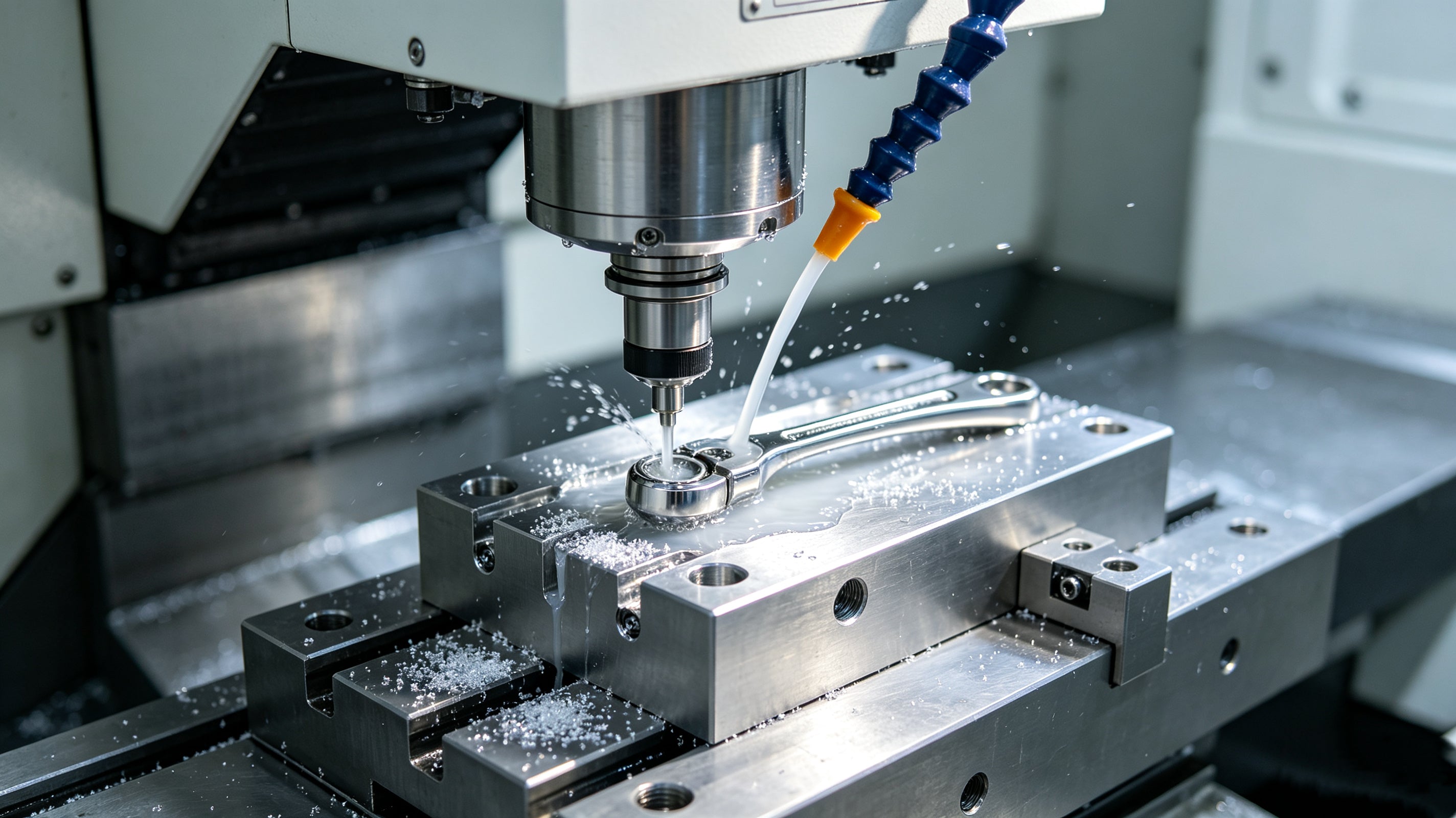
Every component used in medical equipment directly impacts clinical accuracy, patient safety, and regulatory compliance. Unlike general industrial machinery parts, medical-grade CNC components demand uncompromising dimensional stability, full biocompatibility, sterile surface integrity, and consistent batch quality that holds up to repeated sanitization and strict global medical standards. Even minor manufacturing flaws can lead to device malfunction, failed compliance audits, or delayed product launches for medical OEMs.
Specializing in custom medical CNC machining for global healthcare equipment manufacturers, our factory delivers application-specific precision components tailored for diagnostic tools, surgical devices, lab analytical instruments, and therapeutic medical systems. We prioritize medical-grade process control, full production traceability, and contamination-free manufacturing, covering the entire project lifecycle from proof-of-concept prototypes to large-scale commercial mass production.
By adopting medical-exclusive machining strategies and standardized quality protocols, we resolve core industry pain points including sanitization-induced deformation, surface microbial residue risks, inconsistent batch dimensions, and incomplete compliance documentation for global medical certification.
1. Core Differences Between Medical-Grade CNC Machining and Industrial Machining
Medical component manufacturing operates under a far stricter quality framework than conventional industrial part production. It is not merely about precision machining, but about building a compliant, traceable, and safety-oriented manufacturing system aligned with clinical application scenarios and international medical regulations.
Clinical Safety-First Biocompatibility Control
Components for medical use often contact human tissues, bodily fluids, or sterile laboratory specimens. Standard industrial machining materials and processes leave residual cutting fluids, metal micro-particles, and unstable chemical compositions that fail biocompatibility and cytotoxicity testing. We exclusively adopt FDA and CE-compliant certified raw materials, independent medical production workflows, and professional degreasing and dust-free cleaning procedures to eliminate cross-contamination and meet clinical safety benchmarks.
Micron Precision for Miniaturized Medical Mechanical Systems
Modern minimally invasive surgery, portable diagnostic devices, and automated clinical testing systems rely on ultra-compact, high-precision mechanical structures. Subtle dimensional errors in sealing surfaces, positioning holes, and moving matching features will trigger inaccurate sensor readings, poor sealing performance, and unsmooth mechanical operation. Strict micron-level tolerance control ensures long-term stable and reliable operation of high-end medical equipment in clinical and laboratory environments.
Sanitization-Resistant Structural Stability
Reusable medical devices undergo cyclic high-temperature autoclaving, hydrogen peroxide sterilization, and chemical disinfection throughout their service life. Conventional rough machining leaves residual internal stress, which gradually releases after repeated temperature and chemical erosion, causing part warping, assembly looseness, and structural failure. Our targeted stress-relief machining and balanced cutting techniques lock in dimensional stability for long-term sanitization cycles.
Full Lifecycle Traceability for Regulatory Compliance
Global medical regulatory authorities require complete production traceability for all medical device components. Every batch of parts must support full record verification, including raw material certification, machining process parameters, equipment calibration data, operator records, and finished product inspection reports. Our standardized process system simplifies OEM audit procedures and accelerates FDA, CE, and ISO 13485 certification progress.
2. Specialized Medical-Grade Materials for Diverse Medical Scenarios
Material performance determines the safety, durability, and compliance of medical components. We select targeted certified materials based on different clinical and laboratory application scenarios, ensuring optimal biocompatibility, corrosion resistance, and sanitization adaptability for every customized part.
Medical-Grade 6061/7075 Aluminum – Lightweight Diagnostic Device Structures
Certified 6061-T6 and high-strength 7075 medical aluminum are the preferred materials for portable and desktop diagnostic equipment. Featuring low density, excellent thermal stability, and stable mechanical properties, these aluminum grades support lightweight equipment design while ensuring structural rigidity. After medical-grade hard anodizing treatment, the surface gains anti-corrosion, anti-fouling, and insulating properties, fully adapting to long-term clinical environment use.
Common Applications: Medical imaging equipment brackets, clinical monitoring device housings, portable diagnostic instrument frames, electronic shielding structures, optical precision mounting bases
316L Medical Stainless Steel – Reusable Surgical & Disinfection Components
Low-carbon 316L stainless steel is universally recognized for reusable surgical equipment, with ultra-low impurity composition and superior resistance to medical disinfectants and high-temperature sterilization. It avoids rusting, surface oxidation, and performance degradation after long-term cyclic disinfection. Post-machining electropolishing and passivation eliminate surface micro-defects, achieving a smooth, residue-free surface that inhibits bacterial adhesion.
Common Applications: Surgical instrument handles, precision clamping components, medical control valve bodies, equipment connecting joints, positioning guide sleeves
Ti-6Al-4V Medical Titanium Alloy – Orthopedic & Surgical Positioning Fixtures
Titanium alloy boasts high specific strength and excellent human body compatibility, making it ideal for high-precision medical auxiliary tools and orthopedic equipment. It resists metal fatigue and deformation under complex stress environments. We adopt low-heat slow-speed cutting processes to avoid material thermal deformation and surface micro-cracks, preserving the integrity and biocompatibility of titanium components.
Common Applications: Orthopedic correction fixtures, surgical navigation brackets, implant positioning tools, bone fixation auxiliary components
Medical PEEK & Delrin – Disposable & Isolation Structural Parts
Medical engineering plastics feature non-toxicity, chemical corrosion resistance, and excellent electrical insulation, widely used in disposable medical devices and laboratory fluid control systems. We adopt low-stress precision machining to eliminate burrs and tool marks, ensuring consistent batch dimensional accuracy and meeting disposable medical safety standards.
Common Applications: Laboratory fluid control modules, disposable instrument supports, equipment insulation blocks, test fixture spacers

3. Ultra-Precision Machining Technology for Medical Core Functional Parts
Medical core functional components require far higher precision standards than ordinary mechanical parts. Our factory stably maintains ultra-tight tolerances of ±0.005mm to ±0.01mm for key functional features, fully meeting the assembly and operating precision requirements of high-end diagnostic, surgical, and laboratory medical equipment.
For complex multi-curved miniature medical parts, we apply 5-axis one-clamping integrated machining technology. This process eliminates cumulative positioning errors caused by repeated fixture replacement, ensuring consistent spatial position accuracy, flatness, and concentricity of intersecting precision features, and greatly improving part assembly compatibility.
Aiming at the common deformation problem of thin-wall medical components, we adopt layered roughing, staged stress relief, and post-thermal-stabilization finishing processes. All medical parts are produced in independent dedicated processing areas with exclusive cutting tools and cleaning procedures to completely isolate industrial oil stains, mixed material residues, and cross-contamination risks.
Core Machining Coverage: Micro fluid pump housings, high-precision medical valve seats, sensor fixing bases, endoscope positioning structures, surgical needle clamping components, optical calibration brackets

4. Custom Medical CNC Components We Specialize in Manufacturing
We focus on full-custom precision CNC machining for the medical and healthcare industry, covering diagnostic equipment, surgical devices, laboratory testing systems, and medical auxiliary facilities. All products are customized strictly according to customer 2D engineering drawings and 3D CAD files without standard off-the-shelf products:
-
Surgical instrument structural shells and precision matching parts
-
Clinical diagnostic analyzer frames and load-bearing bases
-
Medical sensor fixing brackets and precision calibration plates
-
Medical implant positioning fixtures and surgical auxiliary tools
-
Infusion equipment structural parts and fluid control manifolds
-
MRI non-magnetic aluminum structural components for medical imaging
-
Endoscope precision outer shells and internal connecting components
-
Laboratory testing equipment support and positioning blocks
-
Medical sterilization tray structural parts and isolation brackets
-
Medical optical equipment precision mounting components

5. Medical-Approved Surface Finishing for Sterilization & Biocompatibility
Surface finishing of medical components is not only for appearance optimization, but also a key process to ensure clinical safety and long-term service life. All our surface treatments comply with international medical standards, featuring no toxic precipitation, no residual pollutants, and stable performance after repeated disinfection and sterilization.
Medical Hard Anodizing for Aluminum Components
This process forms a dense, stable oxide protective layer on aluminum surfaces, effectively improving surface hardness and wear resistance. It resists erosion by various medical disinfectants, maintains stable insulation performance, and prevents surface fouling, making it ideal for long-term use on diagnostic equipment housings and structural frames.
Electropolishing & Passivation for Stainless Steel Parts
Professional electropolishing removes microscopic tool marks and burrs on stainless steel surfaces, while passivation optimizes the surface oxide layer. The dual process enhances overall corrosion resistance, eliminates bacterial adhesion points, and ensures easy cleaning and disinfection, perfectly matching the usage needs of reusable surgical components.
Medical-Grade Non-Toxic Sandblasting
Controlled fine sandblasting creates a uniform matte texture on component surfaces, optimizing equipment appearance while improving coating adhesion. The whole process uses non-toxic and pollution-free abrasives, meeting medical clean standards, and is widely used for medical equipment panels and instrument handles.
Universal Sterilization Compatibility
All finished medical components are verified to adapt to mainstream medical sterilization methods, including high-pressure steam autoclaving, hydrogen peroxide disinfection, and chemical reagent cleaning. No surface peeling, discoloration, or performance attenuation occurs after long-term cyclic sterilization.
6. ISO 13485 Compliant Full-Process Quality Inspection System
To meet the strict quality audit requirements of global medical OEMs, we have established a complete ISO 13485 standardized quality control system, implementing full-process monitoring and traceability from raw material incoming inspection to finished product delivery, ensuring every batch of parts meets FDA and CE medical manufacturing standards.
Raw Material Qualification Verification
All medical-grade raw materials are accompanied by official material certificates, alloy component test reports, and biocompatibility qualification documents before warehousing. We strictly screen material sources to eliminate unqualified raw materials and lay a foundation for compliant production.
In-Process Real-Time Sampling Monitoring
During production, professional QC personnel conduct regular sampling inspections on key dimensions, surface roughness, and processing status. Potential processing deviations are corrected in real time to avoid batch defective products and ensure consistent process stability.
CMM Full-Dimensional Precision Inspection
Core precision medical components undergo full-size inspection by high-precision coordinate measuring machines (CMM), covering position tolerance, flatness, perpendicularity, profile accuracy and other key indicators. Complete CMM inspection reports can be provided to support customer certification and quality audit.
Dust-Free Cleaning & Medical-Level Export Packaging
All finished parts undergo professional degreasing, dust removal, and sterile cleaning. We adopt anti-collision, dust-proof, and pollution-free customized packaging to avoid secondary contamination during international transportation, ensuring parts arrive in full compliance with medical clean standards.
7. FAQ – Custom Medical Device CNC Machining Services
1. Can you support customized medical prototypes and mass production? We provide one-stop customized services covering medical prototype verification, pilot batch testing, and large-scale commercial mass production. All stages adopt unified medical-grade process standards and inspection specifications to ensure consistent quality in the whole cycle.
2. What design files do you accept for medical component processing? We support mainstream 3D CAD files including STEP, IGES, Parasolid, SolidWorks, and standard 2D engineering drawings with complete GD&T tolerance markings to ensure accurate interpretation of all processing features.
3. Can you provide complete medical compliance documents? Yes. We can provide customized supporting documents such as raw material qualification certificates, batch production traceability records, full CMM dimensional inspection reports, and product conformity certificates to assist customers in global medical certification.
4. What is the minimum tolerance for medical precision parts? Combined with part structure and material characteristics, we can stably achieve ultra-precision tolerance of ±0.005mm, meeting the ultra-high precision processing requirements of medical miniature functional components.
5. Do you process customized titanium alloy and PEEK medical parts? We have mature processing experience in medical titanium alloy orthopedic fixtures and PEEK insulating structural parts, strictly following medical production standards to ensure biocompatibility and dimensional accuracy.
6. How do you prevent contamination during medical part production? We adopt independent medical production scheduling, exclusive processing tools, professional dust-free cleaning procedures, and full-process environmental control to completely eliminate cross-contamination and residual pollution risks.
7. Will you provide batch inspection reports for shipments? We can provide first article inspection reports, batch dimensional inspection data, and complete CMM test reports according to customer quality system requirements, supporting customer incoming inspection and regulatory audits.
8. Do you provide free DFM optimization for medical designs? Our professional engineering team provides free medical-oriented DFM manufacturability analysis, optimizing tolerance distribution, processing feasibility and surface matching schemes, reducing customer production risks and certification costs.
Conclusion
Medical device CNC machining is a high-standard, compliance-oriented precision manufacturing service that determines the safety and market competitiveness of medical equipment. With strict ISO 13485 quality management, medical-exclusive processing technology, full traceability production system, and ultra-high precision manufacturing capability, we help global medical OEMs optimize product quality, reduce certification risks, and accelerate product market launch.
We accept customized processing of 2D engineering drawings and 3D CAD files, supporting medical component prototype development and mass production. All quality inspection documents and compliance certificates can be delivered with products. Send your design files to our team for professional DFM evaluation and competitive quotation, with detailed technical feedback provided within 24–48 hours.