Black Titanium Exposed: What It Really Is And What It Isn't
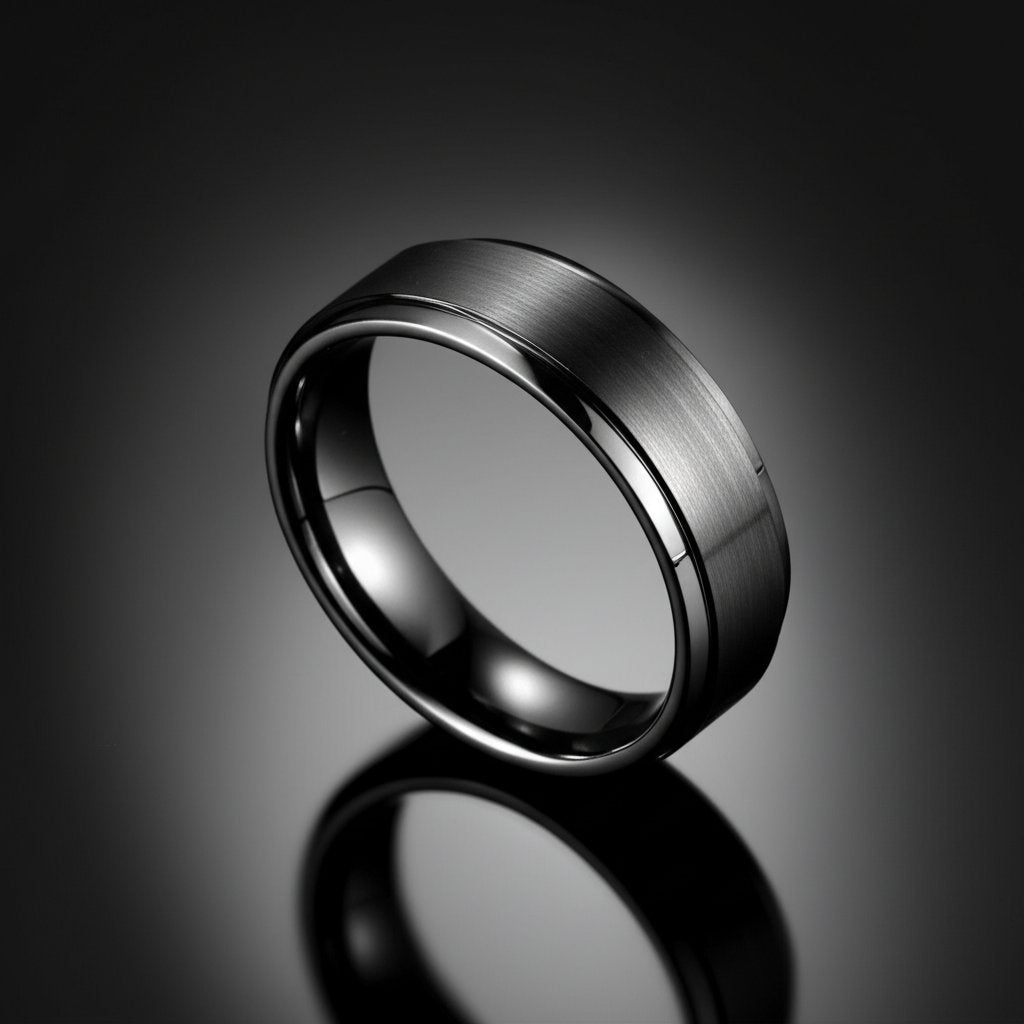
What Black Titanium Really Means
Ever wondered why a black titanium ring looks so bold and modern, while the titanium used in aerospace or medical devices is a classic silver-gray? The answer lies in the science of surfaces, not in the core metal itself. Let’s break down what black titanium truly is—and what it isn’t—so you can make informed choices for your next piece of jewelry or component.
What is black titanium?
Black titanium isn’t a naturally black metal. In its pure form, titanium is a strong, lightweight, silver-gray metal prized for its corrosion resistance and hypoallergenic properties. The deep, dark appearance you see on a black titanium ring or component comes from a surface treatment, not from a change in the metal’s chemical makeup. This distinction is crucial: the titanium beneath remains its original color and properties, while only the outer layer achieves the black look through advanced finishing techniques.
How black color is applied to titanium
So, how do makers turn titanium black? Here are the most common approaches:
- PVD Coating (Physical Vapor Deposition): A thin, hard film—often titanium nitride or carbon-based—is deposited onto the titanium in a vacuum. This method creates a durable, deep-black finish and is widely used for both jewelry and technical parts.
- DLC Coating (Diamond-Like Carbon): A specific type of PVD where a carbon-rich, diamond-like layer is applied, resulting in a very hard, wear-resistant black surface.
- Anodizing: An electrochemical process that thickens the natural oxide layer on titanium. While often marketed as "black anodized titanium," this finish typically results in a dark gray or interference color—not a true, deep black.
- Heat Patina: Controlled heating forms a blackened oxide layer, but this is less common for jewelry and is more often used for decorative or industrial parts.
- Laser Blackening: Laser treatment can create a darkened surface for specific technical or aesthetic applications.
- Powder Coating or Paint: Sometimes, products are described as "black titanium" based on a color name rather than the actual metal or process. This is common in industries like automotive or hardware, where "titanium black" might refer to a paint shade, not a metal that is black in color.
Solid titanium versus coated surfaces
It’s important to spot the difference between a solid-color metal and a coated finish. While some metals—like certain forms of black zirconium—can be transformed at the surface to become black throughout, black titanium almost always refers to a surface process. The base metal stays silver-gray underneath. This means that with enough wear, scratches, or abrasion, the underlying color may show through, especially on high-contact items like rings (source).
- Blackening titanium doesn’t change the core strength or hypoallergenic nature of the metal.
- True naturally black metals are rare—most black jewelry metals are surface-treated.
- If you see a product described as "titanium black," ask if it’s a real titanium item or just a color name.
- Powder-coated or painted items may be called "black titanium" in marketing, but they may not contain any titanium at all.
Spot the difference: Is it really black titanium?
- Does the item show silver or gray at worn edges or scratches? It’s likely a coated titanium piece.
- Is the term "black titanium" used as a color name for paint or powder coat? It may not be actual titanium.
- Does the supplier specify PVD, DLC, or anodizing as the finish? That’s a true surface treatment on titanium.
- Does the seller provide details about what is a titanium ring, including base metal grade and coating process?
When shopping for black titanium, always check whether you’re getting a surface-treated titanium item or a product that’s simply named for its color. This helps you set realistic expectations for appearance, durability, and long-term wear.
Understanding the difference between engineered black finishes and naturally black metals puts you in control as a buyer—whether you’re after a sleek black titanium ring or a high-performance technical component. In the next section, we’ll decode the terminology behind these finishes so you can shop and specify with confidence.
Finish Types and Terminology Decoded
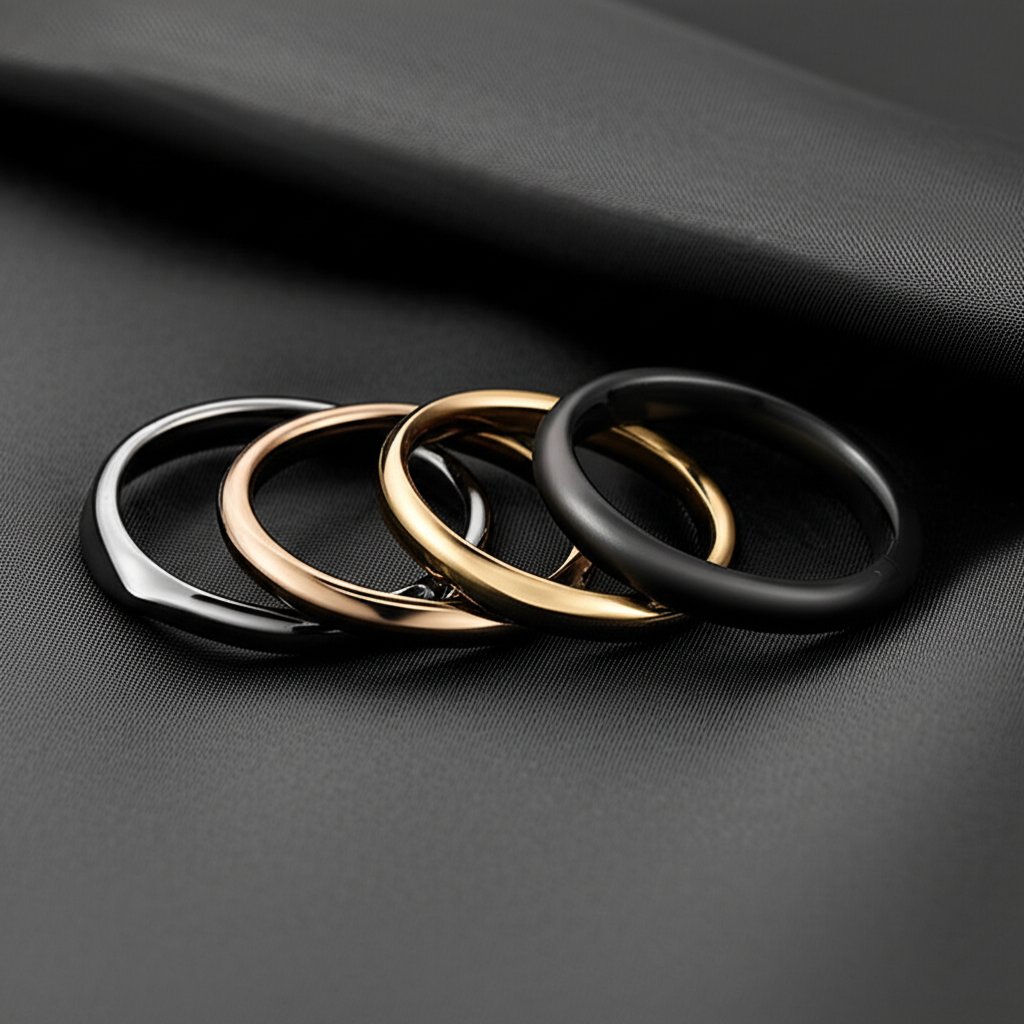
Ever noticed that black titanium wedding rings, blackened gold rings, and even black ceramic bands all get lumped together in online listings and jewelry counters? Sounds confusing? It is—unless you know how to decode the language of modern metal finishes. Let’s break down what these terms really mean, so you can confidently choose the right black ring for your style and needs.
What is PVD on titanium?
PVD, or Physical Vapor Deposition, is a high-tech process where a thin, durable film is deposited onto a metal surface inside a vacuum chamber. For jewelry, this often means a black finish is added to titanium or stainless steel using compounds like titanium nitride or titanium carbonitride. The result: a tough, scratch-resistant surface that gives rings their bold, dark look.
- PVD (Physical Vapor Deposition): A vacuum-based coating process using metallic or carbon-based compounds. Used for black, gold, and other color finishes on titanium and stainless steel.
- Common Use: Black titanium wedding rings, black gold ring men, high-end watches, and technical components.
Understanding DLC and carbon-based films
DLC stands for Diamond-Like Carbon. It’s a special type of PVD coating that uses carbon as the main ingredient, resulting in a finish that’s incredibly hard and highly resistant to scratches. DLC is known for its deep black, glassy appearance and is favored for both jewelry and luxury watches because it outperforms standard PVD in wear resistance (source).
- DLC (Diamond-Like Carbon): A carbon-rich, ultra-hard coating applied via modified PVD. Noted for deep black color and excellent scratch resistance.
- Common Use: Premium black titanium wedding rings, luxury watches, and wear-critical components.
Ion plating versus PVD: what sellers mean
Ion plating (IP) is a specific type of PVD process that uses plasma to enhance the bonding of the coating to the metal. You’ll often see “IP black” or “IP gold” in product descriptions. The key thing to remember: all ion plating is PVD, but not all PVD is ion plating.
- Ion Plating (IP): A plasma-assisted PVD technique, often used for black or gold finishes on jewelry. Produces a dense, long-lasting surface.
- Common Use: Black ring gold, gold and black wedding ring, and fashion jewelry.
Other dark finishes and naming pitfalls
- Blackened Gold Ring: Usually white or yellow gold electroplated with black rhodium. The surface can wear and require periodic re-plating.
- Black Gold Wedding Band: Typically a gold base with a dark rhodium or ruthenium plating. Not a naturally black alloy; the black color is only on the surface.
- Black Tungsten: Tungsten carbide rings with a dark PVD or similar coating. The underlying metal is gray; the black finish can wear over time.
- Titanium Black: Can refer to the color of a coating or a naming convention for a certain finish. Always ask for process details.
Key insight: Just because a product is called "black titanium" or "black gold ring men" doesn’t mean it’s made from a solid black metal. Color name ≠ material identity.
Mini-glossary: Decoding black ring terms
- PVD (Physical Vapor Deposition): Vacuum-applied, thin-film metallic or carbon-based finish. Used for black, gold, and other colors.
- DLC (Diamond-Like Carbon): Ultra-hard, carbon-rich black coating with superior scratch resistance.
- IP (Ion Plating): Plasma-assisted PVD variant for dense, durable color finishes.
- Blackened Gold: Gold jewelry coated with black rhodium or ruthenium. Surface only; requires re-plating.
- Black Tungsten: Tungsten carbide with a dark coating, not solid black throughout.
- Titanium Black: May refer to a true titanium item with black coating, or just a color label—always clarify.
Knowing these distinctions helps you avoid surprises—like a "gold and black wedding ring" that turns out to be gold-plated steel, or a "black titanium wedding ring" that’s actually painted. In the next section, we’ll look at how durability is tested and what those lab results really mean for your jewelry’s lifespan.
How to Evaluate Black Titanium Rings
Ever wondered why some black titanium rings look flawless for years, while others quickly reveal scratches or faded patches? The answer lies in how their surfaces are tested, rated, and reported. Sounds complex? It doesn’t have to be—if you know what to look for. Here’s how to decode durability claims and lab results, so you can choose a black titanium band or black titanium wedding band with confidence.
Scratch and Hardness Testing Basics
When a seller boasts about a "hard" or "scratch-resistant" dark titanium ring, what does that really mean? The Mohs scale, often mentioned in jewelry marketing, is actually designed for minerals—not metals or coatings. For real insight into the surface durability of black titanium rings, look for these industry-standard tests:
- Rockwell Hardness: Measures how deep an indenter presses into the metal under a fixed load. Fast, automated, and commonly used for bulk metals like steel or titanium. Not ideal for thin coatings, but useful for the base metal.
- Vickers Hardness: Uses a diamond pyramid to make a tiny mark. Perfect for testing thin layers—like PVD or DLC coatings on a black titanium ring. Gives precise, repeatable results on delicate or coated surfaces.
- Knoop Hardness: A microhardness test for very thin coatings or surface treatments. Uses a small, elongated diamond indenter and light force, making it ideal for checking the top layers of black titanium rings with black diamonds or similar features.
In short, the smaller the indentation, the harder (and often more wear-resistant) the surface. For coated rings, Vickers and Knoop are the gold standards.
Adhesion Tests That Matter for Coatings
Durability isn’t just about resisting scratches. It’s also about how well the black coating sticks to the titanium underneath. Imagine a black wedding band with diamonds—if the coating peels or flakes, the ring loses its beauty fast. Here are the main adhesion tests you might see on a lab report or spec sheet:
- Knife Test (ASTM D6677): A simple scratch test using a utility knife to check if the coating can be picked or peeled from the substrate. Useful for a quick check, but highly subjective.
- Tape Test (ASTM D3359): Involves making cuts in the coating (either an X-cut or cross-hatch), applying tape, and quickly removing it to see if the surface lifts. Standardized and commonly used for coatings less than 5 mils thick.
- Pull-Off Test (ASTM D4541, ISO 4624): A dolly is glued to the coating and pulled until it detaches. The force required measures the tensile strength of the bond. Best for quantifying adhesion on rigid substrates like titanium.
For the highest-quality black titanium rings with diamonds, look for sellers who reference these test methods and provide lab documentation.
How to Read a Test Report
Lab reports can be intimidating, but you don’t need to be a scientist to spot the essentials. Here’s a simple checklist to help you interpret a test report for your black titanium wedding band or any coated jewelry:
- Test Method Name: Look for recognized names and codes like Rockwell, Vickers, Knoop, ASTM D3359, or ISO 4624.
- Test Parameters: Check the load, indenter type, or dolly size. Are they appropriate for coatings or bulk metal?
- Lab Accreditation: Was the test performed by a certified third-party lab or in-house?
- Sample Preparation: Was the surface polished, cleaned, or otherwise prepped? This affects results.
- Date and Traceability: Is the report recent and does it reference the specific ring or batch?
- Results and Interpretation: Are the numbers explained? For example, higher Vickers or Knoop values generally mean better scratch resistance for coatings.
Some sellers also provide wear or corrosion testing results (like salt spray or abrasion cycles). These add context but are only meaningful if test parameters are clearly stated and relevant to everyday wear.
Prioritize method transparency over marketing claims.
Remember, even the toughest surface will eventually show signs of use—especially for pieces like a black titanium band that you wear every day. But by understanding these tests, you can set realistic expectations and choose a dark titanium ring or black wedding band with diamonds that stands up to your lifestyle.
Next, we’ll show you how to verify black titanium at home and what paperwork to request from your seller—so you can shop with total confidence.
Non Destructive Checks to Verify Black Titanium
Simple Checks at Home
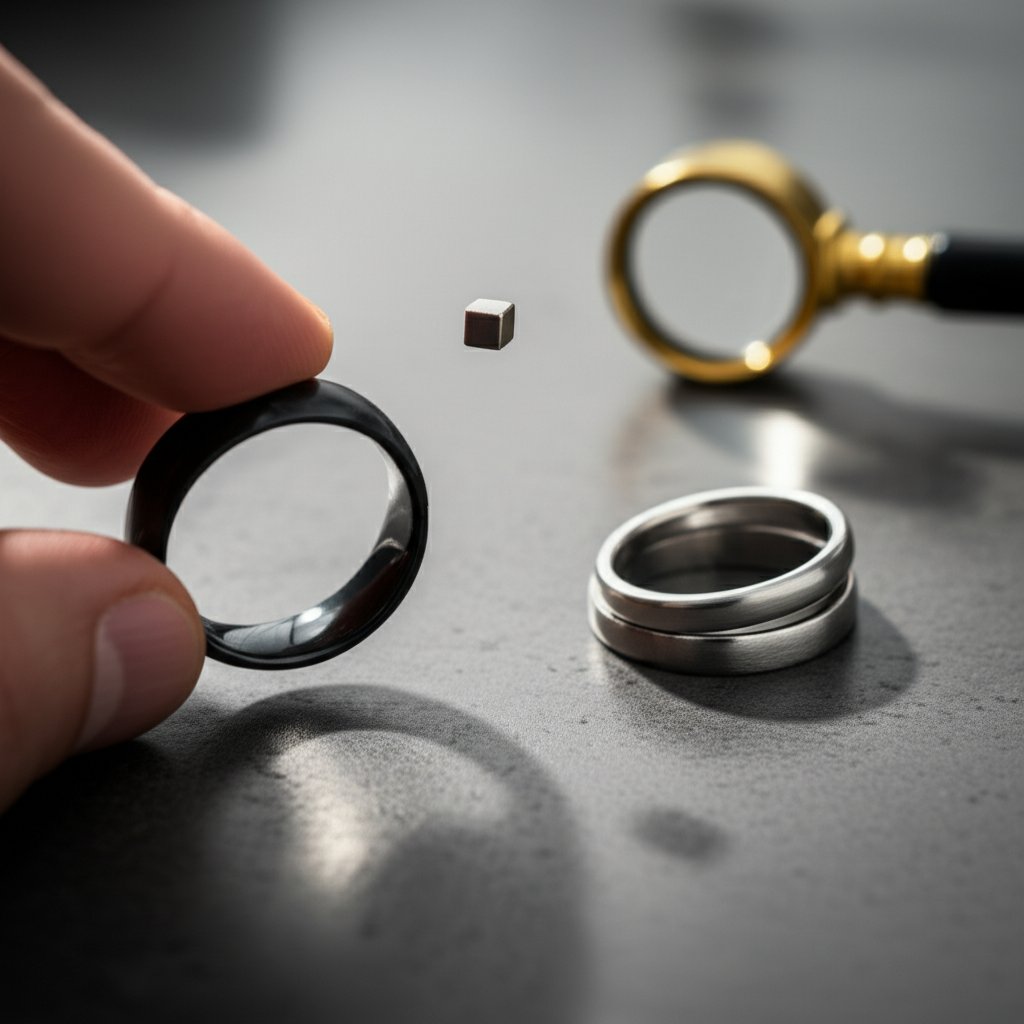
When you receive a new piece of jewelry or a component labeled as black titanium, how can you be sure it’s the real deal—without scratching, cutting, or risking damage? The answer: use a series of simple, non-destructive checks. These practical steps, inspired by expert guides on verifying titanium jewelry, help you confidently assess authenticity and finish quality without special tools or lab access.
- Visual Inspection: Examine the edges, inside bores, sharp corners, and engravings. You’ll notice that high-quality black titanium has a uniform color and crisp transitions. If you spot flaking, uneven buildup, or silver showing through at wear points, it may be a low-quality coating or a plated base metal.
- Weight Test: Titanium is famously lightweight compared to stainless steel or tungsten. Hold the piece in your hand or compare it to a similar-sized ring. If it feels surprisingly light, that’s a good sign—but beware, this isn’t a foolproof method on its own (reference).
- Magnet Test: Use a small magnet. Genuine titanium is non-magnetic or only very weakly so. If your item is strongly attracted to the magnet, it’s likely not titanium. Still, some stainless alloys can also be non-magnetic, so use this as one clue, not the final word.
- Color and Finish Check: Black titanium should have a deep, even black or dark gray tone. If the finish looks too shiny, yellowish, or wears off easily, it might be a plated or painted product, not a true PVD or DLC finish.
- Heat Conductivity: Titanium does not conduct heat well. Hold the item in your hand—if it warms up slowly, that’s a typical titanium trait.
- Engraving and Markings: Look for clear stamps or engravings such as “Ti” or “Grade 5 Titanium.” While not all genuine pieces are marked, their presence adds credibility.
- Skin Feel: Titanium is hypoallergenic and comfortable for most people. If you experience irritation, the item may be plated or mixed with other metals.
Documentation to Request from Sellers
Even the best at-home checks can’t replace solid documentation. Before you buy—or if you’re still unsure after your inspection—ask the seller for:
- Material Identification: Request details on the titanium grade (e.g., Grade 2, Grade 5) and the specific finish or coating process (such as PVD or DLC).
- Test Certificates: See if the seller can provide third-party test reports or authenticity certificates. If you receive one, check for method names (like XRF analysis or hardness testing) and lab accreditation.
- Warranty and Return Policy: Reliable sellers back their claims with clear warranty terms and a straightforward return policy if the item is not as described.
- Invoice or Spec Sheet: Ask for an invoice or product spec sheet that spells out composition, finish, and any guarantees in writing.
Don’t rely on destructive tests—always seek clear seller documentation and request proof of authenticity when in doubt.
Not to Be Confused with Game Materials
One last tip: if you’ve stumbled across terms like black titanium fallout 76 or are searching for where to get black titanium fallout 76, remember that these refer to in-game resources in titles like Fallout 76—not real-world metals. Guides on how to get black titanium fallout 76 or where to find black titanium fallout 76 are for gamers, not jewelry shoppers. Don’t let gaming lingo cloud your judgment about material authenticity!
- Quick Non-Destructive Checklist
- Check for uniform black or dark gray color at all edges and engravings
- Compare weight—genuine titanium feels light
- Try the magnet—real titanium is not magnetic
- Look for clear engravings or stamps
- Request documentation: grade, finish, and warranty
- Test skin comfort (hypoallergenic feel)
- Ask for third-party certificates if available
- Review seller policies before purchase
By combining these checks and insisting on proper paperwork, you can confidently identify authentic black titanium and avoid disappointment. Next, we’ll show you how to standardize your requests with a ready-to-use spec and warranty template—so you know exactly what to ask for before you buy.
Spec Sheet and Warranty Templates You Can Use
When you’re investing in black titanium jewelry—especially for milestone pieces like black titanium wedding bands or a black titanium wedding band mens style—how do you make sure you’re getting exactly what you expect? Sounds complex? It doesn’t have to be. With a clear, standardized spec sheet and warranty request, you can compare offers, avoid vague claims, and ensure your piece stands up to daily wear.
Spec Fields to Request from Any Seller
Imagine you’re shopping for black titanium wedding rings for men. You want to know what’s beneath the surface—literally. Here’s a ready-to-copy template you can send to any jeweler or maker. Ask them to fill out each field or attach their technical data sheets:
| Substrate Alloy & Grade | (e.g., Ti-6/4, Ti-6/6/2, or CP Titanium) |
| Finish Process Name | (e.g., PVD, DLC, anodizing—specify type) |
| Coating Thickness | (measured in microns, if available) |
| Surface Finish Before Coating | (polished, matte, brushed, etc.) |
| Hardness Test Method Used | (e.g., Vickers, Knoop, Rockwell) |
| Adhesion Test Method | (e.g., ASTM D3359, knife test) |
| Corrosion Test Method | (e.g., salt spray, ASTM B117) |
| Hypoallergenic Statement Basis | (reference to titanium’s biocompatibility) |
| Resizing Policy | (can the ring be resized? If not, is exchange available?) |
| Refinishing Policy | (can the black finish be reapplied or touched up?) |
| Country of Manufacture | (where was the ring made?) |
| Lab or Certification References | (any third-party test reports or certifications?) |
Why does this matter? For example, knowing whether your black titanium mens wedding ring is made from aircraft grade Ti-6/4 or pure CP titanium helps you anticipate both strength and comfort. A clear finish process name (like DLC or PVD) sets your expectations for color durability and wear.
Warranty Language That Protects You
Not all warranties are created equal. Some only cover manufacturing defects, while others may include finish wear or stone security for black titanium wedding bands with diamonds. Here’s a sample warranty text you can request or adapt:
This warranty covers defects in materials and workmanship, including finish adhesion and surface integrity, for the original purchaser. Exclusions include damage from excessive abuse, unauthorized repairs, or normal wear of inlay materials. Warranty service may require proof of purchase and prior authorization. Coverage does not include resizing, shipping costs, or loss/theft of the item. For rings with diamonds or other stones, tightening or resetting is included only if the original stone is returned with the ring. Please review the full warranty terms before purchase.
Always ask the seller to specify what is covered (finish, adhesion, stones), what is excluded (resizing, inlays, loss), and the process for making a claim. Reliable companies will provide these details in writing.
Buyer Checklist for Final Review
Before you finalize your order for a black titanium wedding bands men design—or any custom black titanium jewelry—run through this pre-purchase checklist:
- Is the substrate alloy and grade clearly stated?
- Does the seller specify the finish process (PVD, DLC, etc.)?
- Are coating thickness and test methods documented?
- Is there a hypoallergenic statement based on the specific titanium grade?
- Are resizing and refinishing policies explained in writing?
- Is the country of manufacture disclosed?
- Are third-party lab or certification references provided?
- Have you received a full warranty policy with clear coverage and exclusions?
- For rings with stones, is stone security (tightening/resetting) covered?
Following this template makes it easy to compare offers side by side, whether you’re choosing a classic band or a black titanium wedding bands with diamonds piece. It also protects you from surprises down the road if you ever need resizing or refinishing.
Clarity up front—on specs, finish, and warranty—prevents frustration later. Always get these details in writing before you buy.
With your paperwork in order, you’re ready to move on to evaluating resizing, repair, and refinishing options—critical for keeping your black titanium looking its best for years to come.
Resizing, Repair, and Refinishing Workflows for Men's Black Titanium Rings
Why Resizing Titanium Rings Is Difficult
Ever tried to resize a ring only to be told, “Sorry, not possible with titanium”? You’re not alone. Titanium’s legendary strength and resilience make it a favorite for modern jewelry—especially mens black titanium rings—but those same qualities also make resizing a challenge. Unlike gold or silver, titanium can’t be melted and reshaped. Instead, resizing often requires shaving material from the inside (to make it larger) or adding a liner or sizing beads (to make it smaller). When you add a black coating, things get even trickier: cutting, welding, or polishing can disrupt the finish, leaving visible marks or exposing the gray metal beneath.
Practical Paths to the Right Fit
Sounds complex? It doesn’t have to be—if you plan ahead and know your options. For mens black titanium wedding bands, here’s how to get the right fit and what to do if your size changes later:
- Get Professionally Sized Before Ordering: Visit a jeweler to measure your finger, and specify the width and profile (comfort-fit bands can feel slightly different).
- Order a Ring Sizer or Use a Sizing Chart: Many online retailers offer sizer tools or printable charts for precise measurement at home.
- Choose Comfort-Fit Profiles: These are easier to slip on and off and may require a slightly different size than flat bands.
- Ask About Exchange or Remake Policies: Some sellers offer free or low-cost remakes if your ring doesn’t fit, since true resizing is limited for mens rings black titanium.
- Consider Non-Permanent Sizing Inserts: Sizing beads or inner liners can reduce the diameter by a half or full size, though they may affect comfort.
- For Larger Sizing Needs: Skilled jewelers can sometimes sand the interior to enlarge a ring by up to two sizes, especially if it’s made from Grade 5 titanium. However, this may remove any interior engraving and slightly thin the band.
- If Sizing Down: Adding an interior liner or sizing beads is possible, but often less attractive for wedding bands and may incur extra charges.
- Replacement as a Last Resort: Because black titanium mens wedding bands are often more affordable than precious metals, buying a new ring in your correct size is sometimes the simplest solution.
Refinishing and Re-Coating Considerations
What if your ring’s black finish gets scratched or dulled during resizing or daily wear? Unlike plain titanium, which can be easily polished, black coatings require special attention. Here’s what to know:
- Polishing Can Remove Black Coatings: Any attempt to sand or buff the surface can expose the gray titanium beneath. For mens black titanium wedding rings, this means visible color loss at high-contact points.
- Re-Coating Is a Specialized Process: Restoring the black finish usually requires sending the ring to the original maker or a specialist with PVD or DLC equipment. Ask about turnaround time, costs, and whether re-coating is covered under warranty or offered as a paid service.
- Engraved or Stone-Set Rings: If your ring has engraving or inlaid stones, confirm in writing whether these features can be preserved during any repair or refinishing process.
- Ask for a Clear Workflow or Policy: Before purchasing, request documentation on resizing, repair, and refinishing policies. Reliable sellers will provide this up front, not just after the sale.
Get the sizing, exchange, and re-coating policy in writing before purchase.
- Checklist: What to Ask Vendors About Resizing and Repair
- Is professional sizing available before purchase?
- What are the exchange or remake policies if the fit isn’t right?
- Can the ring be resized, and if so, by how much?
- Is re-coating or refinishing offered for black finishes?
- Are engraving and stone settings preserved during repair?
- What are the costs and turnaround times for each service?
- Is there a warranty or guarantee on repairs or refinishing?
- Can you receive the policy in writing before ordering?
By planning ahead and clarifying these details, you’ll save time, money, and frustration—ensuring your black titanium mens wedding band looks sharp for years to come. Next, we’ll compare finish options for longevity and comfort, so you can choose a ring that fits your style and stands up to daily life.
Finish Comparison for Longevity and Comfort
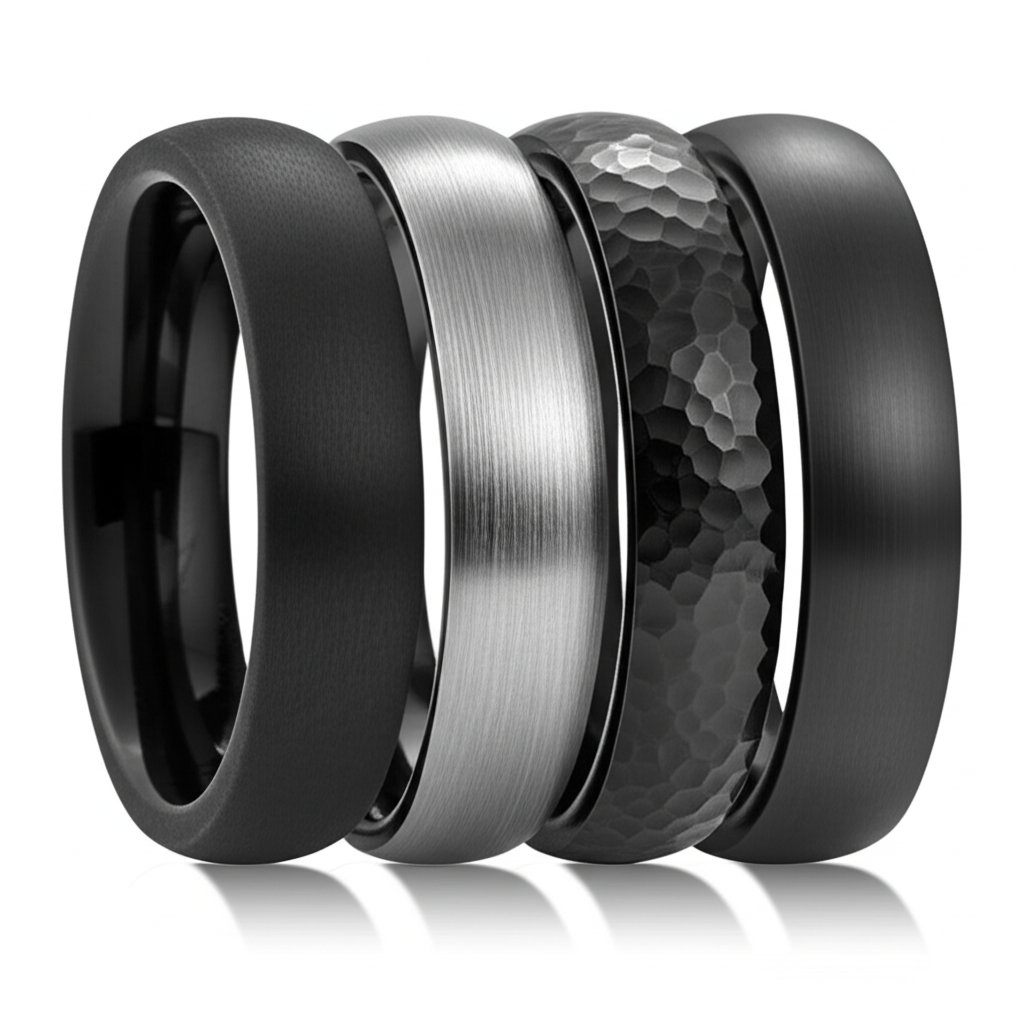
Choosing the Right Black Finish for Your Use
When you’re shopping for titanium black rings or comparing dark titanium wedding bands, it’s easy to think all black rings are created equal. But the truth? The finish type and base material make a huge difference in how your ring looks, feels, and lasts over time. Imagine two rings side by side—one gleaming after years of wear, the other showing silver scratches or faded patches. What’s the difference? It’s all about the finish and how it matches your lifestyle.
| Base Material | Finish Type | Longevity | Scratch Resistance | Refinishability | Hypoallergenic Risk | Typical Wear Pattern | Notes |
|---|---|---|---|---|---|---|---|
| Titanium | PVD (Physical Vapor Deposition) | Good – finish lasts with moderate care | High (1400–2400 HV) | Can be re-coated by a specialist | Very low | May show silver at edges/scratches | Wide color options (including black) |
| Titanium | DLC (Diamond-Like Carbon) | Excellent – top-tier for daily wear | Very high (2000–3000 HV) | Re-coating possible; requires expert | Very low | Matte finish, less visible glare; wears slowly | Deep black/dark gray; best for extreme durability |
| Titanium | Anodized | Moderate; more for color than toughness | Low (300–500 HV) | Can be re-anodized but not truly black | Very low | Color may fade or shift; not a true black | Best for unique color effects, not deep black |
| Tungsten Carbide | PVD or Ceramic Coating | Good, but coating may chip | Very high (tungsten core is ~9 Mohs) | Difficult; may need full replacement | Low | Chips can reveal gray base | Heavy, dense feel; not hypoallergenic for all |
| Gold | Black Rhodium/Ruthenium Plating | Fair; requires periodic re-plating | Low to moderate | Re-platable, but wears with time | Low to moderate (depends on alloy) | Surface wears to reveal gold | Classic look for black and gold bands |
| Stainless Steel | PVD | Good; affordable and durable | Moderate to high | Possible to re-coat | Low to moderate (nickel content possible) | May reveal steel at wear points | Budget-friendly; less hypoallergenic than titanium |
What Visible Wear Looks Like
Ever notice a black ring with shiny silver streaks or faded edges? That’s the base metal peeking through as the coating wears. For most black wedding rings, the first signs of wear show up on edges, corners, and high-contact surfaces. DLC finishes tend to wear the slowest and maintain a matte look, while PVD and black rhodium can show wear more quickly, especially if exposed to hard knocks or abrasive surfaces.
Refinishability and Skin Compatibility
Can your ring be restored if it gets scratched? For black titanium wedding bands for men, PVD and DLC coatings can be re-applied by specialists, though it may require sending the ring back to the maker. Anodized finishes can be redone, but you won’t get a true black—more likely a dark gray or blue. Blackened gold and ceramic-coated tungsten may need full replacement or re-plating. As for comfort, titanium and DLC are top picks for hypoallergenic wear, making them ideal for sensitive skin.
- Best for daily wear: DLC on titanium or PVD on titanium—these finishes balance durability, comfort, and easy maintenance.
- Best for unique style: Anodized titanium or blackened gold—great if you want something different, but expect more upkeep.
- Best for high-abrasion work: DLC on titanium—matte finish hides scratches and lasts the longest.
- Best for affordability: PVD on stainless steel—cost-effective and widely available, but check for nickel if you have allergies.
- Best for classic look: Black and titanium wedding bands with gold or rhodium accents—timeless, but will need touch-ups over the years.
Process control and aftercare matter more than marketing names. Choose the finish that fits your lifestyle—not just the trend.
Understanding these finish differences helps you select black wedding bands or a black and titanium wedding band that truly stands the test of time. Next, we’ll explore how machining and finishing workflows affect the final result for custom black titanium parts.

Machining Black Titanium Parts with Precision
Design for Coating Success
When you’re aiming for flawless black titanium mens rings or high-performance technical parts, the journey starts long before the black finish is applied. Sounds complex? Imagine spending hours on a beautiful design, only to have the final coating peel, chip, or distort your carefully machined details. That’s why thoughtful planning and precision machining are essential for any ring men titanium black or custom component.
- Specify Pre-Coat Surface Finish: The smoother and cleaner the titanium before coating, the more consistent and durable the final black layer. Polished or bead-blasted finishes often yield the best results for PVD or DLC coatings.
- Design with Edge Radii: Sharp edges can cause coatings to thin or flake. Adding small radii (rounded corners) helps the black layer adhere evenly and resist chipping.
- Plan for Masking: Threads, bearing surfaces, and sealing faces should be masked before coating to prevent unwanted buildup that could affect fit or function.
- Leave a Finish Allowance: Blackening processes like PVD or DLC add a thin, but measurable, layer to your part. For titanium rings for men black or tight-tolerance components, design a slight clearance (typically 2–4 microns) to accommodate the coating thickness.
- Document Everything: Record the finish process name, cleaning route, and post-process inspection requirements in your spec sheet. This ensures everyone—from machinist to coater—knows what’s expected.
- Coordinate with the Coater: Early communication with your finishing partner prevents rework and ensures the final part matches your vision.
Surface Preparation That Supports Adhesion
Ever wonder why some mens titanium black ring designs last for years while others flake after a few months? The secret is in the prep. Surface preparation is the foundation of strong coating adhesion—skip it, and even the toughest black ti finish will fail. Here’s what works:
- Thorough Cleaning: Remove all oils, dust, and residue using ultrasonic cleaning, degreasing, or etching. Any contamination can cause “fish eyes” or bubbles in the black finish.
- Surface Roughening (if needed): Sometimes a light sandblasting or micro-etching is used to create a key for the coating to grip, especially for DLC.
- Masking Critical Areas: Use silicone plugs or Kapton tape to shield threads, bores, or engraved details that shouldn’t be coated. This protects function and keeps tolerances tight.
- Pre-Coat Inspection: Check for scratches, dents, or tool marks—anything left on the surface will show through the final black ti finish.
Critical Tolerances and Masking Strategy
When tolerances are tight, every micron counts. For titanium black mens ring projects or complex housings, here’s how to keep fit and function on track:
| Feature | Finishing Consideration | Best Practice |
|---|---|---|
| Threads | Coating buildup can interfere with fit | Mask threads before coating; verify fit post-finish |
| Bores/Sealing Faces | Critical for assembly; must remain smooth and within tolerance | Mask or specify tight finish allowance; inspect after coating |
| Sharp Edges | Coating may thin or flake at corners | Apply small radii; avoid knife edges |
| Engraving/Logos | Coating can fill or obscure fine details | Deepen engravings or mask as needed |
| High-Contact Surfaces | Wear can expose base metal | Choose DLC for maximum durability; inspect finish regularly |
For complex projects—like dark titanium bezels, custom housings, or intricate jewelry—partnering with a certified CNC shop can make all the difference. Teams planning black titanium mens rings or technical parts can collaborate with a shop like XTJ for 4–5 axis machining, ultra-tight tolerance prep (down to ±0.005mm), and finish-friendly geometry. Their ISO 9001 & IATF 16949 certifications, rapid turnaround, and engineering support help ensure your design is ready for the black ti finish you want.
Key takeaway: The best black finishes start with thoughtful machining and surface prep. Don’t cut corners—precision up front means durability and beauty for years to come.
By following these best practices, you’ll set your black titanium mens rings, bezels, or custom components up for success—ensuring that the final product looks sharp, fits perfectly, and stands up to daily wear. In the next section, we’ll walk through a step-by-step action plan and point you to trusted sources for buying and specifying black titanium with confidence.
Action Plan and Trusted Sources for Smart Buys
Step-by-Step Buyer Action Plan
Ready to put your knowledge into action? Whether you’re eyeing a black titanium wedding ring for yourself or designing a custom component, a clear buying process saves time, money, and stress. Here’s a practical, repeatable sequence you can use for any black titanium purchase—from a simple band to a custom black titanium black diamond ring.
- Define Your Use Case and Priorities: Is this for daily wear, a special occasion, or technical use? Consider lifestyle, comfort, and whether you want a plain band or a black titanium wedding band with diamonds.
- Choose the Right Finish Type: Refer back to the comparison table. Decide if you want PVD, DLC, anodized, or another finish. Match the option to your durability, style, and maintenance needs. For example, if you’re after a black titanium black diamond ring that stands up to daily wear, DLC is often the best bet.
- Request a Detailed Spec Sheet: Use the template provided earlier to ask about substrate alloy, finish process, coating thickness, and test methods. This is especially crucial for black titanium rings for men or any custom order.
- Review Test Method Names and Documentation: Look for references to recognized tests like Vickers, Knoop, or ASTM standards. Ask for third-party certificates if available, and check that the finish and adhesion claims are backed by real data—not just marketing language.
- Confirm Warranty and Refinishing Policy: Before you buy, get the warranty terms in writing. Make sure you know what’s covered (finish, stones, resizing), what’s excluded, and how to make a claim. This is vital for high-value purchases like a men’s wedding band black titanium style with inlays or stones.
- Evaluate Seller Reputation and Return Policy: Check reviews, request references, and ensure there’s a clear return or exchange policy. For custom pieces, clarify remake or adjustment options up front.
- Proceed to Purchase or Engage a Precision Partner: Once you’re satisfied with the documentation, specs, and policies, you’re ready to buy. If your project involves custom machining—like a unique black titanium black diamond ring or technical part—consider working with a certified CNC partner. Shops like XTJ can coordinate tight-tolerance machining and finish prep to ensure your part is ready for a flawless black coating.
Key takeaway: Documentation and test method transparency are the best predictors of long-term satisfaction—don’t settle for vague promises or missing paperwork.
Trusted Sources to Consult
Not sure if a claim is credible? Turn to these reliable resources for black titanium research and buying decisions:
- Materials Science Textbooks: For in-depth understanding of titanium alloys, coatings, and mechanical properties.
- Peer-Reviewed Journals: Look for studies on PVD/DLC coatings, wear resistance, and biocompatibility in journals like Surface and Coatings Technology or Journal of Materials Engineering and Performance.
- Coating Manufacturer TDS/SDS: Technical and safety data sheets from finish suppliers provide real-world performance data on adhesion, hardness, and corrosion resistance.
- ASTM/ISO Standards: Reference documents like ASTM B117 (corrosion), ASTM D3359 (adhesion), or ISO 14577 (hardness) to verify test methods and results.
- Specialist Retailers and Maker Guides: Use comprehensive guides from trusted jewelry and metalworking sites for practical tips and real-life examples.
When to Engage a Precision Partner
If your project exceeds what’s available off-the-shelf—such as a custom men’s wedding band black titanium style with intricate geometry or a prototype part needing ultra-tight tolerances—partnering with a machining expert is the next step. A vetted CNC shop can:
- Advise on the best titanium grade for your application
- Prepare surfaces and tolerances for optimal coating adhesion
- Coordinate finishing and inspection to meet your exact specs
If your project moves beyond off-the-shelf rings into custom titanium parts prepared for black finishes, consider coordinating machining and finishing through a vetted shop like XTJ.
By following this action plan and relying on trusted sources—not just marketing claims—you’ll be equipped to buy or commission black titanium with confidence. Whether you’re searching for a unique black titanium black diamond ring or sourcing technical parts, a methodical approach ensures your investment delivers on both style and substance.
Frequently Asked Questions About Black Titanium
1. Is black titanium expensive?
Black titanium is typically more affordable than gold but costs more than standard titanium due to the advanced coatings and processes used to achieve its black finish. Pricing also reflects the quality of the base titanium and the durability of the applied surface treatment.
2. Does black titanium stay black?
The black color on titanium comes from a surface coating, such as PVD or DLC, rather than the metal itself. Over time, with heavy wear or abrasion, the black finish can show signs of fading or reveal the silver titanium underneath. Choosing a high-quality coating and following care instructions helps maintain the color longer.
3. Is black titanium valuable?
Black titanium's value is based on the quality of the underlying titanium, the durability of its coating, and its appeal in jewelry and technical applications. While it is not as valuable as gold, its strength, corrosion resistance, and unique look make it sought after in both luxury and industrial markets.
4. How can I tell if my black titanium ring is genuine?
Check for uniform black color at edges and engravings, a lightweight feel, and non-magnetic properties. Ask for documentation on the titanium grade and coating process, and request warranty or authenticity certificates from the seller. Reliable retailers will provide these details.
5. Why is resizing black titanium rings difficult?
Titanium’s strength makes it challenging to resize, and black coatings can be damaged or removed during the process. Most jewelers advise getting the correct size initially or using exchange/remake policies, as resizing often requires specialized equipment or a new ring.
-
Posted in
black titanium, black titanium rings, DLC finish, PVD coating, titanium jewelry